The "Pulse" Trial: Prosecution's Expert Calls the Defence's Expert Report "Professional Self-Disqualification"
12.11.2026


12.11.2026

12.11.2026

12.11.2026

12.11.2026

12.11.2026

12.11.2026

12.11.2026

12.11.2026

11.11.2026

12.11.2026

12.11.2026

11.11.2026

12.11.2026

12.11.2026

12.11.2026

12.11.2026

11.11.2026

06.11.2026

12.11.2026

11.11.2026

11.11.2026

12.11.2026

11.11.2026

11.11.2026

12.11.2026

11.11.2026

11.11.2026

23.04.2026

23.04.2026

12.04.2026

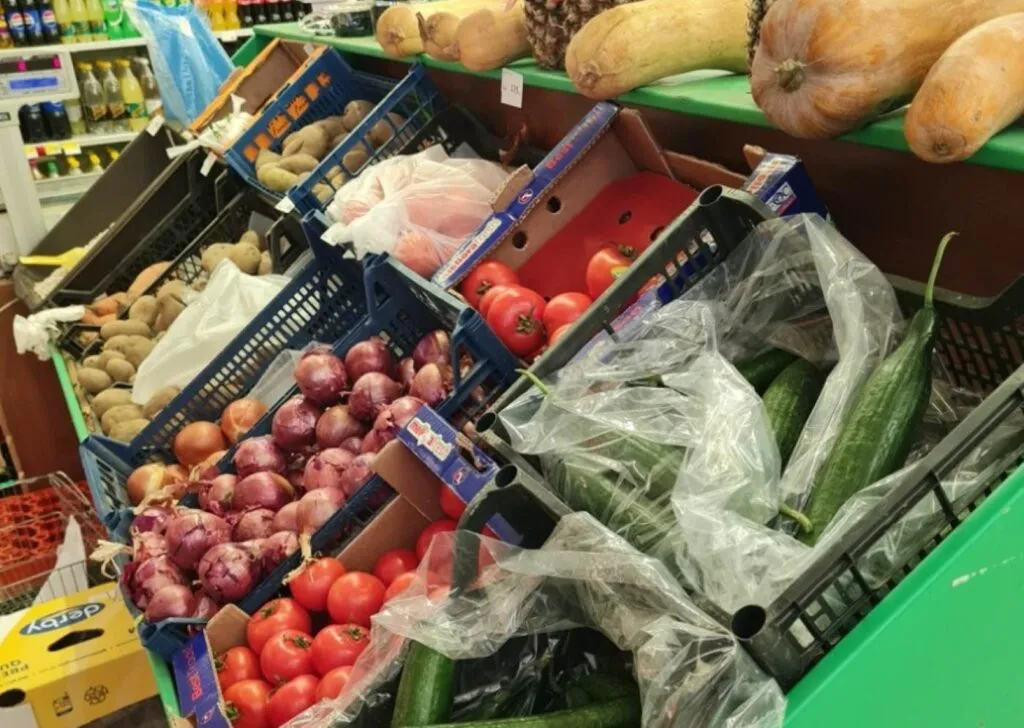
Two shipments in five days, 40.4 tonnes in total. On October 29 Bulgaria's Food Safety Agency stopped 21,089 kilograms of apples from Macedonia - they were found to contain a pesticide banned for use in the EU. On November 2 the second shipment fell, 19,350 kilograms, with pesticide residues above the maximum permitted limits. Both are being returned to the sender. And on September 18 a shipment of 11,843 kilograms of peppers was also stopped over pesticide residues.
Exactly what was found isn't known. The published information gives neither the names of the pesticides nor the measured concentrations, nor which growers or exporters are behind the shipments.
In farmers' groups on social media the reaction came quickly: politics, protecting Bulgarian production. The argument heard most often is Russia - we exported there for years without a problem, so why is Bulgaria sending things back now? Some also ask why products from Italy get in without any trouble.
The rules, however, say something else. Bulgaria is an EU member and applies Regulation 396/2005 on maximum residue levels of pesticides, which applies equally to domestic produce and imports. A Macedonian apple at the Bulgarian border has to meet the same limits as a Polish, Italian or Bulgarian one. Russia has its own sanitary rules within the Eurasian Economic Union - not necessarily looser, but different. Without knowing which pesticide and at what concentration, nobody can claim the returned shipment would have passed there.
And the Russian apple story is more memory than statistics. According to the World Bank's WITS database, Macedonia exported 65,524 tonnes of fresh apples in 2025, worth 24.1 million dollars. Russia doesn't appear among the destinations at all. The biggest buyers were Serbia, Greece and Bulgaria. And Bulgaria is slipping: from 31,785 tonnes in 2024 to 14,557 tonnes in 2025 - less than half in a single year.
The easiest thing is to point a finger across the border. But a pesticide banned in the EU didn't climb into the truck on its own. Someone sold it, someone sprayed it, someone should have checked before the shipment left. Under its Food Safety Law, Macedonia uses the European maximum residue values. If those limits apply here too, then the question isn't only why Bulgaria sent the apples back. It's also what happens to the shipments nobody sends back - the ones that end up in our markets.
The latest 10 news from this category

Documents from government sessions, a call for the governor to resign, and a prosecutor who says he mentioned "neither whether...

Over 20 years the funds earned 1.25 billion euros in returns. Now they propose that people work longer and that...
Fewer people are buying, many more are renting, and the average amount per flat sold is rising. The market is...

Huang has 60 direct reports and no successor. The affair with an alleged Chinese spy has opened the most awkward...

The startup won't ship its first chips until next year, yet it is already worth over 5 billion pounds. The...

The DJ can now be a laid-back American, an Irishman or an Australian - or barely talk at all. The...

In July the deficit was raised so there could be more capital projects. In November the projects are cut and...

Firms themselves declared 5.6 billion denars of VAT and paid less than half of it on time. One employer in...

A small firm in Macedonia fills in almost the same reports as a corporation. Accountants are proposing a short standard...

From 1 January the biggest AI labs will have to register with a state that oversees them, instead of grading...
This site uses cookies - is that okay? Learn more
Be the first to know when Metla launches something new
Leave your email and we'll write to you when there's a new guide or something new on Metla.