
Five Minors Beat a Boy With Hard Objects Outside a School in Rashche: Who Is Watching the School Gates?
14.11.2026


14.11.2026

14.11.2026

14.11.2026
14.11.2026

14.11.2026
14.11.2026

14.11.2026

13.11.2026

12.11.2026

14.11.2026

14.11.2026

13.11.2026

14.11.2026

14.11.2026

14.11.2026

14.11.2026

13.11.2026

12.11.2026

14.11.2026

13.11.2026

12.11.2026

14.11.2026

13.11.2026

13.11.2026

14.11.2026

13.11.2026

12.11.2026

23.04.2026

23.04.2026

12.04.2026

The National Diabetes Register for 2025, published by the Institute of Public Health, counts 141,891 people with diabetes mellitus in Macedonia. Of these, 78,663 are women and 63,228 men. As many as 95.09 percent have type 2 diabetes - the form most often linked to lifestyle, and one that can develop for a long time without any symptoms.
That is the number of those who have been diagnosed. How many are outside it? The International Diabetes Federation estimates that almost 589 million adults aged 20 to 79 worldwide live with diabetes, or 11.1 percent of that age group. Around 252 million of them, or 43 percent, do not know they are ill. By 2050 the number could reach 852.5 million.
For 14 November, World Diabetes Day, this year's motto is "Early action on diabetes", and a press conference with Health Minister Sasho Klekovski has been announced at the Clinic of Endocrinology in Skopje. The focus is prevention, early detection and greater engagement of the health system at all levels. Fine words - worth exactly as much as will be seen in clinics and pharmacies.
Patients have already said what they need. The Gevgelija Association of Diabetics is asking the Ministry of Health for continuous glucose monitoring sensors for all type 1 patients, noting that they are "not a luxury but modern technology" that protects them from dangerous hypoglycaemia and hyperglycaemia. They are also asking for good-quality, accurate glucometers for all type 1 and type 2 patients, as well as the most modern type 2 therapy that protects the heart, kidneys and blood vessels.
If prevention is a priority, then requests like these are a test of how serious it is. Diabetes is among the leading causes of blindness, end-stage kidney disease, non-traumatic amputations and cardiovascular disease. Those are precisely the complications that sensors and timely therapy are meant to prevent.
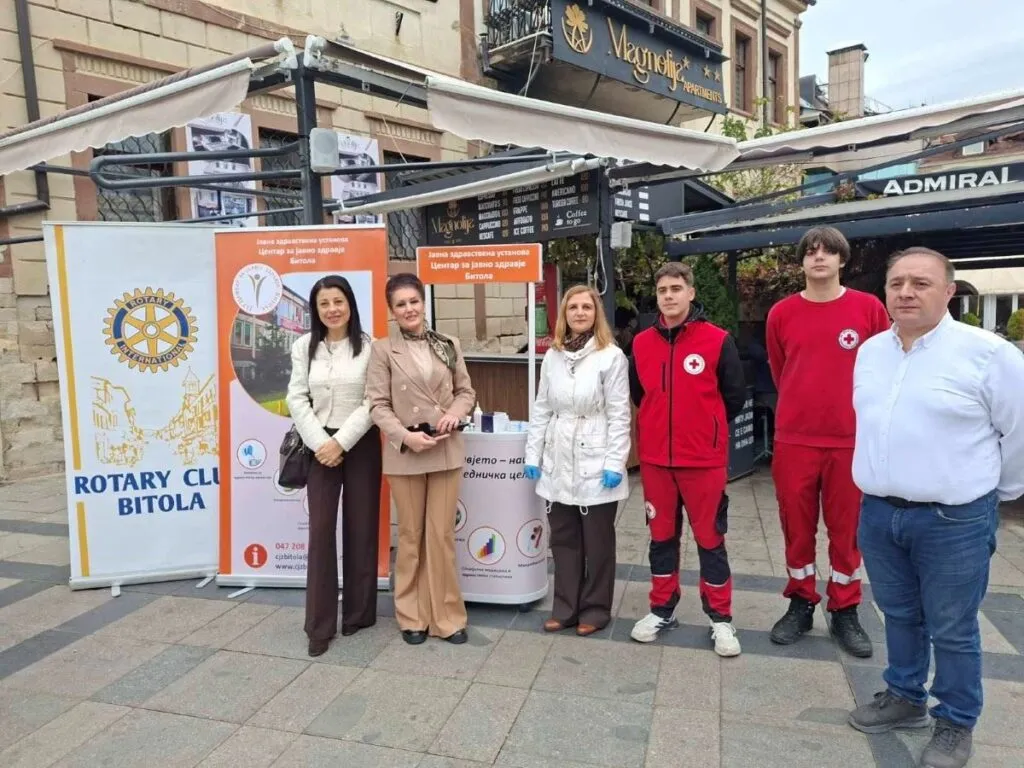
In Bitola, the Public Health Centre set up on Magnolija Square with free blood-sugar testing. There, the register counts 5,624 people with diabetes, 2,969 women and 2,655 men, and 98.4 percent have type 2. A campaign on a square is a small step, but exactly that kind of step can catch one of those who don't know they're ill. The question is whether it will remain a one-day, occasional event or become regular practice.
The latest 10 news from this category

A girl with a broken ankle, another with a facial wound, a woman with a cut arm. The wind was...

A pool, a sports complex, multi-storey car parks, a water supply for Bistrica. "Bitola is waiting," the activists wrote. The...

Machinery for the bigger piles of waste, schools, public enterprises and companies in the field. And a message from the...

1,897 reported cases in ten months. The new law brings emergency removal from the home and electronic tags, for which...

500 square metres, three playrooms, more than 50 children. Good news without reservation, but the number parents wait for most...

The train whistles from afar and slows down, because the barrier won't come down. The railway's explanation sounds like a...

Ballet, dentistry, swimming and a learning platform among this year's winners. Plus a promise from the mayor that is easy...
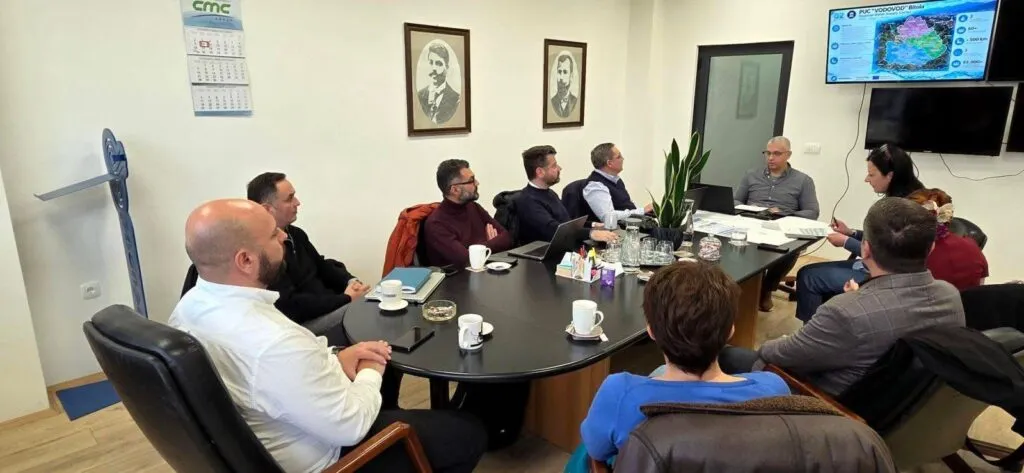
A pilot project with European money, SCADA and sensors - and a digger pulling out cast-iron pipes. The word "losses"...

Kumanovo, Veles, Ohrid and Delčevo are showing off their plaques. The yardstick is how well they implement the Law on...
The date is set by law, not by the forecast. What exactly you must have in your vehicle until 15...
This site uses cookies - is that okay? Learn more
Be the first to know when Metla launches something new
Leave your email and we'll write to you when there's a new guide or something new on Metla.