

It's October, and Macedonia Is Still Burning: 30 Fires in a Single Day, Five of Them at Landfills and Rubbish Dumps
09.10.2026


09.10.2026

09.10.2026

09.10.2026

09.10.2026

09.10.2026

09.10.2026

09.10.2026

08.10.2026

08.10.2026
09.10.2026

09.10.2026

08.10.2026

09.10.2026

09.10.2026

09.10.2026

09.10.2026

08.10.2026

07.10.2026

09.10.2026

09.10.2026

09.10.2026

09.10.2026

09.10.2026
08.10.2026

09.10.2026

08.10.2026

07.10.2026
08.10.2026

06.10.2026

05.10.2026

23.04.2026

23.04.2026

12.04.2026

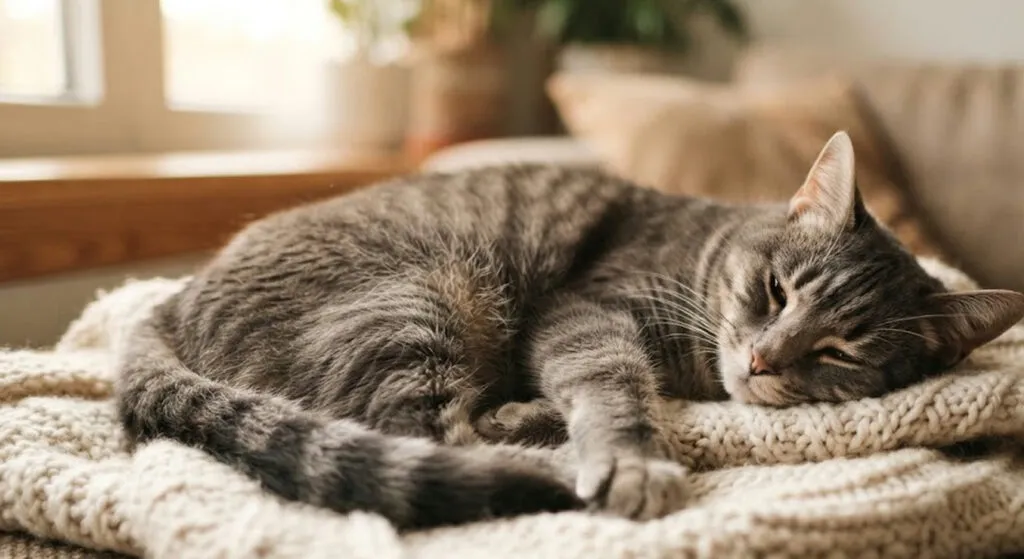
Your cat is lying in your lap, purring, and you're relaxed: it must be happy. Sometimes it is. But vets warn that cats also make that familiar "prrr, prrr" when they're frightened, stressed or in pain - on the vet's table, for example, where no cat is happy.
What actually is purring? Vet Ignacio Molina of the AniCura Estoril veterinary hospital explains that it's rhythmic contractions of the muscles of the larynx, which open and close the glottis. The result is a soft, rhythmic and usually continuous vibration that a cat can produce both while breathing in and breathing out.
Vet Bárbara Febrel of the Clinicanimal clinic adds that purring is above all a means of communication. Mother cats use it to keep in contact with their kittens, and kittens start purring when they're still very small. Adult cats purr when they're relaxed - when you stroke them, when they're resting or when they're near people they have a good relationship with - but also when communicating with other cats.
When "prrr" means something else
Some cats purr in situations of fear, stress, discomfort or pain: at the vet's, in an unfamiliar place or when something is bothering them physically. Both specialists suspect that purring may then work as a self-soothing mechanism - the cat is literally comforting itself. But both stress that this is a hypothesis, not a proven fact, and that there's still a lot we don't know about purring.
That's why the sound on its own doesn't say much. What matters is the whole picture, and above all - a change from usual behaviour. Warning signs: the cat hides more than usual, avoids being touched, moves less, changes its eating or sleeping habits, sits hunched up or is sensitive to touch. Body language is worth watching too - posture, ears, eyes.
If a cat is purring but at the same time withdrawing, less active or showing discomfort, vets advise a check-up to rule out a health problem. Cats are masters at hiding pain, and purring, it turns out, can be part of the mask. How many times have we read it as "everything's fine" precisely when it wasn't?
The latest 10 news from this category

Златниот ретривер е една од најомилените раси на кучиња во светот, познат по својата нежност, интелигенција и неверојатна приврзаност кон...

„Од куче речиси ништо не можеш да сокриеш“, вели д-р Николас Додман, почесен професор и основач на Одделот за однесување...

Жените и кучињата имаат толку силна врска што понекогаш може да ги засени и некои човечки односи. Но не било...

Ако некогаш сте го гледале вашето куче додека спие, веројатно сте забележале како му се мрдаат нозете, му се мрда...

ЏЕЈМС Секстон, еден од најпознатите адвокати за развод во Америка, откри зошто, според него, толку многу бракови се распаѓаат. Со...

Хранењето на вашето куче со правилна количина висококвалитетна храна е едноставен, но многу важен начин да го задржите здравјето на...

Секој сопственик на куче сака да знае дали неговиот четириножен пријател е среќен. Добрата вест е што кучињата имаат многу...

Дали знаевте дека ова е знак за висока емоционална интелигенција?

Нема сомнеж дека малите кучиња имаат посебен шарм. Лесни се за патување, имаат долг животен век, а многу од нив...

Иако миленичињата се дел од нашите семејства, сè уште постојат многу митови што се пренесуваат од генерација на генерација. Некои...
This site uses cookies - is that okay? Learn more
Be the first to know when Metla launches something new
Leave your email and we will write when there is a new guide or something new on Metla.