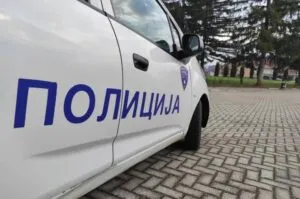
Five Minors Beat a Boy With Hard Objects Outside a School in Rashche: Who Is Watching the School Gates?
14.11.2026


14.11.2026

14.11.2026

14.11.2026
14.11.2026

14.11.2026
14.11.2026

14.11.2026

14.11.2026

13.11.2026

14.11.2026

14.11.2026

13.11.2026

14.11.2026

14.11.2026

14.11.2026
14.11.2026

13.11.2026

12.11.2026

14.11.2026

13.11.2026

12.11.2026

14.11.2026
13.11.2026

13.11.2026

14.11.2026

13.11.2026

12.11.2026

23.04.2026

23.04.2026

12.04.2026

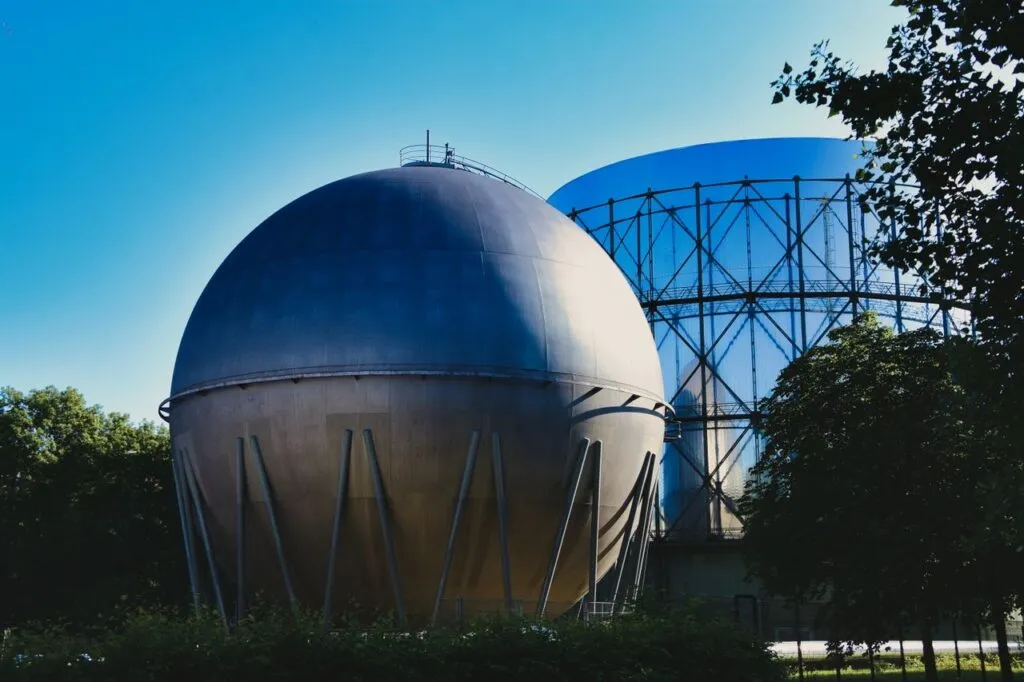
Two truths about the same gas, depending on who is telling it. In the official comparison, natural gas for households in Macedonia costs 10.83 euro cents per kilowatt-hour, slightly below the European Union average of 11.03 cents. Prime Minister Hristijan Mickoski said in a television interview that the government is doing everything so that citizens pay the lowest possible energy prices, without the big jumps seen in parts of Europe.
Now take the same figure and adjust it for purchasing power. For the first half of 2026, Eurostat puts Macedonia at 20.8 purchasing power standard units (PPS) per 100 kilowatt-hours. That is the highest value among all the European countries in the comparison. Sweden, which has the highest nominal price in the EU, is at 17.7. Portugal at 15, the Netherlands at 13.8. In euros, we are below average. By purchasing power, we are at the top.
The good news for households is almost theoretical. According to the Energy Community, there are only 496 household users of natural gas in the country. The average retail price for them fell by 6.9 percent, to 1,832.7 denars per gigajoule. At the same time, household gas in Europe got 10.2 percent cheaper compared with the previous half-year and is at its lowest level in four years.
The real story is with companies. According to the State Statistical Office, gas for business users in the first half of 2026 rose by between 8 and 17.8 percent, depending on the category, compared with the second half of 2025. Roughly 85 percent of gas consumption in the country goes to the energy sector. So the gas that is getting more expensive is exactly the gas that goes into production - and from there into prices and into the competitiveness of domestic firms.
The official statistics are right when they say electricity is cheaper: 11.68 euro cents per kilowatt-hour against 28.32 in the EU. BMB-95 petrol is 1.48 euros, diesel 1.61, lower than in Germany, France, Greece and Serbia. But a comparison in euros is convenient for whoever is making it. The question that should be asked is a different one: why is gas getting cheaper in Europe but more expensive for Macedonian companies - and how much of that increase will end up in the price of what they produce?
The latest 10 news from this category

The state will borrow more than it plans to invest in every capital project combined. Interest is up 18.2 percent,...

The 65 euros per megawatt-hour stays. But from 1 January the bill will also be shaped by grid tariffs, and...
Paying with a mobile number, payee verification, QR codes and transfers at night and on weekends. The announcement is missing...
America banned the best chips for Chinese companies. New research says their most powerful models trained on them anyway, and...
A data centre on a ship, cooled and powered by the ocean. Sounds like science fiction, but the concept dates...

OpenAI wants ChatGPT to be not just the place where you ask, but the place where you pay. Amazon has...

A deficit of 3.5 percent of GDP, more than 300 amendments and 183.1 billion denars of borrowing in a single...

The MBI10 is 11.73 percent below where it started the year, and 2026 turnover is heading towards almost half of...

More than 430 million people depend on one company, and the company itself doesn't know when it will restore its...

Nvidia built an entire industry around its chips, and was itself built around one man. Now he is gone, and...
This site uses cookies - is that okay? Learn more
Be the first to know when Metla launches something new
Leave your email and we'll write to you when there's a new guide or something new on Metla.