
Five Minors Beat a Boy With Hard Objects Outside a School in Rashche: Who Is Watching the School Gates?
14.11.2026


14.11.2026

14.11.2026

14.11.2026

14.11.2026

14.11.2026

14.11.2026

14.11.2026

13.11.2026

12.11.2026

14.11.2026

14.11.2026

13.11.2026

14.11.2026

14.11.2026

14.11.2026

14.11.2026

13.11.2026

12.11.2026

14.11.2026

13.11.2026

12.11.2026

14.11.2026

13.11.2026

13.11.2026

14.11.2026

13.11.2026

12.11.2026

23.04.2026

23.04.2026

12.04.2026

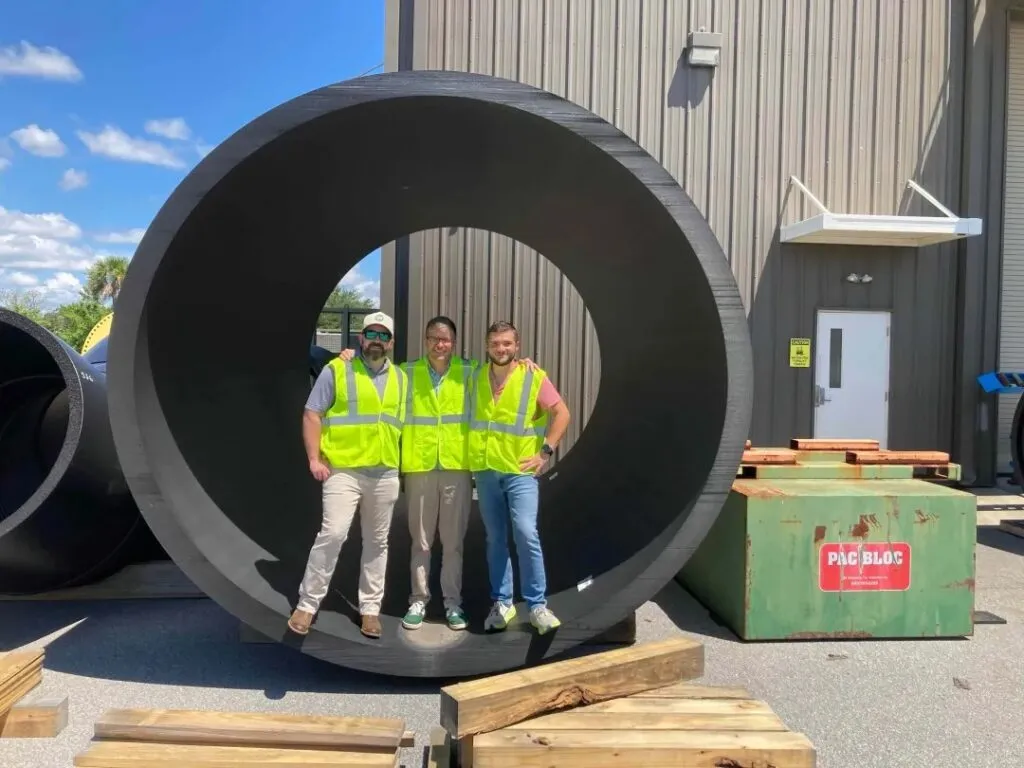
Artificial intelligence is hungry for power, and data centres on land take years to build. The startup Drogue from Washington, D.C., founded about six months ago, offers a solution that sounds like science fiction: data centres on ships, drawing their power from the heat of the ocean. The company says it has raised 20 million dollars (about 17 million euros), from investors including XYZ Venture Capital, Toyota Ventures, Tamarack Global and Slow Ventures. The company's valuation hasn't been disclosed.
Founder and CEO Sam Sipe is a former US Navy pilot who flew E-2D Hawkeye early-warning aircraft off aircraft carriers. His argument is simple: a classic data centre takes 8 to 10 years to build, while demand from artificial intelligence, according to him, has grown tenfold in three years. Those two timelines don't fit together.
The technology isn't new. Ocean thermal energy conversion (OTEC) is an idea from the 1950s, tested in the 1980s. Warm surface water cools the servers and heats ammonia to boiling, and the vapour spins a turbine. Cold water, pumped from a depth of about 1,000 metres, turns the ammonia back into liquid. A closed loop - at least on paper.
The first prototype, of a few megawatts, will be housed on an ordinary ocean-going ship, with a trial voyage planned for early 2028. Later versions would look like offshore oil platforms, and each floating data centre would stay on the water for about ten years. Drogue has "approval in principle" from the American Bureau of Shipping and is buying its first ship.
An idea from the 1950s, a prototype in two years and money already in the bank: investors aren't buying finished technology, but a bet that the race for power for artificial intelligence will pay almost any price. Whether the ocean turns out cheaper and faster than the grid will be known at the trial voyage at the earliest.
The latest 10 news from this category
The Amsterdam cloud will spend 40 billion dollars of its customers' money, and one of its biggest customers is already...

The startup won't ship its first chips until next year, yet it is already worth over 5 billion pounds. The...

The company that tracks your sleep and pulse now wants to be your first door to the doctor. A few...

The company that started out flying blood to hospitals in Rwanda is now building a drone network over American suburbs....
The tool anyone could use to make a poster or a presentation now has a competitor in every chatbot. The...

Three Stanford classmates are selling the idea that AI can build up experience like an employee. Nvidia is both investor...

It had an independent privacy audit and money from Khosla Ventures, but not the capital for the race with Muse...

The National Bank says the license pulled in Belgrade doesn't automatically mean anything for Bitola. Legally, that's true. But the...
Profit is slightly down on last year but above plan. The biggest interest growth comes from the state, and fees...
The model learned from building permits across America and promises buildings that stand. What remains is the question everyone in...
This site uses cookies - is that okay? Learn more
Be the first to know when Metla launches something new
Leave your email and we'll write to you when there's a new guide or something new on Metla.