Man Suspected of Strangling His Partner Escaped Police Through a Window in Bitola: She Is in a Shelter, He Is Free
15.11.2026


15.11.2026

15.11.2026

15.11.2026
15.11.2026
15.11.2026

15.11.2026

15.11.2026

15.11.2026

15.11.2026

15.11.2026

15.11.2026

14.11.2026

15.11.2026

15.11.2026

15.11.2026

15.11.2026

14.11.2026

13.11.2026

15.11.2026

14.11.2026

13.11.2026

15.11.2026

15.11.2026

14.11.2026

15.11.2026

15.11.2026

14.11.2026

23.04.2026

23.04.2026

12.04.2026

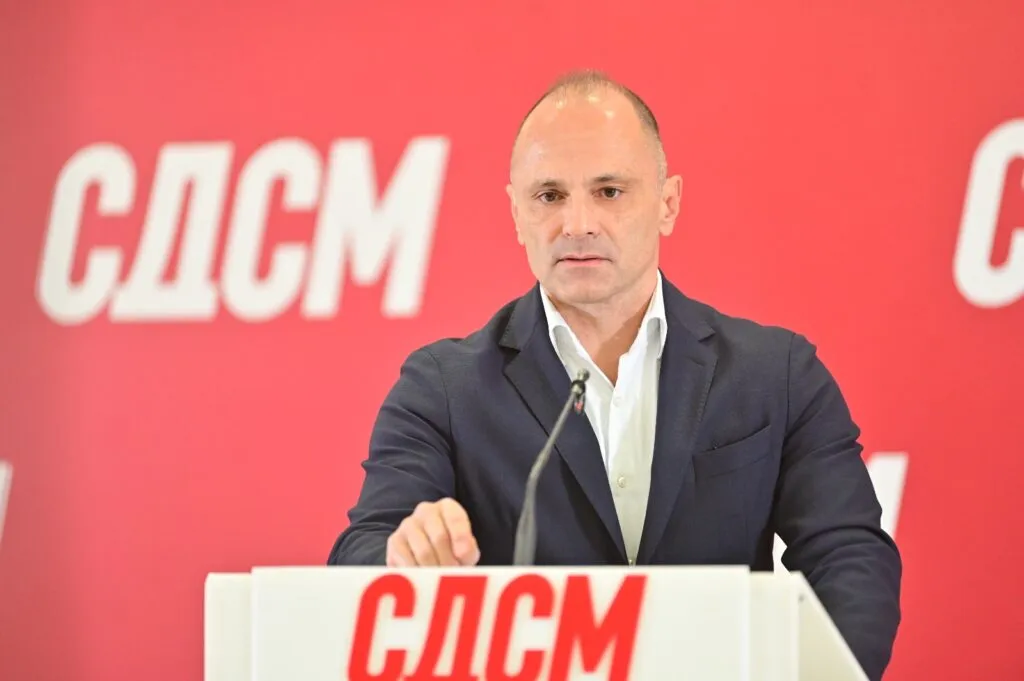
SDSM leader Venko Filipče came out with a figure from the International Monetary Fund: according to IMF projections, Macedonia ranks 41st out of 48 European economies by gross domestic product per capita, at 11,762 dollars. Serbia, Montenegro and Albania are ahead of us. "What third economy - Macedonia is at the bottom of Europe," Filipče said.
VMRO-DPMNE responded with a press release and numbers of its own. Macedonia, they say, has the highest GDP growth rate in the region and the lowest inflation, inflation is 25 percent below the European average, and growth in the second quarter of this year was 4.3 percent. "When Filipče doesn't know any better, he should keep quiet," the party said.
The two numbers measure different things
Nobody needs to lie here for both sides to sound convincing. GDP per capita tells you how big the economy is per person today. The growth rate tells you how fast it's moving. A country can grow the fastest in the region and still stay near the bottom by level, because it's starting from low down. One party looks at the height, the other at the speed, and each presents its half as the whole truth.
Filipče takes the figure all the way to the kitchen. According to him, the consumer basket comes to 90,000 denars including rent, "not even three salaries are enough", there's 4 billion euros of new borrowing in two years, and heating and electricity prices are expected to go up, while the minimum wage isn't rising. VMRO-DPMNE, for its part, pins the debt on the previous government: in 2027, loans worth 2.3 billion euros must be refinanced or repaid, and for 2028 there are obligations of 2.7 billion euros - inherited, they say, from the SDSM-led government.
In the end, citizens don't pay with a growth rate or a place on a table. They pay with their wages at the till. When the parties stop shouting numbers at each other, will any of them say how much that wage will be next year?
The latest 10 news from this category
Eurostat: 11.68 euro cents per kilowatt-hour of electricity versus 28.32 in the EU. For gas, Macedonia ranks first in Europe...

Growth is 28 percent, and the minister is also announcing off-season charters for Ohrid, not yet confirmed. The missing number...

The cable company, the driver's licence office, the restaurant that won't take online bookings: Meta's AI agent now makes the...

"When Nvidia was among the owners, everyone felt safe." Now the cheques will be smaller, valuations lower, and Europe may...

An AI model company got breached, and Uber's drivers paid for it: their driving licences were sitting with a company...

The state will borrow more than it plans to invest in every capital project combined. Interest is up 18.2 percent,...

The 65 euros per megawatt-hour stays. But from 1 January the bill will also be shaped by grid tariffs, and...
Paying with a mobile number, payee verification, QR codes and transfers at night and on weekends. The announcement is missing...

America banned the best chips for Chinese companies. New research says their most powerful models trained on them anyway, and...
A data centre on a ship, cooled and powered by the ocean. Sounds like science fiction, but the concept dates...
This site uses cookies - is that okay? Learn more
Be the first to know when Metla launches something new
Leave your email and we'll write to you when there's a new guide or something new on Metla.