Man Suspected of Strangling His Partner Escaped Police Through a Window in Bitola: She Is in a Shelter, He Is Free
15.11.2026


15.11.2026

15.11.2026

15.11.2026
15.11.2026
15.11.2026
15.11.2026

15.11.2026

15.11.2026

15.11.2026

15.11.2026

15.11.2026

14.11.2026

15.11.2026

15.11.2026

15.11.2026

15.11.2026

14.11.2026

13.11.2026

15.11.2026

14.11.2026

13.11.2026

15.11.2026

15.11.2026

14.11.2026

15.11.2026

15.11.2026

14.11.2026

23.04.2026

23.04.2026

12.04.2026

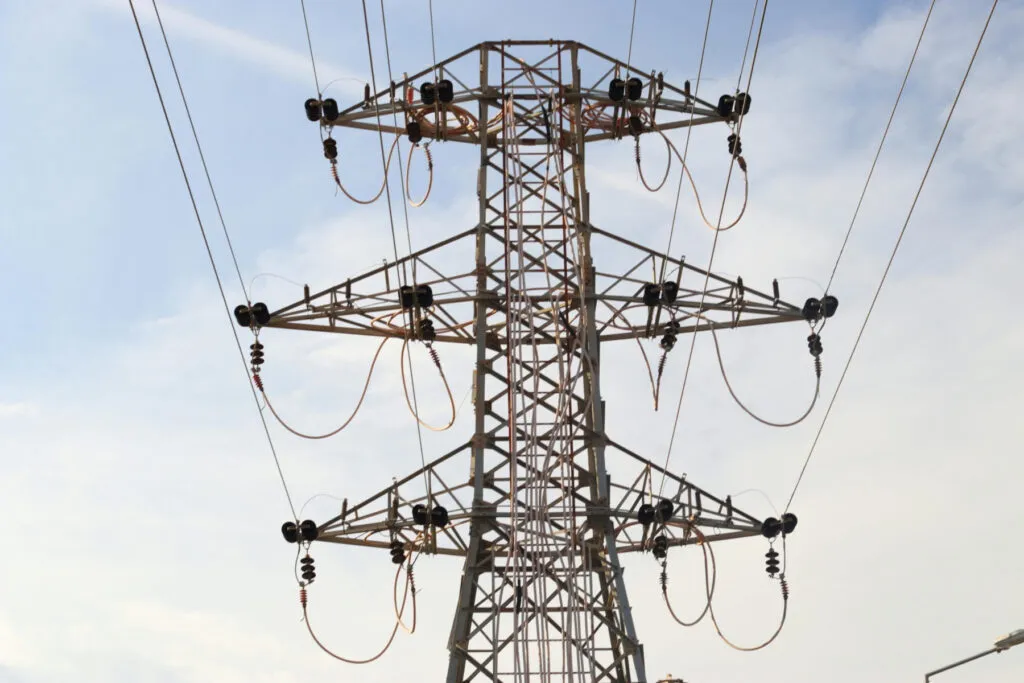
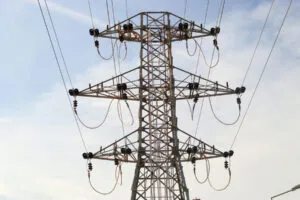
Eurostat's latest data for the first half of 2026 puts Macedonia in two opposite spots on the European table. Electricity for households is among the cheapest on the continent. Natural gas, once you calculate what it costs relative to purchasing power, is the most expensive in Europe.
Electricity: 11.68 euro cents
A kilowatt-hour of electricity in Macedonia costs 11.68 euro cents on average, while the European Union average is 28.32 euro cents. That's almost 60 percent cheaper. In the region, Romania is the most expensive at around 28.36 euro cents, followed by Greece at 24.01 and Croatia at 18.16 euro cents, while people in Bosnia and Herzegovina pay the least. In the EU, the record-holders are Ireland at 38.71, Germany at 36.18 and Belgium at 35.75 euro cents per kilowatt-hour.
The figures refer to households with annual consumption of 2,500 to 5,000 kilowatt-hours, including taxes and levies. They don't tell you how heavy the bill is relative to wages. When prices are calculated by purchasing power, Romania has the most expensive electricity in Europe, at 46.9 units (PPS) per 100 kilowatt-hours. There, electricity went up 51.9 percent in a year.
Gas: the most expensive on the continent
With gas, the picture flips. In euros, Macedonia is slightly below the EU average: 10.83 euro cents per kilowatt-hour versus 11.03. But adjusted for purchasing power, Macedonia reaches 20.8 PPS per 100 kilowatt-hours, the highest value among the European countries in the comparison. That's more than Sweden (17.7 PPS), which has the most expensive gas in the EU in euros, and more than Portugal (15) and the Netherlands (13.8).
The paradox is that gas barely exists in Macedonian homes. According to Energy Community data, the country has just 496 household natural gas customers. Around 85 percent of consumption goes to the energy sector.
That's why the other number matters more. According to the State Statistical Office, gas for businesses rose by 8 to 17.8 percent in the first half of the year, depending on the category, compared with the second half of 2025. For households it went the other way: the average price fell 6.9 percent, to 1,832.7 denars per gigajoule. In Europe, meanwhile, gas for households got 10.2 percent cheaper on average.
What comes next
European households paid less on average for electricity and gas in the first half of this year than last year. But wholesale prices are already rising, and experts warn that higher bills could arrive towards the end of the year, and especially at the start of 2027.
Cheap electricity is a number that's easy to quote. The most expensive gas relative to purchasing power and the price rise for businesses are facts that rarely make it into press releases. And when gas gets more expensive for companies, who really thinks it will stop at their invoices and not reach the prices on the shelves?
The latest 10 news from this category
SDSM is waving the IMF projection for GDP per capita, the government the growth rate and inflation. One side measures...

Growth is 28 percent, and the minister is also announcing off-season charters for Ohrid, not yet confirmed. The missing number...

The cable company, the driver's licence office, the restaurant that won't take online bookings: Meta's AI agent now makes the...

"When Nvidia was among the owners, everyone felt safe." Now the cheques will be smaller, valuations lower, and Europe may...

An AI model company got breached, and Uber's drivers paid for it: their driving licences were sitting with a company...

The state will borrow more than it plans to invest in every capital project combined. Interest is up 18.2 percent,...

The 65 euros per megawatt-hour stays. But from 1 January the bill will also be shaped by grid tariffs, and...

Paying with a mobile number, payee verification, QR codes and transfers at night and on weekends. The announcement is missing...
America banned the best chips for Chinese companies. New research says their most powerful models trained on them anyway, and...
A data centre on a ship, cooled and powered by the ocean. Sounds like science fiction, but the concept dates...
This site uses cookies - is that okay? Learn more
Be the first to know when Metla launches something new
Leave your email and we'll write to you when there's a new guide or something new on Metla.