
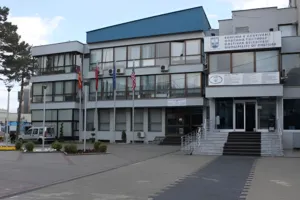
The Macedonian Flag in Gostivar Taken Down and Thrown on the Ground, While the Municipality Claims Nothing Was Removed
29.11.2026


29.11.2026

29.11.2026

29.11.2026

29.11.2026

29.11.2026

29.11.2026

29.11.2026

29.11.2026

29.11.2026

29.11.2026

29.11.2026

28.11.2026

29.11.2026

29.11.2026

29.11.2026

29.11.2026
28.11.2026

27.11.2026

29.11.2026

28.11.2026
27.11.2026
29.11.2026

28.11.2026

28.11.2026
29.11.2026
29.11.2026
28.11.2026

23.04.2026

23.04.2026

12.04.2026

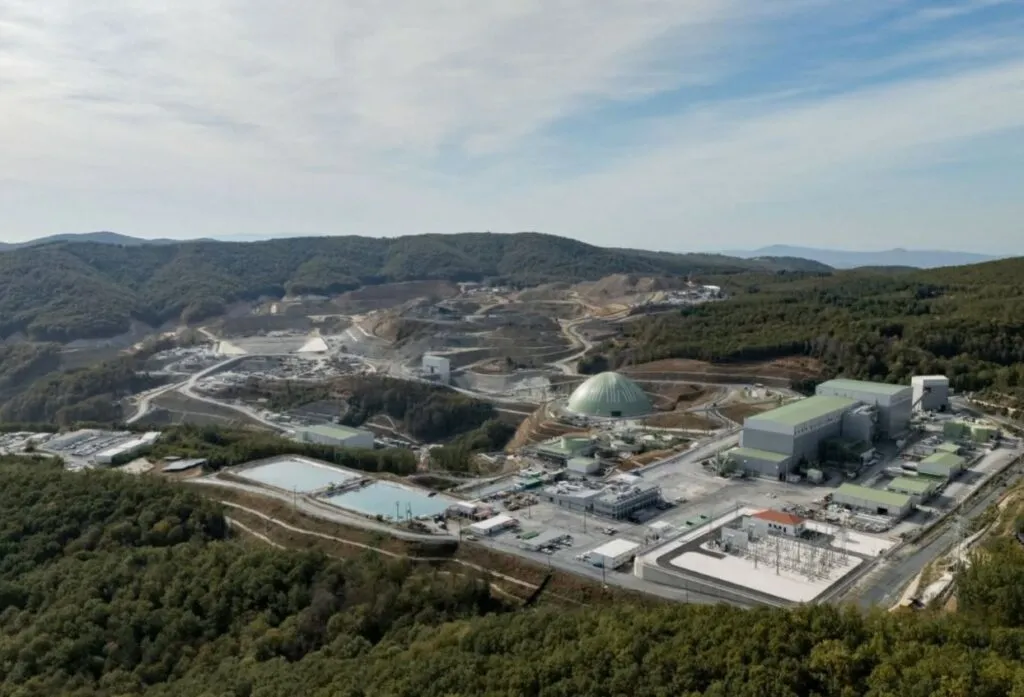
Inland in Halkidiki, in the forest belt near Megali Panagia, Greece has opened the "Skouries" copper and gold mine. Prime Minister Kyriakos Mitsotakis opened it on 8 October, the first concentrate was already produced on 8 September, and commercial production is expected towards the end of the year. According to the project estimates, the mine should yield around 30,400 tonnes of copper a year.
Since 23 November, four filter presses for tailings have been running there. Five are needed for the plant to reach full capacity. The presses squeeze the water out of the tailings so it can be reused, and the rest is stored in layers. The biggest test isn't how much copper comes out, but whether the mine can run at full capacity without endangering the water that the villages and the tourist coast depend on.
The Strumica region looks to Greece
The local initiative "Both Health and Work", which campaigns for investment in the Strumica region, cites "Skouries" as proof that mining can go hand in hand with tourism and agriculture. The initiative calls for "breaking the myths and fears" about the consequences of mining and mentions the Ilovica-Shtuka mining project as a potential new economic boost for the region.
The Greek example is only one side of the story. The other is what happens when a mine closes. On 23 November the European Commission approved a Slovenian state aid scheme of one billion euros just for the gradual closure of a coal mine. Extraction is due to stop by the end of 2033, and full remediation is planned by June 2045. Twelve years after the last tonne of ore, someone will still be paying.
The old mines are not a closed story
A new report by the association "Journalists for Human Rights", prepared with the support of the international organisation Earthworks, warns that the expansion of mining in Macedonia, Serbia and Turkey carries serious risks for the environment, health and democratic processes. The report singles out the mining areas of Sasa, Toranica, Zletovo and Lojane, as well as the industrial legacy in Jegunovce and Veles. Unremediated mining waste, it warns, can pollute groundwater, rivers and farmland for decades.
Interest in Macedonian minerals is growing. In April 2026 the US International Development Finance Corporation (DFC) approved five million dollars in support for restarting antimony extraction in Macedonia. At the same time, the domestic figures look odd: in August 2026, sale prices in mining were 21.7 percent higher year on year, while production volume fell by 10.1 percent and the number of employees by 8.0 percent. The world is paying more, and here less is being dug out.
So the question for Ilovica, and for every mine after it, isn't "mine or tourism". The question is whether the clean-up guarantee, with money and deadlines, gets written before the first blast - or whether we'll be chasing it decades later, the way today we are asking who will pay to clean up Sasa, Toranica, Zletovo and Lojane.
The latest 10 news from this category

The law says five working days. In practice, your six percent travels for up to two months, while the government...

A worker on 35,000 and a colleague on 55,000 denars get the same minimum. If the allowance hasn't arrived by...

A 167-year-old problem, a million-dollar prize and a proof longer than a thousand books. The computer says it's correct -...

Users are writing tools to protect their work from their own AI assistant. Anthropic says there is no sabotage, just...

A Japanese startup already working for the Defence Ministry is building its own model. Its boss is blunt: for defence,...

The passwords are safe, says 1Password. But users' names and email addresses ended up with an attacker who got in...

The Health Insurance Fund says the right to sick leave is not being cut. But who answers for it when...
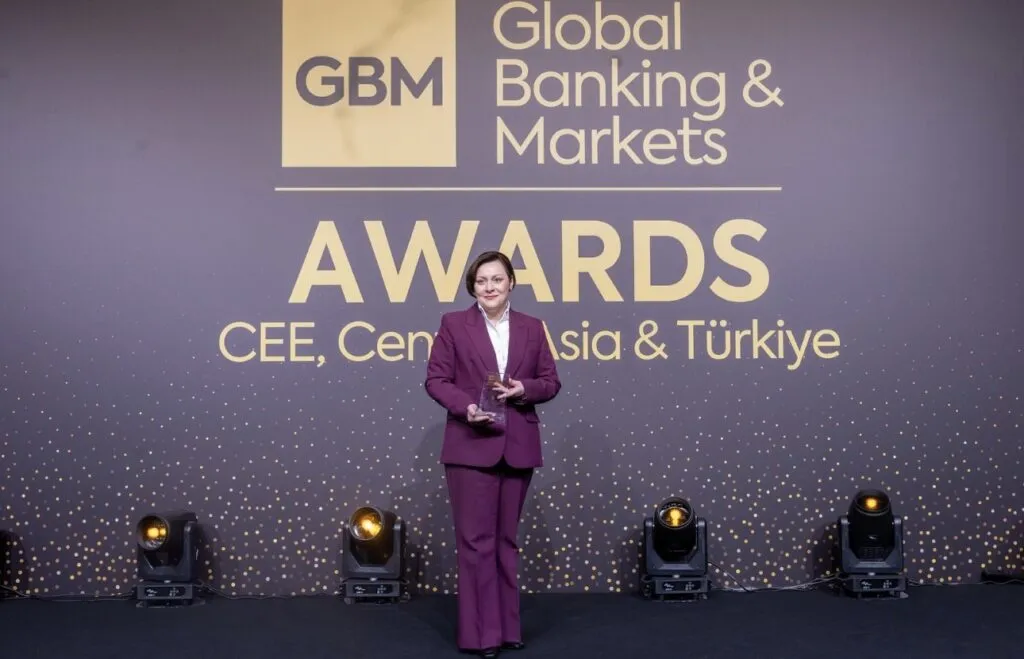
Over 150 investors, favourable interest rates and international recognition. The question of when the state will start borrowing less was...

723,811 citizens neither work nor look for work, one in four economically active young people is unemployed, and natural population...

Anthropic's boss wants a limit on AI that improves itself. In its stock market filings, his company calls exactly that...
If we need anything more, we'll write to the email you left.
Close the form?
What you've entered will be lost.
This site uses cookies - is that okay? Learn more
Be the first to know when Metla launches something new
Leave your email and we'll write to you when there's a new guide or something new on Metla.





