

The Macedonian Flag in Gostivar Taken Down and Thrown on the Ground, While the Municipality Claims Nothing Was Removed
29.11.2026


29.11.2026

29.11.2026

29.11.2026
29.11.2026

29.11.2026
29.11.2026

29.11.2026

29.11.2026

29.11.2026

29.11.2026

29.11.2026

28.11.2026

29.11.2026

29.11.2026

29.11.2026

29.11.2026

28.11.2026

27.11.2026

29.11.2026

28.11.2026

27.11.2026

29.11.2026

28.11.2026
28.11.2026

29.11.2026
29.11.2026

28.11.2026

23.04.2026

23.04.2026

12.04.2026
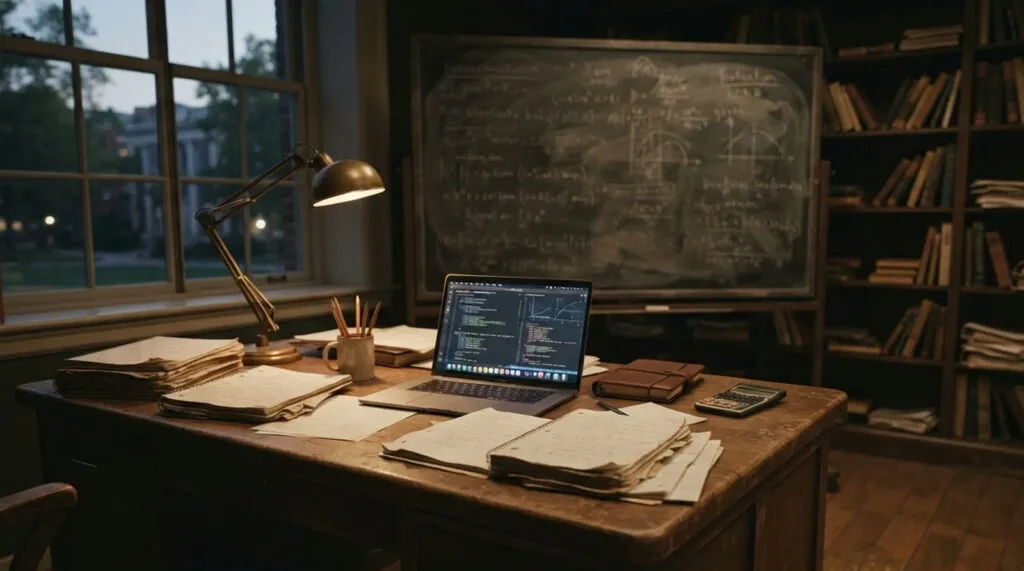
Since 1859, the world's best mathematicians have been racking their brains over one question. In November 2026 the answer was written by a man who works for a tech company - together with artificial intelligence. Mathematician Levent Alpöge, employed by the American company Anthropic, used its system Claude to arrive at a proof of the Riemann hypothesis, one of the hardest problems in the history of mathematics.
The proof was published on 20 November. The very next day, the organisations Lean FRO and the Mathlib Initiative, which check mathematical proofs by computer, confirmed that it is formally correct. "We are fully confident that Alpöge's proof of the Riemann hypothesis is correct and we congratulate him on this achievement," they said.
There's just one footnote. Formal confirmation is not the same as understanding. The argument is written in around 17 million lines of code. At 40 lines per page, that comes to more than a thousand books of 400 pages each. The computer says it's right. Humans still have to discover why.
What the hypothesis actually claims
Prime numbers - 2, 3, 5, 7, 11, 13 - are divisible only by one and by themselves. They are the bricks arithmetic is built from: every whole number greater than one is either prime or a product of primes (12 = 2 × 2 × 3). The problem is that they appear with seemingly no order at all. Between 11 and 13 the gap is two, between 23 and 29 six, between 89 and 97 eight.
In 1859 the German mathematician Bernhard Riemann linked them to the so-called zeta function and conjectured that the error in estimating how many primes there are up to a given limit can be precisely bounded - however far you go along the number line. No computer can check all infinitely many numbers, and not even billions of successful checks prove there isn't an exception somewhere further on. So what was needed was a proof that holds for all cases at once.
A million dollars - but not yet
The Riemann hypothesis is one of the seven Millennium Problems, for each of which the Clay Mathematics Institute offers a million dollars. The rules are strict: the solution must be published in an appropriate publication, at least two years must pass after publication, and the global mathematical community must accept it. So the cheque won't be written tomorrow.
Alpöge himself makes no secret of who ran the last lap. "Claude far outpaced me right before the finish line," he wrote in the published paper. He steered the work towards connecting two ideas from a simpler example, and then together they tried them on the harder problem.
Panic in the offices
This isn't the first breakthrough of its kind. On 6 October OpenAI released more than 700 non-peer-reviewed papers, claiming to have solved over 300 important mathematical problems. According to the journal Nature, some mathematicians spent nights going through the papers, afraid that their own research had become unnecessary overnight.
Mathematician Vjekoslav Kovač from Zagreb, who did his doctorate in the group of Fields Medal winner Terence Tao, believes the community met the rise of artificial intelligence unprepared. In his view, on one side huge resources will be spent on science that is unreadable to humans, with a certificate of correctness. On the other, experts will invest a lot of time extracting what is worth passing on to the next generations. Tao himself warned in Nature that artificial intelligence produces results faster than mathematicians can understand them.
Statistician Petra Posedel Šimović puts the essential point plainly: "Alpöge knew which direction to go and what was worth asking. Artificial intelligence can offer a very convincing but wrong proof, so every step has to be checked."
For those already worried about their online banking: the proof strengthens the mathematical foundations of some procedures important for cryptography, but that doesn't mean anyone will use it to crack codes.
What remains are the questions you won't find in any press release. If a machine writes the proof and another machine checks it, where is the human in that chain - author or witness? The Balkans know the scene well where the stamp is worth more than the content. Is mathematics heading there too - believing because it says "verified", not because we understand?
The latest 10 news from this category
Users are writing tools to protect their work from their own AI assistant. Anthropic says there is no sabotage, just...

The passwords are safe, says 1Password. But users' names and email addresses ended up with an attacker who got in...

Anthropic's boss wants a limit on AI that improves itself. In its stock market filings, his company calls exactly that...

Musk predicted far more sales of new vehicles, and the Cybertruck has finally found buyers on the used market. Expensive...
One shared meter for chatting and working, the same subscription - and an admission that the most active users will...

Daily limits, follower approval, a view of who the child is messaging - but the messages stay closed. And this...
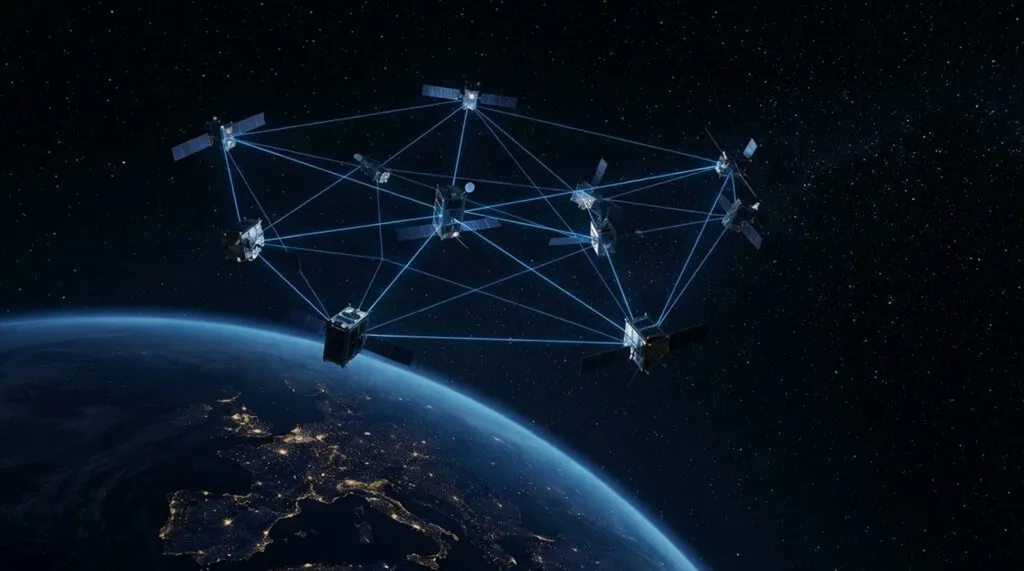
The US regulator has given Musk the green light for satellites that will crunch numbers for artificial intelligence. Who will...

A teddy bear that tells a child it's more fun than school and that it will keep their secrets. New...
Nvidia invested in Decart at a 4-billion-dollar valuation, and now watches it go to Amazon for almost twice as much....
Over 43 percent of new songs on Tidal were created by a machine, and 96 percent of fully AI songs...
If we need anything more, we'll write to the email you left.
Close the form?
What you've entered will be lost.
This site uses cookies - is that okay? Learn more
Be the first to know when Metla launches something new
Leave your email and we'll write to you when there's a new guide or something new on Metla.





