

Four Broken Ribs and Bleeding on the Brain: A Gostivar Woman Fights for Her Life, Her Husband Is in Bardovci, Not in Custody
28.11.2026


28.11.2026

28.11.2026

28.11.2026

28.11.2026

28.11.2026

28.11.2026
28.11.2026

27.11.2026
26.11.2026

28.11.2026

28.11.2026

27.11.2026

28.11.2026

28.11.2026

28.11.2026
28.11.2026

27.11.2026

26.11.2026
28.11.2026
27.11.2026
26.11.2026

28.11.2026
28.11.2026

27.11.2026
28.11.2026

27.11.2026

26.11.2026

23.04.2026

23.04.2026

12.04.2026


The sixteenth meeting of the Brdo-Brijuni Process ended in Ohrid with a declaration that sounds familiar. The leaders of Macedonia, Croatia, Slovenia, Montenegro, Albania, Kosovo, Serbia and Bosnia and Herzegovina once again called for an "objective, predictable and fair" approach to EU enlargement. Every candidate country, they say, should be judged solely on its own reforms and results.
What does the document say? That full and timely membership of the Western Balkans is key to the region's security and economy. That the countries of the region must not be treated as "third countries" but as part of Europe's transport, energy and digital networks. And that decisions on progress should be guided solely by EU law, international agreements, the rule of law and the Copenhagen criteria.
What it does not say
There is no year by which the region is supposed to join the Union. There is no Bulgaria either. The country keeping Macedonia's path blocked is not mentioned by name, even though the wording on "EU criteria and law" is, for Macedonia, the most important sentence in the whole document.
Asked whether she had received a promise that Zagreb and Ljubljana would stand on Macedonia's side in the dispute with Sofia, President Gordana Siljanovska-Davkova said she had not asked for one. She nonetheless described the support as clear. "We talked about the need for de-bilateralisation, especially when it comes to identity issues," she said, calling enlargement a "security imperative": without the Western Balkans, the EU leaves a geopolitical vacuum.
Siljanovska-Davkova welcomed the progress of Montenegro and Albania, arguing that after 2013 "there was almost no open gate for us" and that since the Thessaloniki summit in 2003 she had not seen a clear strategy for the region.
The guests from Ljubljana and Zagreb
Slovenian President Nataša Pirc Musar was the most direct: "I am convinced there is no strong Europe without enlargement of the European Union. And EU enlargement is, unfortunately, still far too slow." Croatian President Zoran Milanović backed membership for everyone but warned that the EU's strength lies in trade and the customs union, and that trying to turn it into a geopolitical alliance carries the danger of domination by individual members.
Both praised the atmosphere in Ohrid as the most constructive yet, with no insults and a culture of dialogue. When a summit boasts that it went by without insults, what exactly happened at the previous ones?
Sixteen meetings, and the declarations are still asking Brussels for a "fair approach". How many more declarations will be signed before someone in the EU says the name of the problem out loud?
The latest 10 news from this category
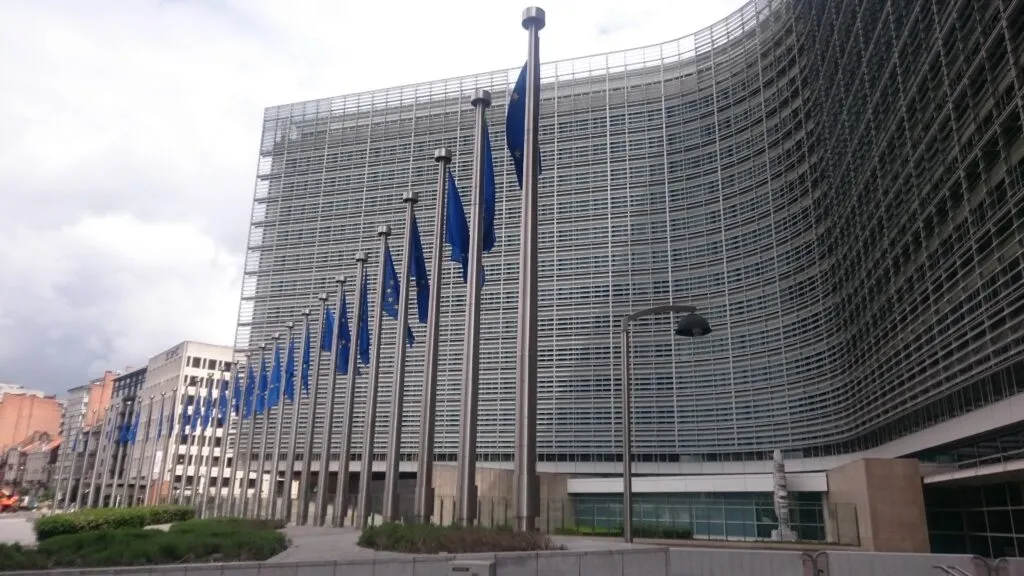
Growth Plan money is flowing, roaming is getting closer, and the first cluster is standing still. The PM compared Montenegro's...

Two Albanian parties are arguing over which of them did more for the language. The decision on the bar exam...

The law requires the student meal subsidy to be adjusted for inflation every year. Minister Janevska says it isn't clear...

Ten years is enough for any politician, says the leader. There is no challenger, the leadership won't let him go,...
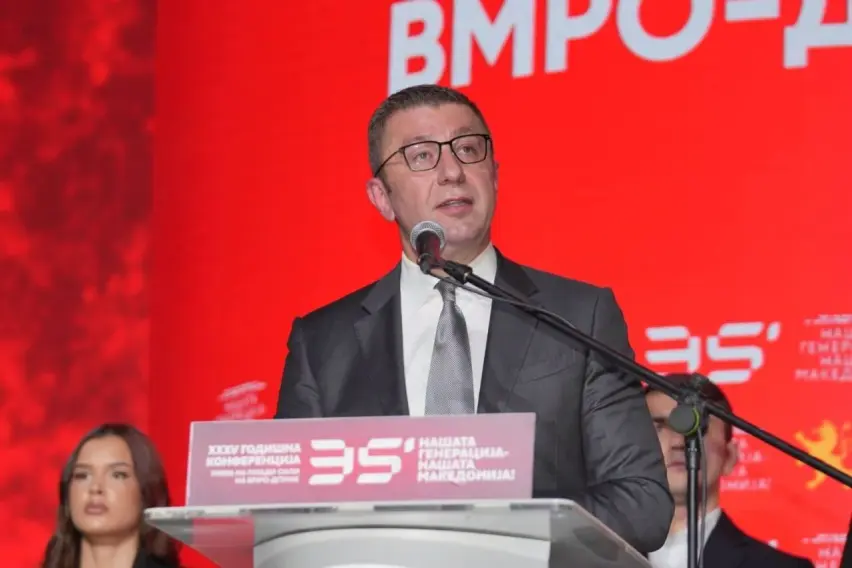
The announcement at the party conference sounds like an answer to the housing crisis. Between the podium and the key...

A protest in the street after a new case from Bitola, an amendment voted down in parliament. Reports will now...

Seven months of reports, court protection orders, then murder. The indictment reached nine officers on the lowest rung - the...

The minister says there's no retroactivity, just a law that hadn't been applied until now. And why wasn't it applied?...

On the Constitution's 35th anniversary, the president counted the changes and told MPs they vote by their own conviction. It's...

The international community brokered 21 of the 36 amendments. The president wants guarantees that the next change won't be just...
This site uses cookies - is that okay? Learn more
Be the first to know when Metla launches something new
Leave your email and we'll write to you when there's a new guide or something new on Metla.





