
Koraboski's Trial Begins: Custody Came Only After the Public Revolted
27.11.2026


27.11.2026

27.11.2026

27.11.2026

27.11.2026

27.11.2026

27.11.2026

27.11.2026

26.11.2026

25.11.2026

27.11.2026

27.11.2026

26.11.2026

27.11.2026

27.11.2026
27.11.2026
27.11.2026
26.11.2026
25.11.2026

27.11.2026

26.11.2026

25.11.2026

27.11.2026

27.11.2026
24.11.2026

23.04.2026

23.04.2026

12.04.2026

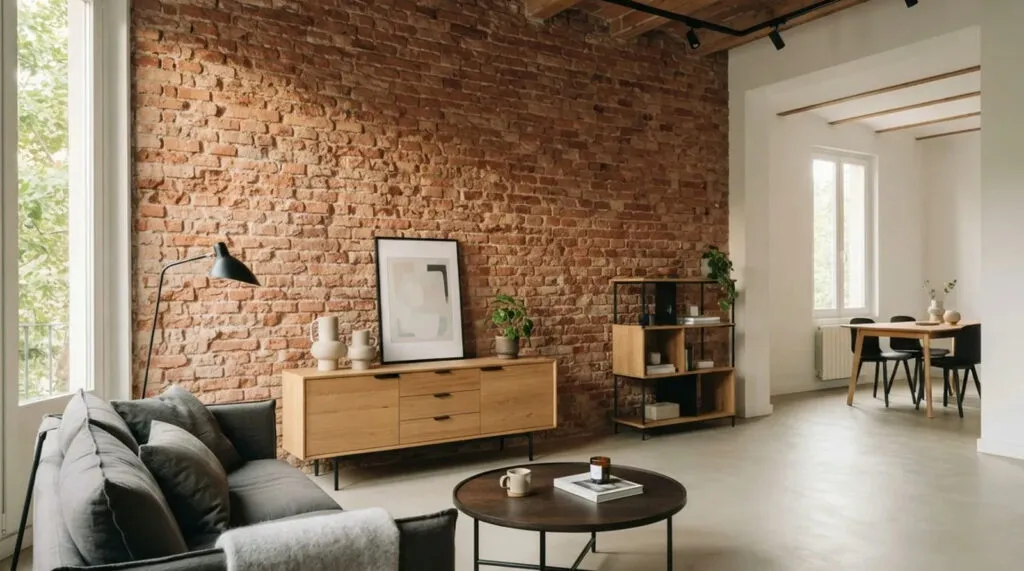
A smooth white wall is no longer the only option. More and more renovations bring back the brick hiding under the plaster, keep the formwork marks on concrete columns, or uncover old vaults hidden behind a dropped ceiling. The reason is simple: a rough surface catches side light, draws shadows and changes its look over the course of the day, which a smooth wall can't do. On top of that, it tells the building's story and escapes the catalogue-clone apartment.
But here's the trap: what looks authentic in an old building can look, in another, like construction the builders walked away from halfway. In the Balkans, bare brick is what we usually see on unfinished houses - so why does it look like luxury indoors? The answer lies in the criteria. Across ten projects by interior designers, here are the surfaces worth leaving uncovered, and what to watch out for when it comes to insulation, damp and maintenance.
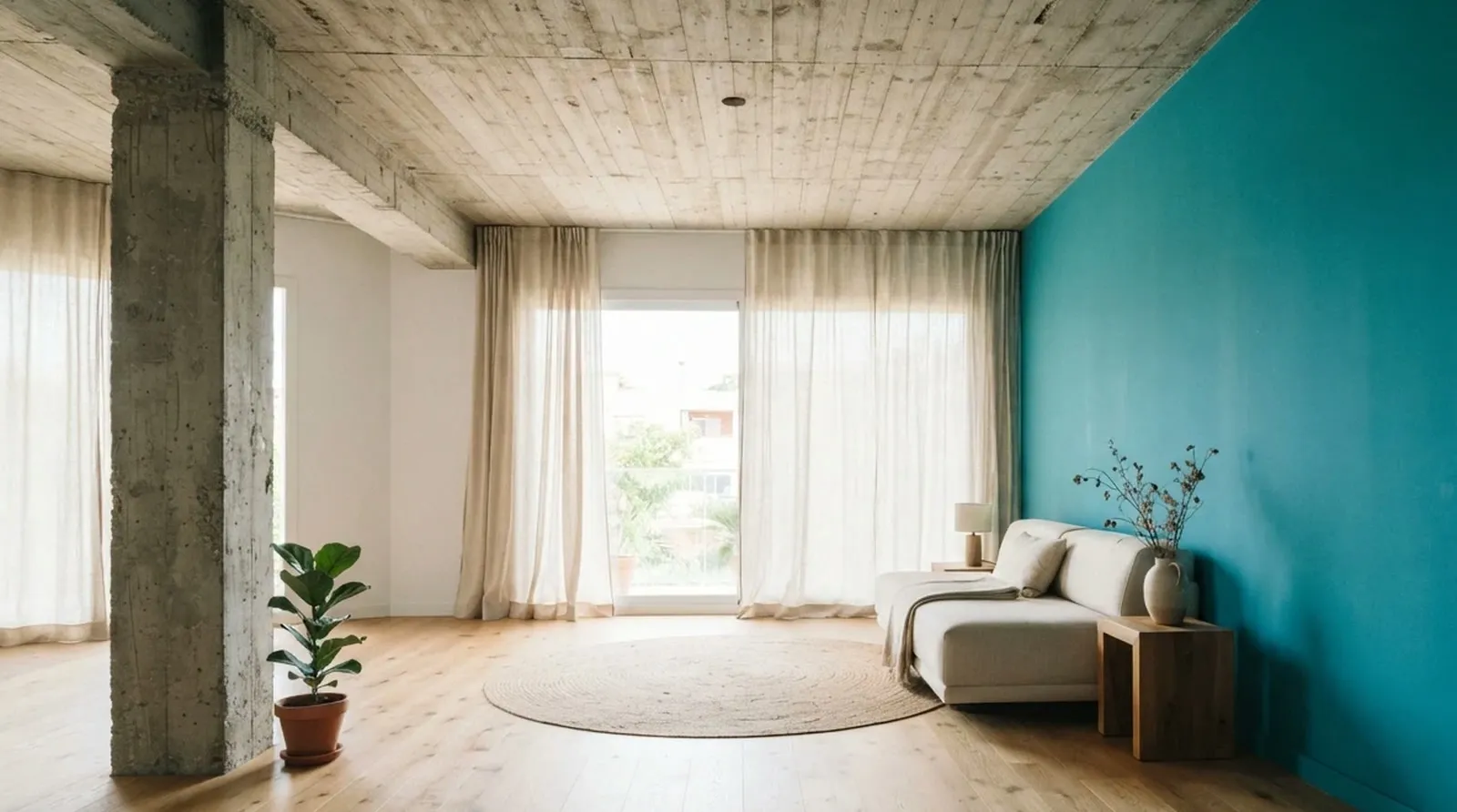
Concrete needs a colour contrast. Exposed concrete has a strong character: the formwork marks, the small irregularities and the grey tone enrich a space, but when it covers too much surface, it hardens the atmosphere. The fix is colour. In one apartment, the Moroni Architettura studio kept the original concrete columns and fireplace and painted one wall a vivid turquoise. If that intensity isn't your thing, blue-greens, terracotta and ochre tones work well too. Whatever the colour, repeat it across several elements so it doesn't end up trapped on a single wall.
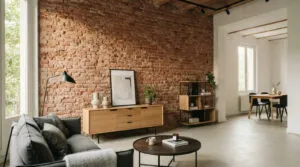
Before you chip, do a test. In a 65-square-metre apartment in Manlleu, near Barcelona, the Júlia Brunet studio kept the brick wall and the steel ceiling beams, because they were original parts of the building. "We chose a coherent palette and honest materials to create a calm atmosphere," says founder Mireia Torruella. Brick under plaster is often a pleasant surprise, but it isn't always worth bringing back. The best approach is to strip the covering from a small area, about one square metre, and see whether the bricks and joints are in good condition. If you find hollow bricks, remnants of old installations or badly damaged material, it's better to cover the wall again.
A wall that organises the home. In a 160-square-metre apartment, the Coblonal studio uncovered a load-bearing brick wall and arranged the living room, kitchen and dining area around it. For company it chose microcement, oak and black sheet metal, a completely restrained combination in which the brick stands out while the space doesn't look rustic. And if your home has no such wall? There are reclaimed brick tiles, 1 to 2 centimetres thick, that keep the traces of use, decorative panels that imitate any material, and ceramic cladding in all sorts of formats and colours.
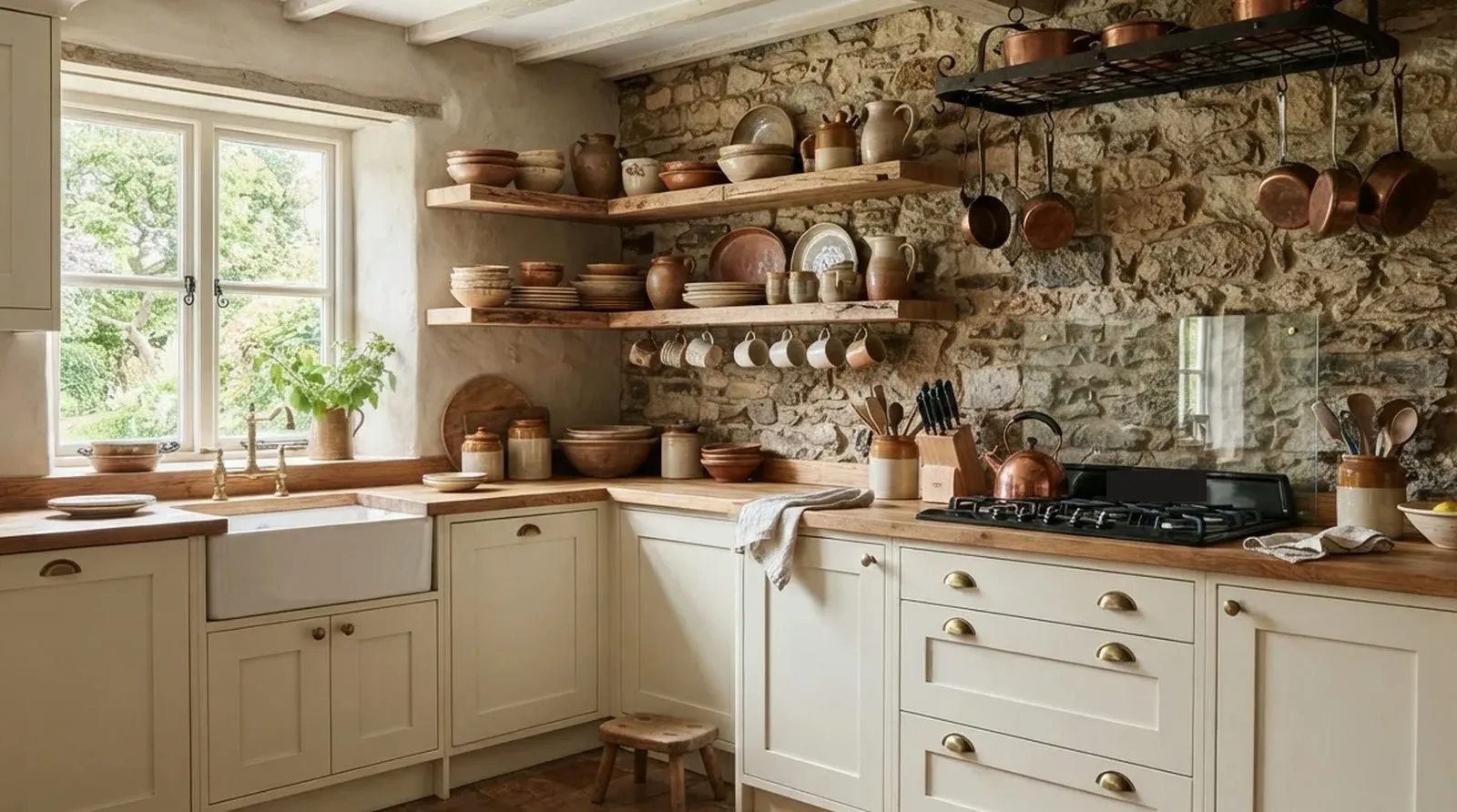
Stone in the kitchen needs protection. Irregular stonework, with pieces of different sizes and visible joints, gives a kitchen the spirit of an old village house. The AKB Design studio left the stone exposed along the whole work wall and paired it with solid-wood shelves and clay pots, while the cream-lacquered base units reduced the visual weight. Because stone is porous and has joints, it needs protecting where grease splashes: with a protective coating for natural stone that repels grease, or with a tempered glass panel behind the hob. If you like the effect but don't have such a wall, there is cladding made of thin slices of natural stone that glue straight onto the wall and take up almost no space.
The ceiling counts too. When a dropped ceiling comes down, an original floor slab with character sometimes appears. In one apartment, X Arquitectos left the concrete slab exposed, with the marks of the formwork and of old repairs, along with the bricks between the windows. For balance they chose white walls, light oak on the floor and floor-to-ceiling linen curtains that filter the light and calm the whole. But this calls for checks: the condition of the structure, corrosion of the reinforcement (in Spain, crumbling concrete in buildings from the fifties to the seventies is a particular problem) and where the services will run, in exposed metal conduits or along another route. And the acoustics: without the void of the dropped ceiling, noise from the flat upstairs gets through more easily and sound echoes more. Curtains, rugs and upholstered furniture soften the echo.
Material from the landscape. Not every stone suits every architecture. Origin, colour and finish determine the result, so when you restore a wall or clad a surface, local material gives the most coherent interior. In Spain that means marés in the Balearics, slate in the north, granite in Galicia. At Des Torrent, a 500-square-metre house near Cala Santanyí in Mallorca, designer Ángel Martín translated the island's rustic architecture into walls of natural stone, travertine and solid wood. "We wanted a home that speaks of the land, of time, of what's authentic," he says. What would that material be here - Prilep marble, the river stone of village houses?
Stone in the bathroom, without fear of damp. Natural stone can go in a bathroom too, but the choice matters. Marble, limestone and sandstone are more porous and need a hydrophobic coating against moisture, splashes and soap residue. Granite and quartzite are far more resistant. In a 170-square-metre apartment in Lisbon's Chiado district, Roof Design Studio chose panels that look like light, textured stone but are made from recycled PET plastic. They don't absorb water, they're light, and they glue straight onto the existing tiles, with no demolition.
Painting the brick is the middle way. If you like the brick but its reddish tone darkens the room, paint it. In one bedroom, Coblonal painted the original wall behind the bed white: the relief stayed, and the room got light. Which paint? Mineral, silicate or lime paints let the wall breathe and age without peeling, although durability depends on the substrate, preparation and application. For a softer effect, a diluted limewash lets some of the original colour show through, especially at the edges.
Rough and polished stone together. On an island in Georgian Bay, Ontario, Canada, Thom Fougere Studio and Bureau Tempo designed Pine Island Cottage, a 325-square-metre house reachable only by water. The rocky landscape inspired the bathroom too: a wall of stone gathered on the site itself, split to show its natural, unpolished side, in grey, ochre, reddish and brown tones. In front of it, a custom double basin in fine limestone takes up the entire wall. Pay attention to the joints: mortar in a warm earth tone, almost flush with the stone, gives a flatter, more contemporary surface than a recessed joint, which outlines every piece.
How to keep a rough surface from looking like unfinished work. In one house, the Reigo & Bauer team turned dark, mahogany-dominated interiors into bright, contemporary spaces. The rough stone columns in the living room, which frame the view of the forest, stayed as part of the original architecture, and soft tones arrived around them: wide-plank oak, solid stairs in Italian limestone, curved sofas and a handleless white kitchen. The secret is in the details: the joints, the junctions with ceiling and floor, and the choice of the other materials. If everything demands attention, the whole loses its balance. A lot also depends on the light: light coming from the side and grazing the wall will bring out the relief, while frontal light will make the surface look flat.
A bare wall isn't a saving on plaster; it's a decision that takes more know-how than a smooth one. Done with restraint, brick and stone tell what no catalogue can: that the house has a past.
The latest 10 news from this category
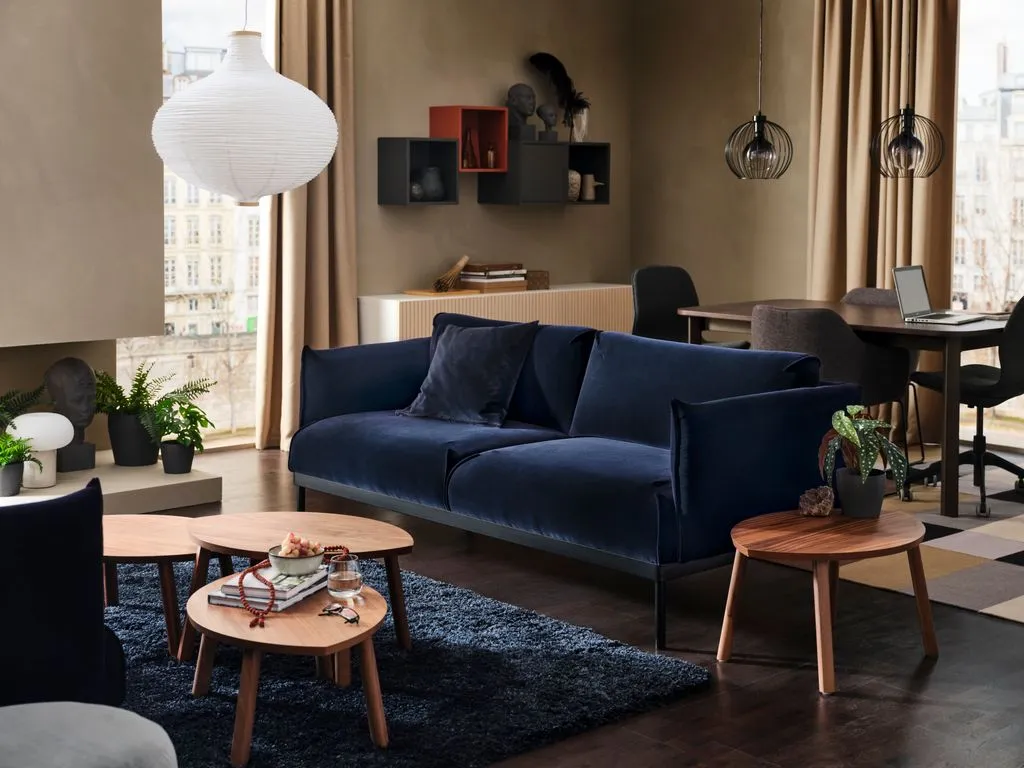
The tiny sofa, the narrow coffee table and one more chest of drawers "for odds and ends" rarely give you...

Islands with curved ends, tables with round tops and cabinets without sharp edges. You don't have to tear the kitchen...

The eight-time MotoGP champion doesn't keep his bike in the garage but in a glass case at the entrance. The...
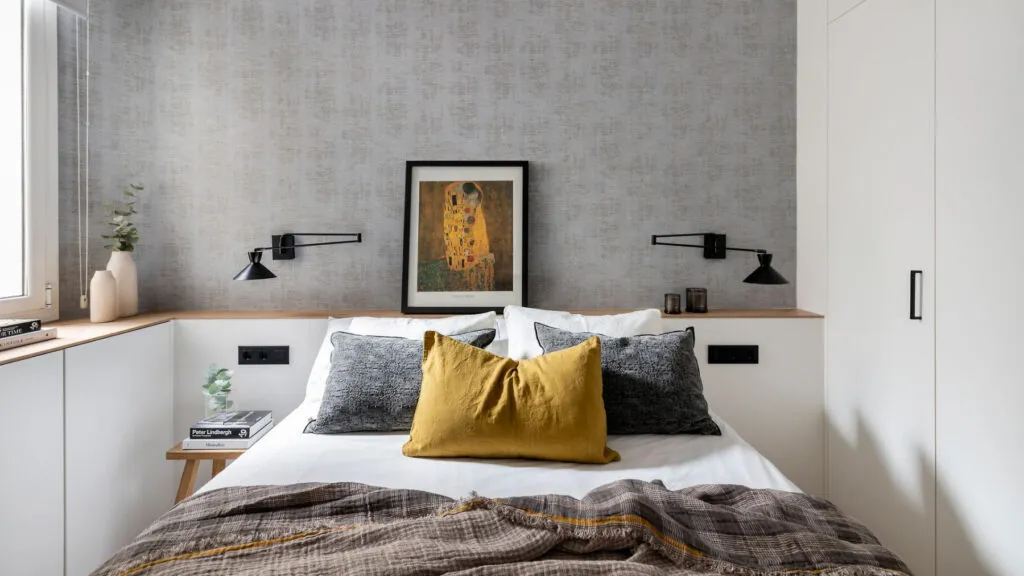
At least 60 centimetres of free space beside the bed, a wall lamp instead of a bulky nightstand, and colours...

Magazines have no kids, dogs or crumbs. Real homes do, and that's exactly why these pieces turn into a battle...

"More and more clients want a living room people actually want to stay in," says the designer. The TV can...

We use the bedroom mostly in the evening, under artificial light, and that is when white loses its glow. Ten...

Endless corridors and a kitchen hidden behind a door, the picture of so many flats from the seventies and eighties....
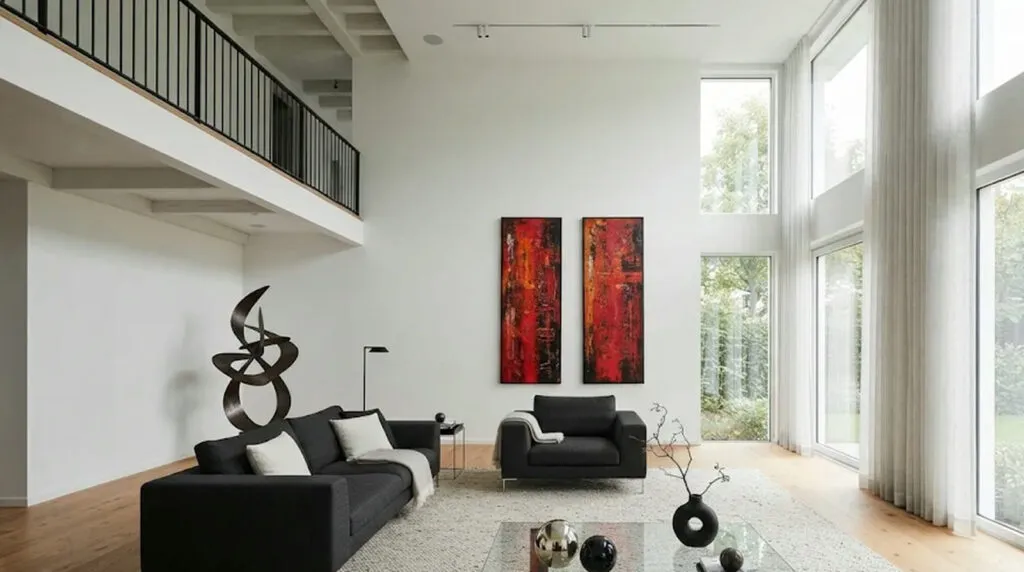
Pilar Miró's son lives in black and white, with abstract canvases in red and a 75 m² terrace. Minimalism for...

A cooperative's building from 1923, one staircase fewer and a dining area under the stairs. A renovation where the old...
This site uses cookies - is that okay? Learn more
Be the first to know when Metla launches something new
Leave your email and we'll write to you when there's a new guide or something new on Metla.