Father and son beat up a doctor and a nurse outside the Jane Sandanski clinic: the law provides up to five years in prison, and almost 70% of attacks aren't even reported
23.11.2026


23.11.2026

23.11.2026

23.11.2026

23.11.2026

23.11.2026

23.11.2026

23.11.2026

22.11.2026

22.11.2026

23.11.2026

23.11.2026
22.11.2026

23.11.2026
23.11.2026

23.11.2026

23.11.2026

22.11.2026

21.11.2026

23.11.2026

22.11.2026

21.11.2026

23.11.2026

23.11.2026

22.11.2026

23.04.2026

23.04.2026

12.04.2026

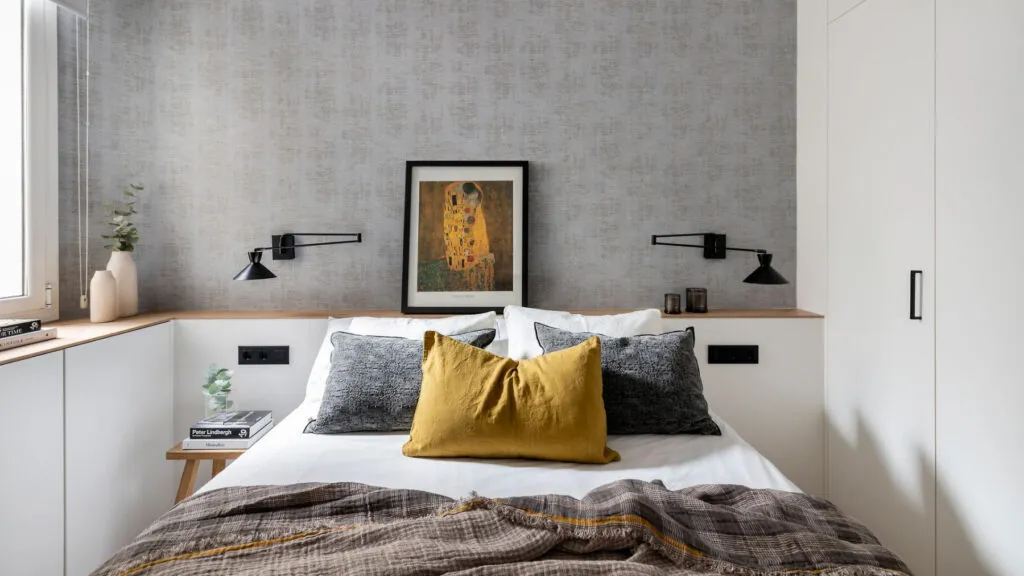
When a bedroom is small, the first reflex is to use every corner: one more shelf, one more chest of drawers, one more armchair "just in case". The result is almost always the same problem in a different form. The room fills up, the paths narrow, and sleep suffers. Designers Luís Peixoto and Rúben da Silva of the Spanish studio Brákara Studio have a simple formula for it: fewer objects doesn't mean less function. The key is choosing better.
Fewer pieces, better chosen. Before you buy anything new, look at what you already have and what's surplus. A bed, a well-planned wardrobe and a surface by the headboard are usually enough. The designers' trick: picture the room empty and bring back only the essentials. Furniture with no clear function, or that only serves as somewhere to throw clothes, is most likely unnecessary. The armchair nobody uses might be more needed in the living room.
Decoration, only as much as needed. Cushions, frames, vases, candles and stacked books easily turn a small bedroom into a storeroom for knick-knacks. The advice: keep two or three things you genuinely love, say a picture above the bed, one plant or a nice lamp. And every now and then, look at what's on display, because whatever adds nothing only distracts.
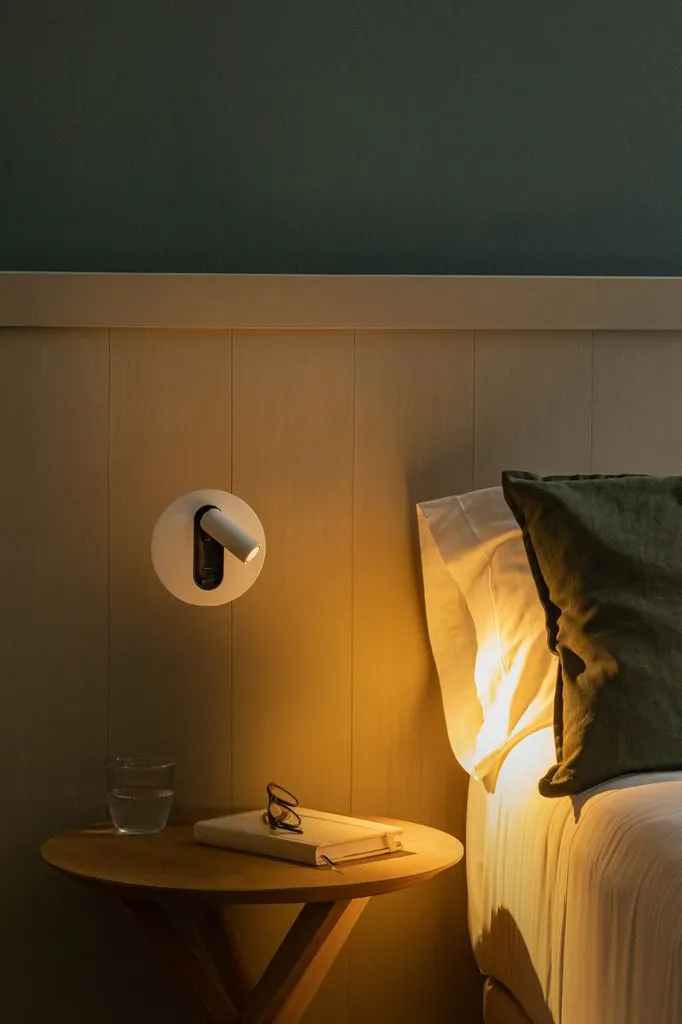
Light or floating nightstands. One of the most common mistakes is a bulky nightstand bought out of habit, without measuring the space. Floating shelves, a small shelf built into the headboard or a wall-mounted table work better. The floor stays clear, cleaning is easier, and the room looks more open. In a narrow bedroom, one nightstand can go altogether and be replaced by a wall lamp with a small shelf at mattress height.
Room to get past. There should be a clear path around the bed, to the wardrobe and to the window, with no obstacles. The designers' rule of thumb: at least 60 centimetres of free space on the sides of the bed and in front of the wardrobe. If that's impossible, the bed may be too big or placed in front of other furniture. Wardrobes with sliding doors help, because they need no room to open.
Natural light, unobstructed. Tall furniture by the window and heavy curtains are a classic mistake. Better are light linen or cotton curtains in pale tones, combined with a blackout blind that goes up during the day if you need total darkness to sleep. A mirror opposite the window or on the wardrobe door multiplies the light and makes the room look bigger.
Lighting that helps. Light can be built into the room too, just like the wardrobe. Brákara suggests LED strips in the headboard, lights inside the wardrobe, or wall lamps instead of table lamps. That way surfaces stay free, and the light is warmer and nicer for reading before bed. Adjustable wall lamps point the light where it's needed, and dimmable bulbs change its strength, from bright morning light to soft evening light.
The bed, in the right size. The bed is the centre of the room and the piece of furniture that takes up the most space. So it needs careful measuring and some thought about how you live with it every day: a 135-centimetre bed can be more practical than a 150. A simple headboard often works better than a big upholstered one, beds on visible legs look lighter, and a bed with a lift-up base gives you storage without yet another piece of furniture. A plain bedspread and a few cushions, and the room instantly looks tidier.
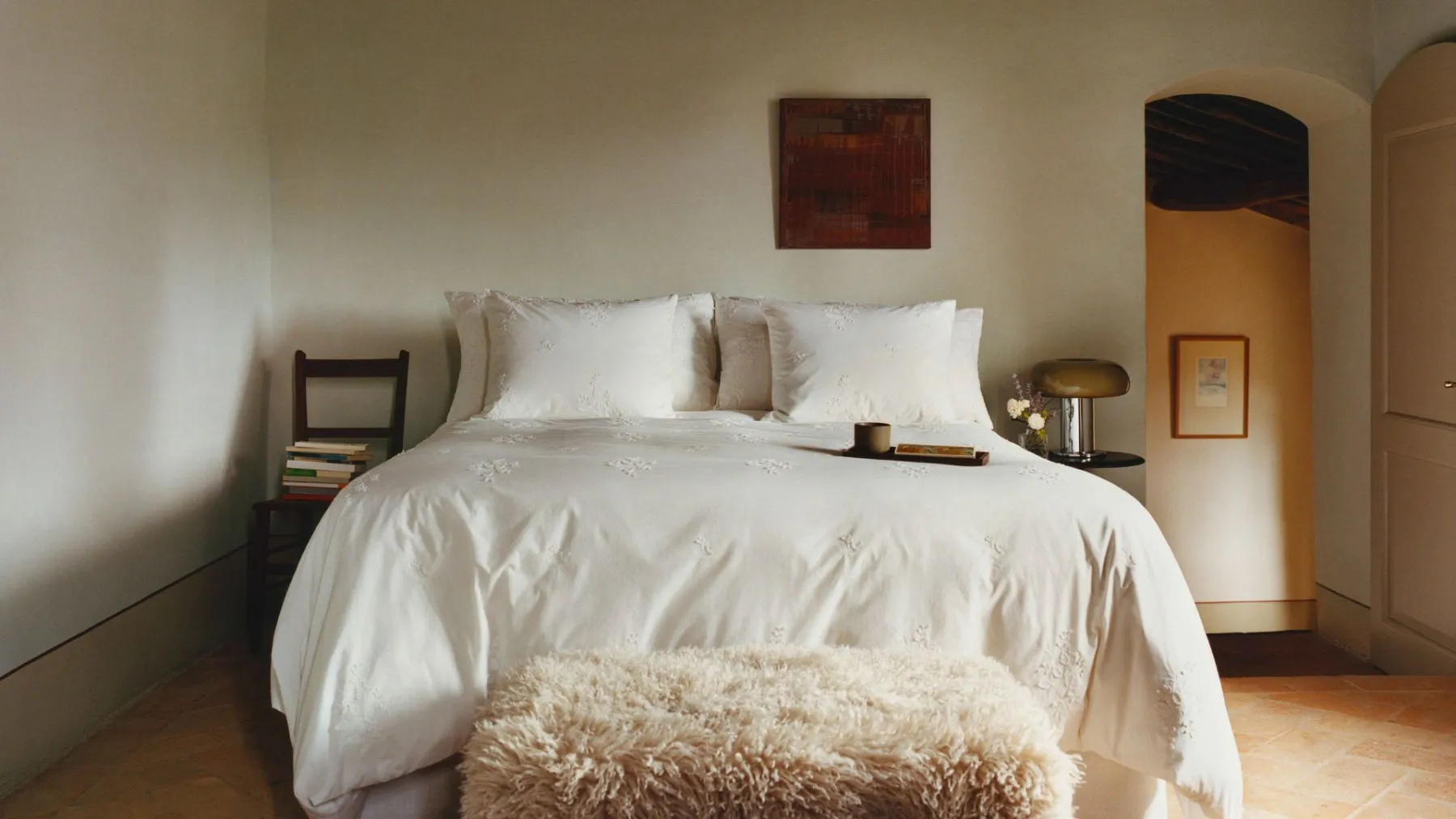
Floor-to-ceiling wardrobes. Made-to-measure furniture gathers all the storage in one place and builds it into the room itself. Wardrobes up to the ceiling use the space people most often forget, and flat doors in the wall colour almost disappear. Custom furniture also solves awkward spots, like a pillar, a low window or a corner.
Colours that add square metres. Light, warm tones such as off-white, sand or soft grey reflect light and visually "push" the walls back. If the custom furniture is also in the wall colour, the room reads as one whole, and light wood or a neutral floor makes it look bigger still. Colour isn't banned: a bolder headboard, contrasting textiles or a single accent wall add character. Just not too many different colours at once.
The designers close with a thought that applies to every flat, not just the bedroom: the real luxury in a small bedroom is the feeling of calm, order and comfort. A well-designed space isn't the one that holds the most things. When a flat has to be the pantry for winter preserves, the wardrobe for the whole family and the office too, how many people even have a bedroom that's only for sleeping?
The latest 10 news from this category

Magazines have no kids, dogs or crumbs. Real homes do, and that's exactly why these pieces turn into a battle...

"More and more clients want a living room people actually want to stay in," says the designer. The TV can...

We use the bedroom mostly in the evening, under artificial light, and that is when white loses its glow. Ten...

Endless corridors and a kitchen hidden behind a door, the picture of so many flats from the seventies and eighties....
Pilar Miró's son lives in black and white, with abstract canvases in red and a 75 m² terrace. Minimalism for...

A cooperative's building from 1923, one staircase fewer and a dining area under the stairs. A renovation where the old...

An 11-million-euro house with a football pitch, a recording studio and two floors underground. The best spots by the window,...

Black velvet sofas, a sculpture made of railway sleepers and a terrace table under lamps made from recycled bottles. A...

The layout of the flat has barely been touched. Colour did the work, and not as decoration, but as a...

A tiger in the hallway, a cherry-red bookcase and a kitchen that looks nothing like a flat kitchen. A hundred...
This site uses cookies - is that okay? Learn more
Be the first to know when Metla launches something new
Leave your email and we'll write to you when there's a new guide or something new on Metla.