Man Suspected of Strangling His Partner Escaped Police Through a Window in Bitola: She Is in a Shelter, He Is Free
15.11.2026


15.11.2026

15.11.2026

15.11.2026

15.11.2026

15.11.2026

15.11.2026

15.11.2026

15.11.2026

15.11.2026

15.11.2026
15.11.2026

14.11.2026

15.11.2026

15.11.2026

15.11.2026

15.11.2026

14.11.2026

13.11.2026

15.11.2026

14.11.2026

13.11.2026

15.11.2026

15.11.2026

14.11.2026
15.11.2026

15.11.2026

14.11.2026

23.04.2026

23.04.2026

12.04.2026

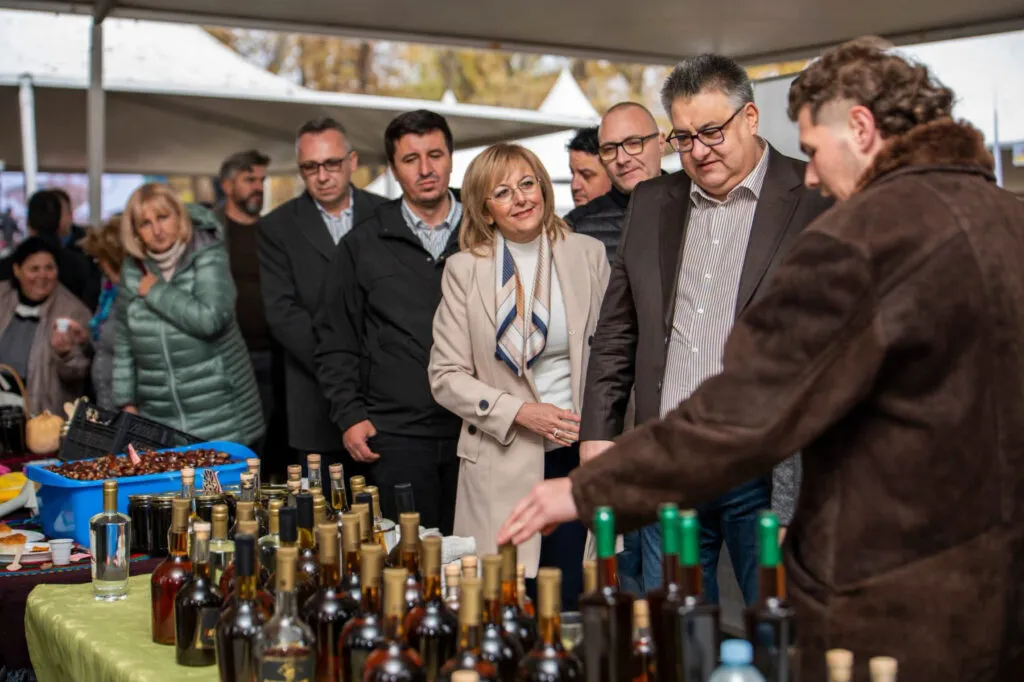
Ajvar, lyutenitsa, madzhun, jams, hazelnut butters, dairy products and cured meats, wine, rakija and fruit juices. Yesterday, despite the rain, the fair "Taste the Tradition Through Healthy Home-Made Food" was held at the Shell in Skopje's City Park, where local producers from all over Macedonia brought their table, with a special section for organic products and a programme of folk music, singing and dance groups.
The fair was organised by the association "Zh'ta" from Kavadarci, selected through a public call, under the patronage of the Ministry of Agriculture, Forestry and Water Management. A budget of one million denars was provided for the event through the 2026 Programme for Financial Support of Rural Development.
The promise: a contract before the harvest
At the opening, Minister Borche Serafimovski said that tradition is a market advantage. A family that sells a finished product with a recognisable origin, instead of the raw material, keeps a bigger share of the value on its farm, he said, and that money can go into a new orchard, equipment or a wider range of products. He also sees room for young people: a food technologist who comes up with a new way to process local fruit, or someone who knows online selling and helps small farms sell in other cities.
The more concrete part of the speech was about purchasing. The ministry, says Serafimovski, is finalising the draft Law on the Regulation of Agricultural Product Markets, with clearer rules for contract farming and organised purchasing: a written contract in which the terms of delivery and the payment deadline are set in advance, and support for smaller farms to band together. He also announced a model that will link research by universities and institutes with support measures, with data on soil, water and how varieties behave in drought and high temperatures, as well as support for the collection of native varieties in the gene bank of the Agricultural Institute.
The ajvar at the Shell is the easy part. The hard part is the farmer who, year after year, finds out who will buy his crop and at what price only once the crop is already ripe. A written contract agreed in advance could change that - if the law makes it to parliament and if anyone actually enforces it on the ground. Will farmers have that signature before the next harvest?
The latest 10 news from this category

The Associated Press and Euronews filmed the cows in the streets. At home, the municipality and the Food and Veterinary...

Instead of waiting up to 36 hours for a court decision, an officer will be able to remove the reported...
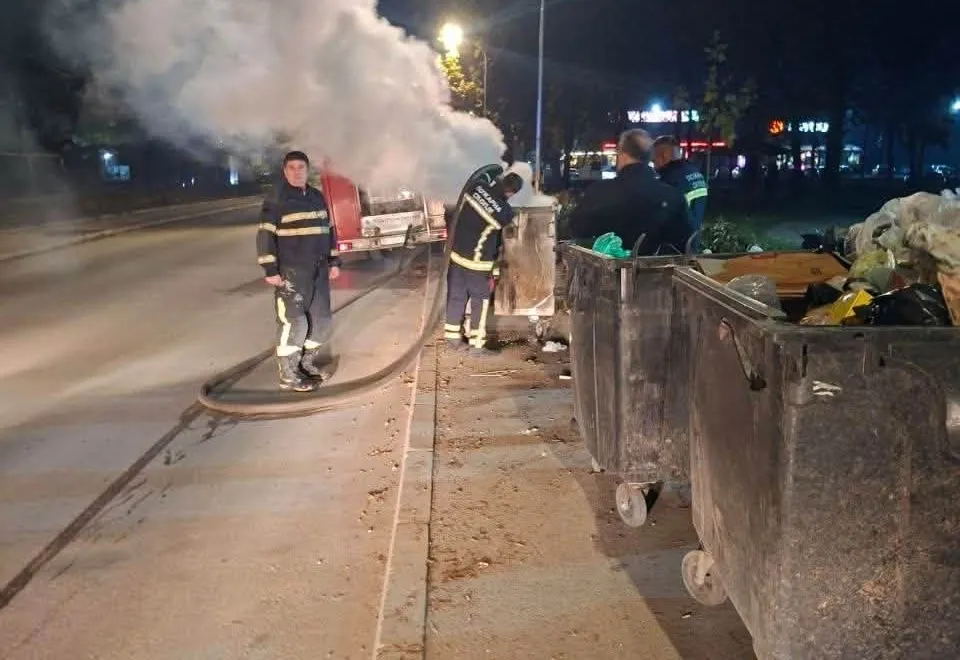
How many bins burned hasn't been said, the motive isn't known, but the political framing was in place before the...

Kisela Voda municipality is building the network and a reservoir for 27.5 million denars, the ministry a pumping station. Until...

Teams of teenagers start from problems everyone knows, from the queues at the ticket office to learning that doesn't reach...

A girl with a broken ankle, another with a facial wound, a woman with a cut arm. The wind was...

A pool, a sports complex, multi-storey car parks, a water supply for Bistrica. "Bitola is waiting," the activists wrote. The...

Machinery for the bigger piles of waste, schools, public enterprises and companies in the field. And a message from the...

1,897 reported cases in ten months. The new law brings emergency removal from the home and electronic tags, for which...

500 square metres, three playrooms, more than 50 children. Good news without reservation, but the number parents wait for most...
This site uses cookies - is that okay? Learn more
Be the first to know when Metla launches something new
Leave your email and we'll write to you when there's a new guide or something new on Metla.