Two-Day-Old Baby Loses Part of Her Thumb at Skopje Maternity Clinic: The Nurse Is Moved to the Milk Kitchen, the Committee Gets 60 Days
20.11.2026


20.11.2026

20.11.2026

20.11.2026

20.11.2026

20.11.2026
20.11.2026

20.11.2026

19.11.2026

18.11.2026

20.11.2026

20.11.2026

19.11.2026

20.11.2026

20.11.2026

20.11.2026

20.11.2026

19.11.2026

18.11.2026

20.11.2026
19.11.2026

18.11.2026

20.11.2026

20.11.2026

19.11.2026

20.11.2026

19.11.2026

18.11.2026

23.04.2026

23.04.2026

12.04.2026


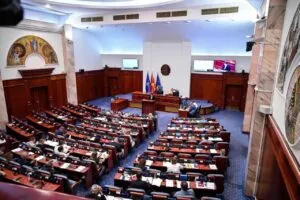
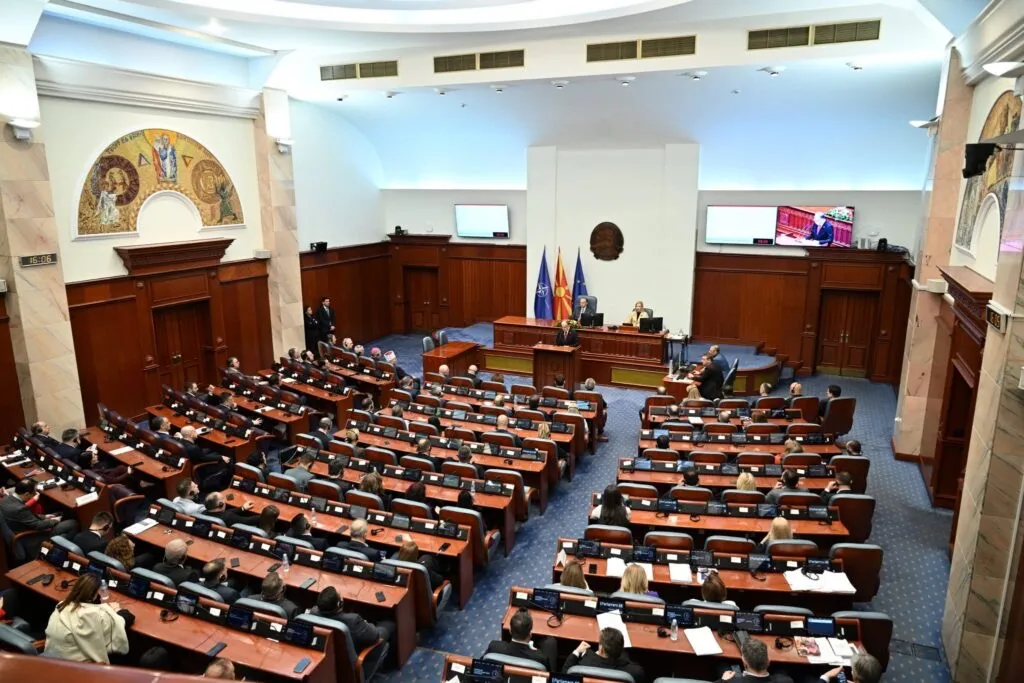
On 12 November, the opposition had two hours to question the prime minister and ministers. It used zero minutes. The two hours were eaten up by breaks.
The first one-hour break was requested by the coordinator of the DUI parliamentary group, Rina Ajdari, on the grounds that ministers who were supposed to answer were missing from the chamber. When it ended, another one-hour break was requested by Daniel Stojčeski, an MP from the ruling ZNAM. After the second break, Speaker of Parliament Afrim Gashi declared that the two hours for opposition questions had expired. Heckling, insults and procedural objections followed, and the session ended without a single question being asked.
A new interpretation, after the old damage
Four days later, Gashi announced a new attempt, for Wednesday, 18 November. This time, by agreement with the coordinators of the parliamentary groups, breaks won't be deducted from the two hours. "There will be no breaks unless they are essential. There will be two hours of actual questions," he said.
Still, Gashi maintains that his earlier reading of the Rules of Procedure was correct: the two-hour period starts once the agenda is adopted, regardless of breaks, because ministers plan their arrival around a fixed slot. He also claims that ministers' attendance has improved significantly, that almost all of them show up for opposition questions, and that he has warned them, but that his powers are limited.
If almost all the ministers show up, why was the first break requested precisely because they weren't there? And if the rule was right, why is it changing now?
Gashi's promises have a history
At the briefing, Gashi again announced talks between the government and the opposition on a Badinter majority for the stalled laws, with priority on the law on adequate and equitable representation. That law went through the entire procedure, but at the vote the majority had only 14 votes from MPs of non-majority communities, against 18 opposition MPs from those communities, led by DUI. A meeting between the leaders of the ruling parties and Ali Ahmeti "has not happened yet," Gashi said, adding: "Personally, I have no problem meeting Ahmeti."
In August, Gashi called the blockades "abuse" and promised the laws would come to a vote in September. In September he said "soon". Now it's mid-November, and sitting in the drawers, alongside the representation law, are amendments to the Law on Local Self-Government on referendums to recall mayors, the law on higher education and around a dozen laws that need to be aligned with the Law on Senior Civil Service.
Parliament is where the government is supposed to answer. When two hours of scrutiny vanish into breaks and laws wait for months, the question is simple: on Wednesday, will we hear answers, or just a new interpretation?
The latest 10 news from this category

Seven months of reports, court protection orders, then murder. The indictment reached nine officers on the lowest rung - the...

The minister says there's no retroactivity, just a law that hadn't been applied until now. And why wasn't it applied?...

On the Constitution's 35th anniversary, the president counted the changes and told MPs they vote by their own conviction. It's...

The international community brokered 21 of the 36 amendments. The president wants guarantees that the next change won't be just...

Vredi pulls out Artan Grubi's signature, SDSM says it's about 1.85 percent of Mijalkov's confiscated shares, and DUI calls the...

Parliament has passed changes that double the thresholds for purchases without a tender and triple the cost of an appeal....

Article 13, which the President had blocked, is gone. Everything else stayed: a threshold twice as high, a pricier appeal,...
The prime minister says the previous government tailored itself an amnesty that can't be fixed retroactively. The new package also...

Gashi counted the break against the opposition's time, the majority asked for another one, and the two hours were gone....
One quiet change of wording was meant to let members of the tender appeals commission be reappointed without limit. The...
This site uses cookies - is that okay? Learn more
Be the first to know when Metla launches something new
Leave your email and we'll write to you when there's a new guide or something new on Metla.