
Father and son beat up a doctor and a nurse outside the Jane Sandanski clinic: the law provides up to five years in prison, and almost 70% of attacks aren't even reported
23.11.2026


23.11.2026

23.11.2026

23.11.2026

23.11.2026

23.11.2026

23.11.2026

23.11.2026

22.11.2026

22.11.2026

23.11.2026

23.11.2026

22.11.2026

23.11.2026

23.11.2026

23.11.2026

23.11.2026

22.11.2026

21.11.2026

23.11.2026

22.11.2026

21.11.2026

23.11.2026

23.11.2026

22.11.2026

23.04.2026

23.04.2026

12.04.2026


If you're planning to work in Germany, this is the rule you need to know before you pack your suitcase. The German government has adopted a draft law under which an employer will be able to keep you on a fixed-term contract for up to four years instead of the current two, and extend it as many as six times instead of three. Without giving any reason at all.
The package implements the deal struck between the Christian Democrats and the Social Democrats in the coalition committee on 1 July. Before it becomes law, it has to pass the Bundestag and the Bundesrat. Labour Minister Alexander Schweitzer says the goal is "to preserve jobs in Germany and enable new hiring".
What changes for the worker
When a fixed-term contract expires, the employment simply ends. There is no automatic switch to a permanent contract, not after two years and not after four. Employers will be able to offer a contract without justification even to someone who has already worked for them, something that is generally banned today. And the contract will no longer have to be signed on paper: an email will do.
The new rules are due to take effect next year and would apply to everyone who starts work by 31 December 2030. That means new hires, including people from Macedonia who are only now arriving, could wait twice as long for a more secure job.
The change is being sold as an opportunity for young people, since they most often get their first job on exactly this kind of fixed-term contract. But an opportunity for whom? For the young person getting a first job, or for the employer getting four years of flexibility with no obligations?
Easier dismissal, work on Sundays too
The package also makes it easier to terminate contracts, with severance pay, for employees earning more than 1.75 times the upper earnings limit for pension contributions, currently around 180,000 euros a year. It expands the option of working on Sundays and holidays in bakeries, patisseries and public libraries. Employers in sectors under special supervision for undeclared work would get simplified documentation of working conditions.
And that's not the end of it. Chancellor Friedrich Merz's coalition is still negotiating rules on working hours, and a working day longer than eight hours is on the table.
For decades Germany was the country the Balkans went to for security: a contract, insurance, a predictable future. That picture is slowly changing. The Macedonian who signs a first contract in Germany next year may have a salary, but not the certainty that the job will stay.
The latest 10 news from this category

The SecuriMeter 2026 survey measures the empty rainy-day fund and the packed suitcase in one poll. Fewer citizens than the...

Three forgotten accounts at three banks easily add up to 3,600 denars a year. The law offers a basic account...

The measure is called perplexity, and Sam Altman called the post the most important thing OpenAI has published lately. The...
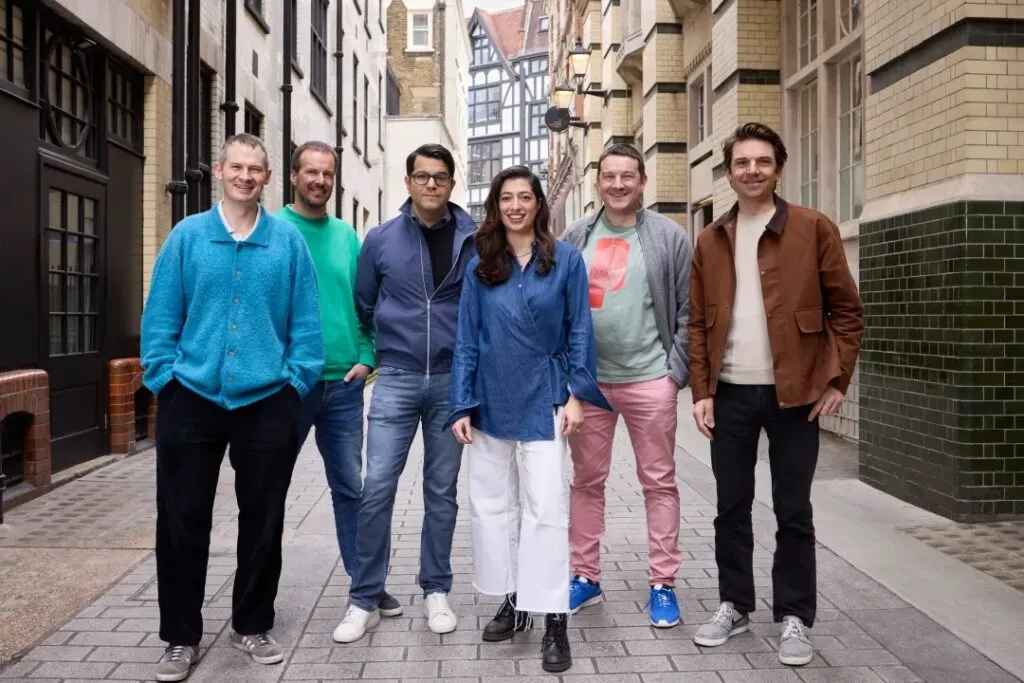
The fund with an office in Tallinn invests in fusion, space and rockets, and openly measures urgency by distance from...

The startup got its Indian patent more than a year after Apple announced the feature. Now it wants the court...

The proposed amendments delete the provision under which 6% of the contribution base goes to the second pillar, and there...

In 2024 the shareholders rejected its offer of 3,200 denars per share. Now the bank is being sold out of...

The studies are being drafted and the application is with the European banks. Before that, reconstruction of the road from...

Instead of another wave of layoffs, an offer to walk out on your own. Microsoft's boss says every job will...

A start-up founded in February by a researcher who left artificial intelligence because of climate change. No fusion plant has...
This site uses cookies - is that okay? Learn more
Be the first to know when Metla launches something new
Leave your email and we'll write to you when there's a new guide or something new on Metla.