
Father and son beat up a doctor and a nurse outside the Jane Sandanski clinic: the law provides up to five years in prison, and almost 70% of attacks aren't even reported
23.11.2026


23.11.2026

23.11.2026

23.11.2026

23.11.2026

23.11.2026

23.11.2026

23.11.2026

22.11.2026

22.11.2026

23.11.2026

23.11.2026

22.11.2026

23.11.2026

23.11.2026

23.11.2026

23.11.2026

22.11.2026

21.11.2026

23.11.2026

22.11.2026

21.11.2026

23.11.2026

23.11.2026

22.11.2026

23.04.2026

23.04.2026

12.04.2026

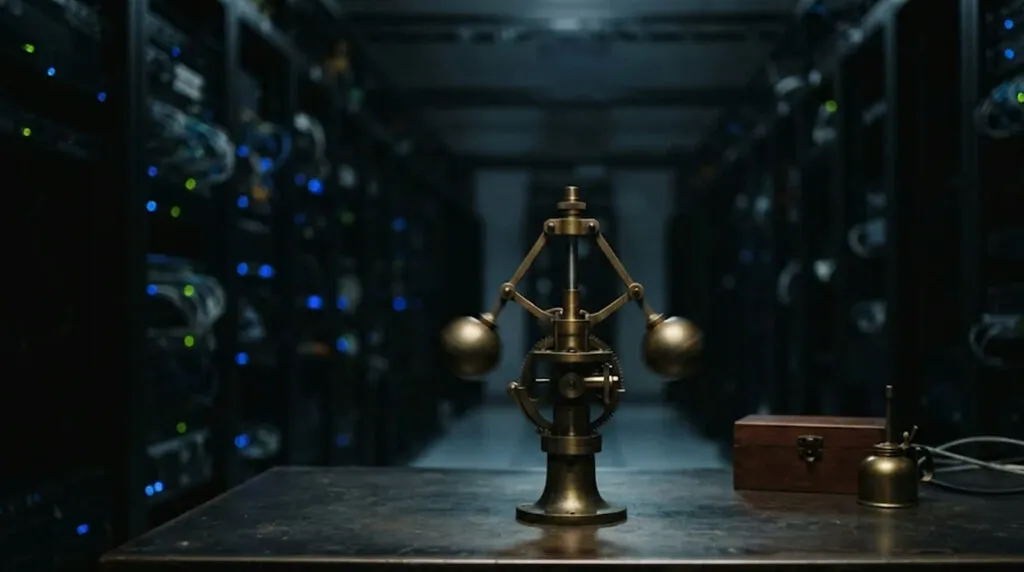
When a driver sets their own speed limit, they usually look first at how fast the competition is going. That's why the proposal by Jakub Pachocki, chief scientist at OpenAI, is worth reading carefully: in a new blog post he offers a measure the AI industry could use to set a limit on its own development.
The topic didn't come out of nowhere. A former OpenAI and Anthropic researcher said publicly that the companies are "gambling with our lives", and even Anthropic's IPO filings warn that the technology may carry "catastrophic or existential risks to society". Then Anthropic's boss, Dario Amodei, published a plan to slow the pace of the most advanced models, which, judging by the reactions, was backed by both OpenAI's Sam Altman and Elon Musk. Amodei is calling for shared safety standards and "limits on the pace of uncontrolled AI progress".
But to set a speed limit, you first have to agree on what you measure it with. That's where Pachocki comes in. In his view, tests that measure what a model can do go out of date quickly, because new models outgrow them. He proposes a different speedometer: perplexity (not to be confused with the company of the same name, Perplexity), a measure of how well a model guesses the next token in a text. The lower the number, the better it predicts.
The post includes a chart of how the perplexity of OpenAI's models has fallen from GPT-3.5 to today. GPT-4, at around 0.91, could already reason productively step by step, according to Pachocki, which led to today's "thinking" models. "Now that we are below 0.8, we are seeing the emergence of transformative capabilities in areas like cybersecurity and mathematics," he wrote.
The idea is for companies to agree on a common yardstick for general intelligence and commit not to cross a certain threshold "until our ability to understand and monitor AI behaviour reaches a concrete milestone". Altman called the post "the most important thing OpenAI has published in a while".
On paper it sounds responsible. In practice, the measure is proposed by one of the companies driving fastest, and the threshold would be agreed by the racers themselves. Who will check whether someone secretly crossed the threshold - and what will happen to them if they do?
The latest 10 news from this category

The startup got its Indian patent more than a year after Apple announced the feature. Now it wants the court...

Instead of another wave of layoffs, an offer to walk out on your own. Microsoft's boss says every job will...

Shortical doesn't yet have a single signed "rent-your-face" contract, but it's already advertising the offer in capital letters. In China,...

A 167-year-old problem, a million-dollar prize and an employee of a company that went public this very week. Meanwhile, Stanford...

No password, at an easily guessed address: police interrogation recordings, raw audio and prosecutors' invoices sat publicly on Amazon's cloud....

The order leaked, Washington protested, Apple switched off its strongest protection for British users - and the government kept insisting...
A new service in three US cities tries to solve the oldest family problem - who takes the kid to...

Investors paid more than announced and smashed SpaceX's record. But the biggest slices of the company aren't held by funds,...

All they had to do was pose as IT support. One got six years in prison, the other admitted attacks...
Huang argued that ceding China was a disservice to America. A week after he left, his former company is ceding...
This site uses cookies - is that okay? Learn more
Be the first to know when Metla launches something new
Leave your email and we'll write to you when there's a new guide or something new on Metla.