Ohrid Attacker Detained Only After New Evidence: Janev Promises Sanctions for Police Who Trample Procedures
18.11.2026


18.11.2026

18.11.2026

18.11.2026

18.11.2026

18.11.2026

18.11.2026

18.11.2026
17.11.2026
16.11.2026

18.11.2026

18.11.2026

17.11.2026

18.11.2026

18.11.2026

18.11.2026

18.11.2026

17.11.2026

16.11.2026

18.11.2026

17.11.2026

16.11.2026

18.11.2026

18.11.2026
17.11.2026

23.04.2026

23.04.2026

12.04.2026

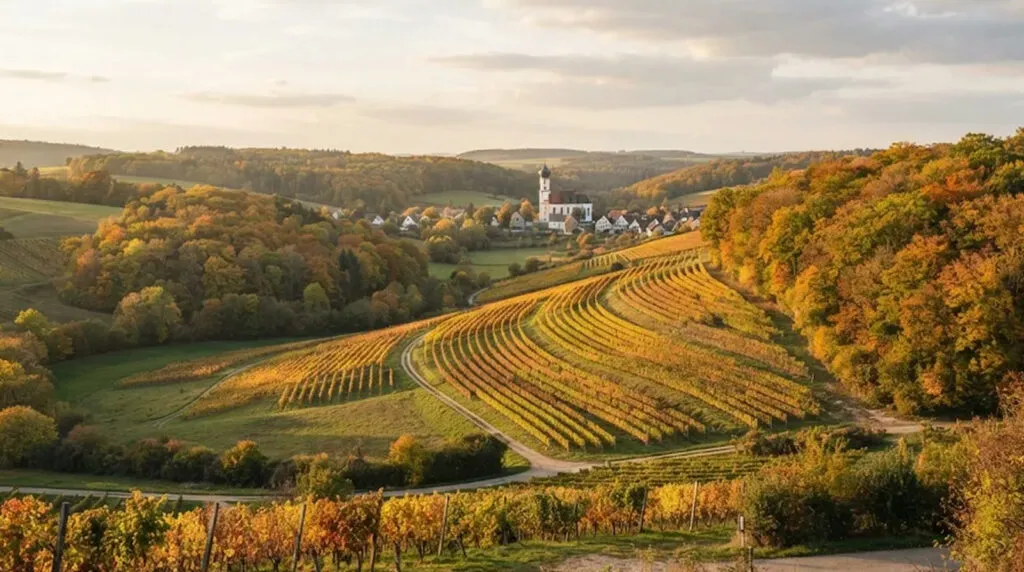
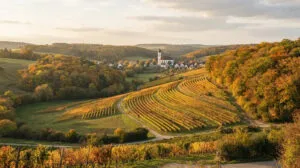
For many families from the Balkans, Vienna stopped being far away a long time ago. We know it for its palaces, its cakes and the relatives who work there. But the city has another face, less than an hour and a half's drive away: abbeys nearly nine centuries old, spa towns where Beethoven spent his summers and a lake where geese land at sunset. Autumn is the right time for them.
Klosterneuburg: a barrel of a thousand buckets
Fifteen kilometres out, about half an hour from the centre, stands the monastery founded by Leopold III. In the former cooper's workshop is the Tausendeimerfass, a barrel that holds a thousand buckets of wine. Sliding down it is said to make wishes come true, but not for free: you pay with a donation to charity. According to the sources, the monastery has the oldest winery in Austria. In the surrounding wine taverns, known as "Heuriger", guests know they're open by the pine branch hung above the door.
Heiligenkreuz: monks singing since 1133
Thirty-two kilometres away, in the Vienna Woods, is the Cistercian abbey founded in 1133. It is the oldest Cistercian abbey in the world that has never stopped being inhabited. Romanesque and Gothic architecture, the tombs of four dukes of the Babenberg dynasty, and Gregorian chant that visitors can attend. The monks became stars in 2008, when their album "Chant - Music for Paradise" reached a wider audience.
Mayerling: the castle of an imperial tragedy
At 39 kilometres is the hunting lodge linked to the death of Crown Prince Rudolf in 1889, together with Baroness Mary Vetsera. The emperor later turned it into a Carmelite convent, and today the visitor centre tells the story of Rudolf's life. From here the trail continues along the Schwechat river valley to Baden, past the ruins of the Rauheneck and Rauhenstein castles. A Habsburg drama the Balkans know well from history textbooks is here within walking distance.
Baden: a spa town on the UNESCO list
Baden, 36 kilometres away, can also be reached on the Badner Bahn light railway. The town has fourteen sulphur springs and a Roman spring in the Kurpark, and in 2021 it joined the UNESCO World Heritage list together with ten other European spa towns. Beethoven spent fifteen summers here, and the house where he wrote a large part of the Ninth Symphony is now a museum. The Beethoven Trail leads through the vineyards to Gumpoldskirchen. Will we ever look at our own Balkan spas this way - as a story, and not just as water?
Neusiedl: the lake of the geese
Fifty-three kilometres away, in the province of Burgenland, lies the shallow steppe lake of Neusiedl with its cross-border national park. In the Seewinkel area, on the Lange Lacke lagoon, geese gather at dusk. Around 11 November, for St Martin's Day, wineries open the young wine festival Martiniloben, often with roast goose on the table.
Muggendorf: waterfalls among wooden stairs
The furthest trip is into the Lower Austrian Alps, 60 kilometres or about an hour and ten minutes' drive. The trail leads to the Myra Falls, over wooden stairs and bridges, with a break at the Karnerwirt inn. Nearby are the Hausstein rock and, in Dreistetten, the ruins of Starhemberg Castle, built around 1140.
The longest part of this trip is getting to Vienna. The rest is a few dozen kilometres and one day off.
The latest 10 news from this category

The canals, the chocolate and the medieval façades have been there for centuries. From November 20 the city adds an...

While the crowds jostle in Florence, Arezzo turns its medieval square into a Christmas market with stalls from Tyrol, Austria...

In Kenya the giraffes come to breakfast, in China the hotel is sunk into an 88-metre-deep quarry, and in Zanzibar...

An hour and a half from Ollantaytambo to Aguas Calientes, peaks above 4,000 metres and a carriage for just eight...

Green-and-white facades, six old gates and spice-filled souks: the former capital of the Spanish protectorate is Morocco without Marrakech and...

It was built in 1963 to carry supplies to Scotland's loneliest lighthouses. Today guests sip tea served in silver on...

A city that the Second World War turned to rubble now sells its baroque splendour and stollen - on 5...

Poilão island is sacred and off-limits to the Bijagó people themselves - and that's exactly why the turtles still come...

Spanish actor Dani Rovira called them "a beautiful, wild and purifying place". Before you go, it's good to know you...
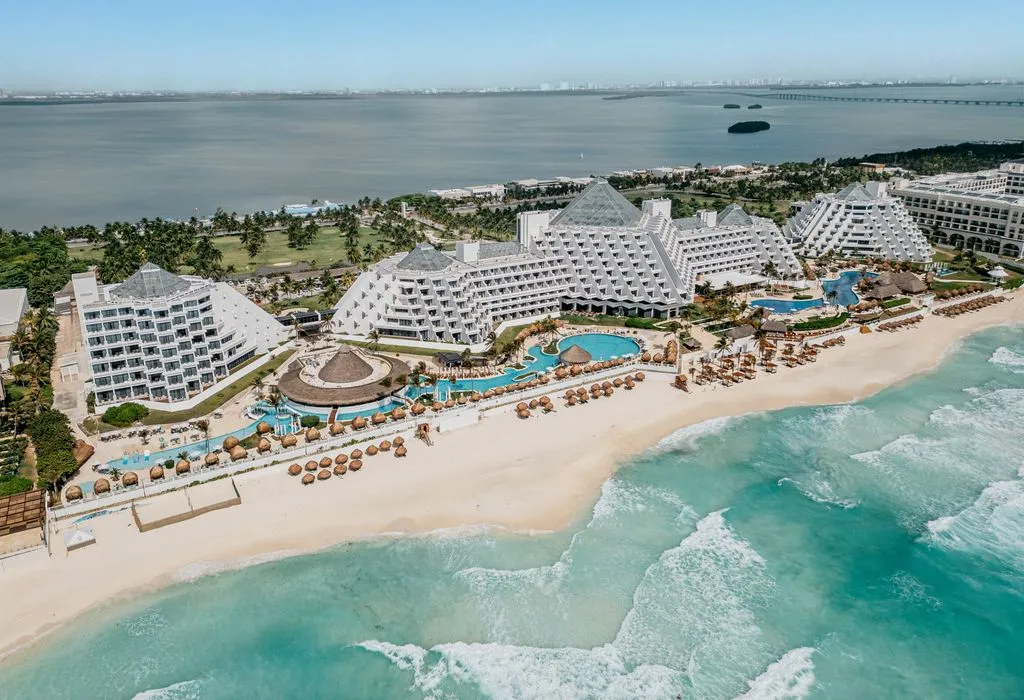
Five white pyramids between the Caribbean Sea and the lagoon, ice baths and yoga under red light. The real Mayan...
This site uses cookies - is that okay? Learn more
Be the first to know when Metla launches something new
Leave your email and we'll write to you when there's a new guide or something new on Metla.