
30 days' custody for the fan who knocked a child unconscious outside "Jane Sandanski": how did two fan groups end up right at the entrance?
03.11.2026


03.11.2026

03.11.2026

03.11.2026

03.11.2026

03.11.2026

03.11.2026

03.11.2026

02.11.2026

02.11.2026

03.11.2026

03.11.2026

02.11.2026

03.11.2026

03.11.2026

03.11.2026

03.11.2026

02.11.2026

01.11.2026

03.11.2026

03.11.2026

03.11.2026

03.11.2026

02.11.2026

01.11.2026

23.04.2026

23.04.2026

12.04.2026

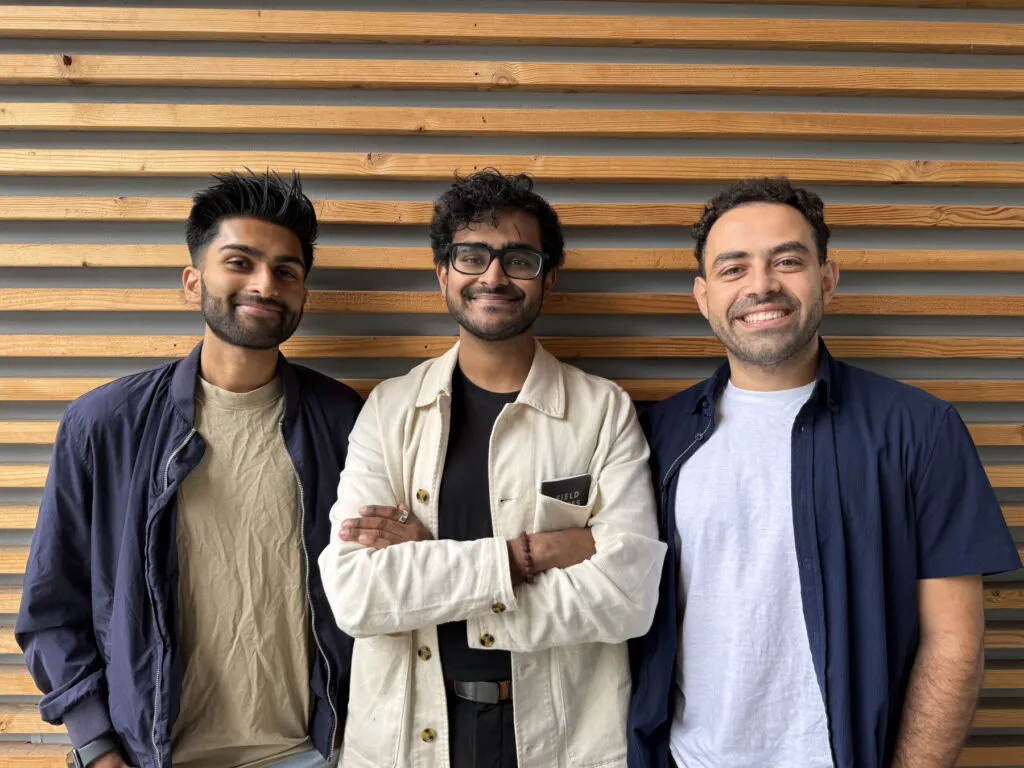
Today's artificial intelligence models, whether from OpenAI, from Anthropic or open source, share one flaw: they don't learn from their mistakes unless someone retrains them. Companies adapting them for law or finance solve this with fine-tuning, which means either their own research team or expensive outside engineers working on site at the client.
Into that gap stepped Trajectory, a startup founded about a year ago by three Stanford classmates with experience at Google DeepMind and Apple. The 18-person company announced it has raised 45 million dollars (about 39 million euros) in a Series A, at a valuation of 300 million dollars (about 260 million euros). The round is led by Sequoia, with Nvidia, Bessemer Venture Partners and Bain Capital Ventures also in.
The idea is called continual learning. A company takes an open-source model, the platform connects to its applications and collects feedback on how the model performs, and then Trajectory retrains it. Co-founder Ronak Malde compares big models to a very smart PhD who keeps starting a new job. "And the economy values the person who has done that job for 30 years," he says.
The clients are well-known names among AI tools: Harvey and Rogo are teaching models to work like experienced lawyers and financial analysts, on tasks such as reviewing a particular type of contract or valuing a company using a specific method. Decagon, Mercor and Nvidia itself are also on the list - the investor is also a customer. The platform is now becoming publicly available.
The most interesting sentence came from the second co-founder, Michael Elabd. The approach resembles recursive self-improvement in AI, he admits, but humans stay in the training loop, which makes it safer, because autonomous self-improvement could end in unforeseen, even dangerous consequences. The competition is crowded: Thinking Machines Lab, founded by former OpenAI chief technology officer Mira Murati, then Applied Compute, valued last month at 3.25 billion dollars, and Prime Intellect. How many of them will still be standing when the capital stops flowing so easily?
The latest 10 news from this category

It had an independent privacy audit and money from Khosla Ventures, but not the capital for the race with Muse...

The National Bank says the license pulled in Belgrade doesn't automatically mean anything for Bitola. Legally, that's true. But the...
Profit is slightly down on last year but above plan. The biggest interest growth comes from the state, and fees...
The model learned from building permits across America and promises buildings that stand. What remains is the question everyone in...

A firm of 1,200 lawyers is preparing to vote on its own shutdown, and a startup that only came out...
Изградбата на автопатот Кичево – Охрид започна во февруари 2014 година, а по 12 години и 8 месеци, проектот сè...

Restaurant delivery and grocery delivery end up in the same hands. There's a year and a half until the deal...

The four-year-old firm rejected a takeover bid because it didn't top its valuation, then raised fresh money. The bet is...

Former Amazon executives raised $2.1 billion for factories, not chatbots. They call deindustrialisation a security risk - the Balkans know...

Nearly a billion dollars in two years, for a kit that drives the excavator instead of a person. The company...
This site uses cookies - is that okay? Learn more
Be the first to know when Metla launches something new
Leave your email and we'll write to you when there's a new guide or something new on Metla.