
Four Broken Ribs and Bleeding on the Brain: A Gostivar Woman Fights for Her Life, Her Husband Is in Bardovci, Not in Custody
28.11.2026


28.11.2026

28.11.2026

28.11.2026

28.11.2026

28.11.2026
28.11.2026
28.11.2026
27.11.2026
26.11.2026

28.11.2026

28.11.2026

27.11.2026

28.11.2026
28.11.2026

28.11.2026
28.11.2026

27.11.2026
26.11.2026
28.11.2026
27.11.2026
26.11.2026

28.11.2026
28.11.2026

27.11.2026
28.11.2026
27.11.2026

26.11.2026

23.04.2026

23.04.2026

12.04.2026


Turkish President Recep Tayyip Erdoğan has signed a decision by which Ankara suspends the application of part of the agreement on the mutual abolition of visas with Montenegro, signed in January 2008. The decision was published in the Turkish Official Gazette. Retaliation, without many diplomatic words.
The trigger is Podgorica's move to reintroduce a visa requirement for Turkish citizens - officially as part of aligning with the European Union's visa policy. Montenegro is the country that has come furthest on the road to the EU, and every step towards the Union also means a visa regime of the kind Brussels demands. Ankara has now shown that such alignment does not go unanswered.
It all started with a knife in Zabjelo
The visas for Turks did not appear out of nowhere. On 26 October last year, in the Podgorica neighbourhood of Zabjelo, a 25-year-old local man was stabbed. Protests followed in the capital, where demonstrators demanded the expulsion of Turks, and several cafés and other businesses owned by Turkish citizens were wrecked.
Podgorica reacted quickly back then, with visas for all Turkish citizens. The decision took effect on 30 October 2025, four days after the attack.
And then came the part few people remembered. Police first arrested a Turkish citizen and an Azerbaijani citizen. The High Court in Podgorica lifted their detention after CCTV footage showed both were at their accommodation at the time of the attack. Police then arrested two other suspects, both Azerbaijani citizens.
Who pays the price
So the visas were introduced after an attack where the first Turkish citizen arrested was not even at the scene, and now they are being kept in the name of Europe. Ankara used the moment to hit back. Between the two signatures are ordinary people: the tourists, students and traders who have travelled between the two countries without a visa since 2008.
The Balkans know this script by heart. EU candidates align their visas with Brussels, and the price is paid by relations with partners outside the Union. Montenegro has chosen where it wants to belong. The question is how many more prices like this await Podgorica on the European road - and whether anyone in Brussels is even counting them.
The latest 10 news from this category
The region's presidents gathered in Ohrid to talk about joining the EU faster. The loudest message came from the president...
Belgrade's new government is holding in custody the editor who for years was the loudest defender of the old one,...

The students beat Vučić, but the academician they're fielding for president calls the border with Bosnia "fictitious" and claims Moscow...
Belgrade has detained the editor of the tabloid that ran "Ukraine Attacked Russia" before the invasion. Now he cries persecution...

A bank that lost money for years, then started making millions after the war in Ukraine began. A firm with...
A Bosniak wartime commander and a former Republika Srpska MP were guests at the wedding of a man police have...
Belgrade recognises Kosovo, and he'll push for the euro in 2027 - plus Čupić's face on a two-euro coin. After...
Čupić announced elections on 27 December, fewer ministries and a parliament that will hold the government to account. How many...

The man who wrote Serbia's rules for more than a decade is now scripting his own arrest in advance. Will...
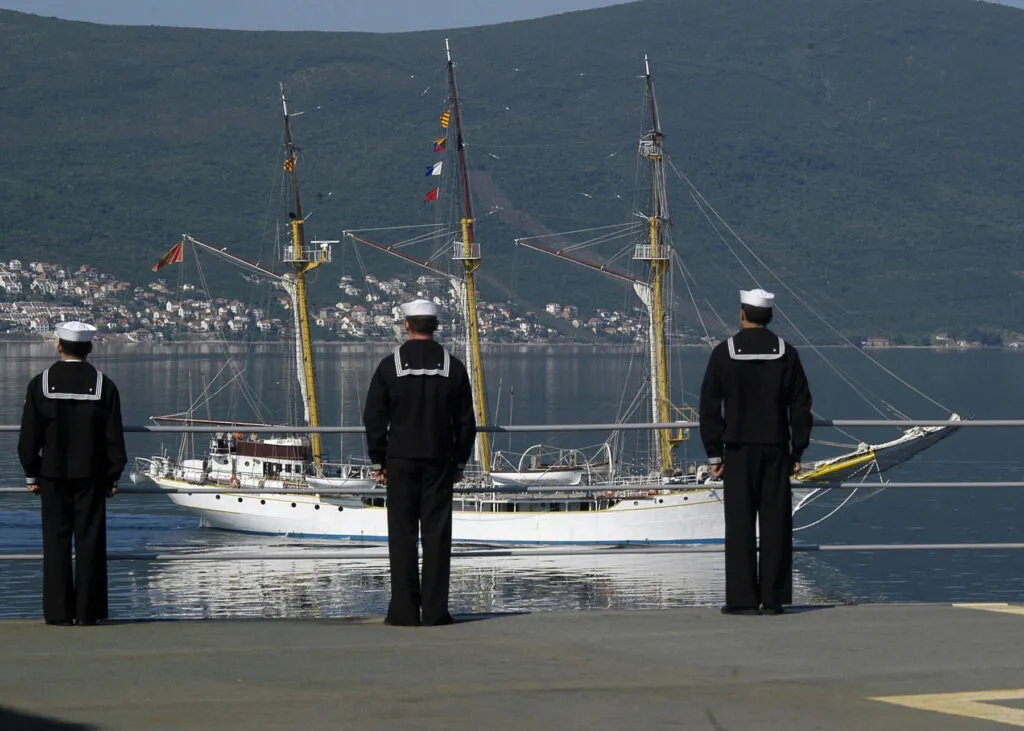
A 1931 sailing ship paid for with German reparations and the king's money is now a tourist attraction in Tivat,...
This site uses cookies - is that okay? Learn more
Be the first to know when Metla launches something new
Leave your email and we'll write to you when there's a new guide or something new on Metla.





