
The Ambulance Service Gets 100 New Vehicles, but More Than 300 Staff Retire by 2030: Who Will Drive Them?
25.11.2026


25.11.2026
25.11.2026
25.11.2026
25.11.2026
25.11.2026
25.11.2026
25.11.2026
24.11.2026
23.11.2026
25.11.2026

25.11.2026
24.11.2026
25.11.2026
25.11.2026
25.11.2026
25.11.2026
24.11.2026

23.11.2026
25.11.2026
24.11.2026

23.11.2026
24.11.2026
23.11.2026

23.11.2026
25.11.2026

24.11.2026
23.11.2026

23.04.2026

23.04.2026

12.04.2026

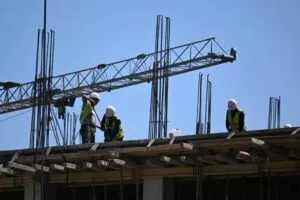
Photo: Marco Pexels, Pexels License
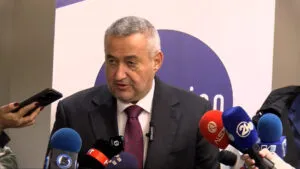
Aleksandar Čupić, the new Speaker of the Serbian Parliament and acting President of Serbia, gave his first big interview to the public broadcaster RTS. He announced presidential elections, fewer ministries and a reform of the institutions. But what drew the most attention was one sentence that sounds unusual coming from someone in that job: "I am acting president, I am not president."
"The elections were just a formality"
Čupić says that after being elected to lead Parliament he didn't feel triumph but responsibility. "First, as a people, we defeated fear, and then some of our own insecurities. A good part of society showed initiative, and that was already a victory. The elections were just the formalisation of that victory," he said.
The presidential elections are due on 27 December, and Čupić plans to call them by 26 November at the latest. Former president Aleksandar Vučić said it is pointless to take part in them under current conditions. Čupić answered with a question: "What changed? The elections on 25 October made sense, and the elections on 27 December are pointless?" The Student List hasn't yet announced the name of its candidate. According to Čupić, that is a matter of political strategy and of the way the student movement makes decisions.
The summit can wait
Čupić confirmed he won't attend the upcoming EU - Western Balkans summit, even though he received an invitation from European Council President António Costa. He explained that Parliament hasn't finished its constitutive session yet and that it would be irresponsible to leave Belgrade for an international meeting he hasn't had time to prepare for. And then he added what sounds like a message to his predecessors: "For more than ten years we've been used to acting office-holders behaving as if they had a full mandate."
On Serbia's European path, he says citizens should be given an objective picture of both the advantages and disadvantages of EU membership. "We have an undecided society because it doesn't have all the information. Once we present it, every citizen will judge whether it is in our interest," he said. How many politicians in the region would publicly admit that citizens haven't been getting all the information so far?
25 ministries and a parliament that only raises its hand
Čupić also announced a cut in the number of ministries. Serbia currently has 25 ministries and five ministers without portfolio, which he considers unnecessary. There is no need to rush forming a new government, he says: "It's much more important to make a good choice than a fast choice."
He singled out the rule of law and depoliticising the institutions as the main priorities. "I think that is the root of the problem. Once that is set up properly, the other areas will start reforming much more easily," he said. Then he described the Parliament he is inheriting: "Parliament elects the government, and then everything the government sends, Parliament approves. What kind of oversight is that?"
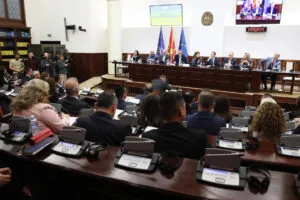
He also wants to change the political culture in the chamber. He compared his role to that of a football referee whom all the players congratulate at the end of the match for how he handled it. He says previous sessions were "political reality shows" that had their audience, but that "there is clearly a much bigger audience looking for different content". The opposition, he added, has the right to its views but must respect the rules of procedure.
All of this is a first interview, and first interviews are the easiest part of any government. The test comes later, when Parliament has to say "no" to the government it elected itself. Will Serbia get a parliament that really holds power to account - or just a new man who speaks nicely? The Balkans know both scenes by heart.
The latest 10 news from this category
A Bosniak wartime commander and a former Republika Srpska MP were guests at the wedding of a man police have...
Belgrade recognises Kosovo, and he'll push for the euro in 2027 - plus Čupić's face on a two-euro coin. After...

The man who wrote Serbia's rules for more than a decade is now scripting his own arrest in advance. Will...
A 1931 sailing ship paid for with German reparations and the king's money is now a tourist attraction in Tivat,...
Last December Vučić pointedly boycotted the summit in Brussels. Now Serbia's new acting president is staying home too, just with...

One was killed in the morning near Cetinje, the other was stopped by an Interpol red notice before a flight...
The Slovak prime minister compared Serbia to Slovakia in the years when he himself was in opposition. How often in...
The students won 140 seats, and the party that held every lever of the state for 14 years now complains...
Greetings just before midnight, applause from the benches and an Instagram post saying the holiday "doesn't exist". Yet Bosniaks have...

An assistant professor with six children and an organic farm is now also acting president of Serbia. Has the street...
This site uses cookies - is that okay? Learn more
Be the first to know when Metla launches something new
Leave your email and we'll write to you when there's a new guide or something new on Metla.





