

Four Broken Ribs and Bleeding on the Brain: A Gostivar Woman Fights for Her Life, Her Husband Is in Bardovci, Not in Custody
28.11.2026


28.11.2026

28.11.2026

28.11.2026

28.11.2026

28.11.2026
28.11.2026
28.11.2026

27.11.2026

26.11.2026

28.11.2026

28.11.2026

27.11.2026

28.11.2026

28.11.2026

28.11.2026
28.11.2026

27.11.2026

26.11.2026
28.11.2026
27.11.2026
26.11.2026

28.11.2026
28.11.2026

27.11.2026
28.11.2026
27.11.2026

26.11.2026

23.04.2026

23.04.2026

12.04.2026

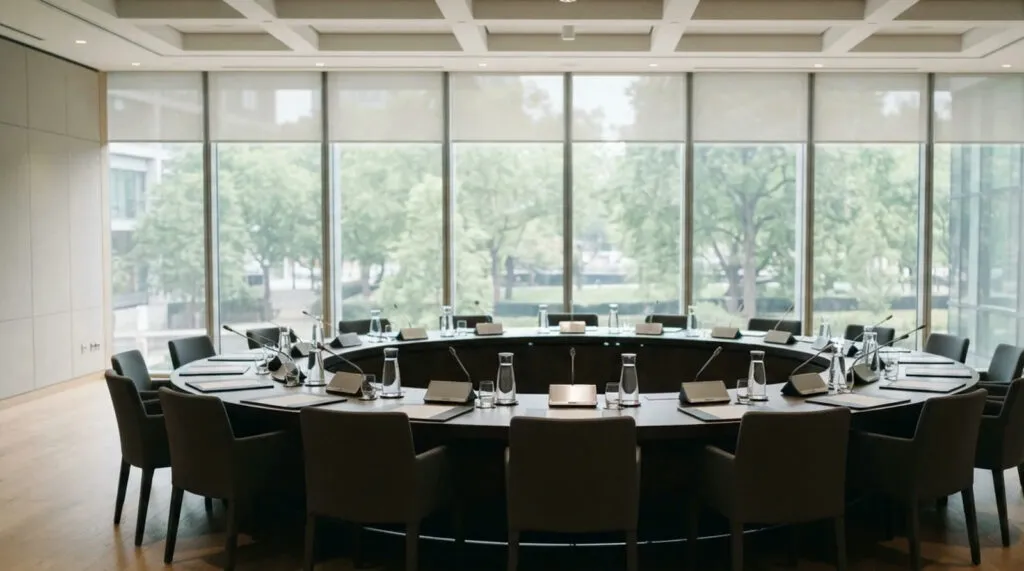
This year the Brdo-Brijuni Process was held in Ohrid, hosted by President Gordana Siljanovska-Davkova. The initiative was founded in 2013 by the then presidents of Croatia and Slovenia, Ivo Josipović and Borut Pahor, with one goal: to bring the Western Balkan countries into the European Union faster. Thirteen years later, not one of them has become a member.
Besides Siljanovska-Davkova, Croatian President Zoran Milanović and Slovenian President Nataša Pirc Musar, Ohrid welcomed Montenegrin President Jakov Milatović, Albanian President Bajram Begaj, Kosovo President Justina Shiroka Pula and the three members of the Presidency of Bosnia and Herzegovina: Darijana Filipović, Denis Bećirović and Željka Cvijanović.
But the most important guest sat in Serbia's chair. There was Aleksandar Čupić, speaker of the Serbian parliament and acting president. It was the first appearance abroad by anyone from Belgrade's new government since the Student List's victory at the end of October. Milanović, who admits the atmosphere at these meetings could get unpleasant, was almost tender this time: the meeting was the "most pleasant" so far, the atmosphere was "different because of the people", and the issues dividing the two countries were approached "sensibly".
The meeting came a day after the European Parliament in Strasbourg adopted a resolution on Vukovar. It pays tribute to the dead, condemns the glorification of war criminals and calls on Serbia to open its war archives to shed light on the fate of 1,725 missing persons. The student movement in Serbia criticised the resolution, saying it contributes neither to an objective view of recent history nor to reconciliation. Milanović said Croatia and Serbia "will never have the same opinion" about Vukovar, but that this must not stand in the way of more normal relations.
Then came the part everyone who has spent years waiting at the counter in Brussels should hear. Milanović said he agrees with "elements" of the resolution, which he called a document of a "semi-democratic institution of the undemocratic European Union". A little later he admitted he had not read the resolution, but "roughly knows what might be in it". About the Union itself he was even harsher: it is going through a hard time and has no answers to the challenges ahead, or has bad ones. "The Union worked excellently, but not in the last few years," he said, adding that the EU is turning into "a dysfunctional empire" in which Croatia, as far as he is concerned, will not take part.
Let's be clear: this is the president of a country that is inside. Croatia pays in euros, is a member of Schengen and sits in the group of states fighting for cohesion funds. And he says it in Ohrid, in front of people whose countries have been meeting conditions for years - while Macedonia changed both its constitution and its name for that "empire".
Did Milanović say out loud what many in the region already think, only he can afford to say it? Maybe. But the candidates left Ohrid with the same question they arrived with: if those inside say the Union does not work, who exactly is going to open the door for us?
The latest 10 news from this category
Belgrade's new government is holding in custody the editor who for years was the loudest defender of the old one,...

Podgorica brought back visas for Turks to please Brussels, and Ankara answered with Erdoğan's signature. European integration in the Balkans...

The students beat Vučić, but the academician they're fielding for president calls the border with Bosnia "fictitious" and claims Moscow...
Belgrade has detained the editor of the tabloid that ran "Ukraine Attacked Russia" before the invasion. Now he cries persecution...

A bank that lost money for years, then started making millions after the war in Ukraine began. A firm with...
A Bosniak wartime commander and a former Republika Srpska MP were guests at the wedding of a man police have...
Belgrade recognises Kosovo, and he'll push for the euro in 2027 - plus Čupić's face on a two-euro coin. After...
Čupić announced elections on 27 December, fewer ministries and a parliament that will hold the government to account. How many...

The man who wrote Serbia's rules for more than a decade is now scripting his own arrest in advance. Will...
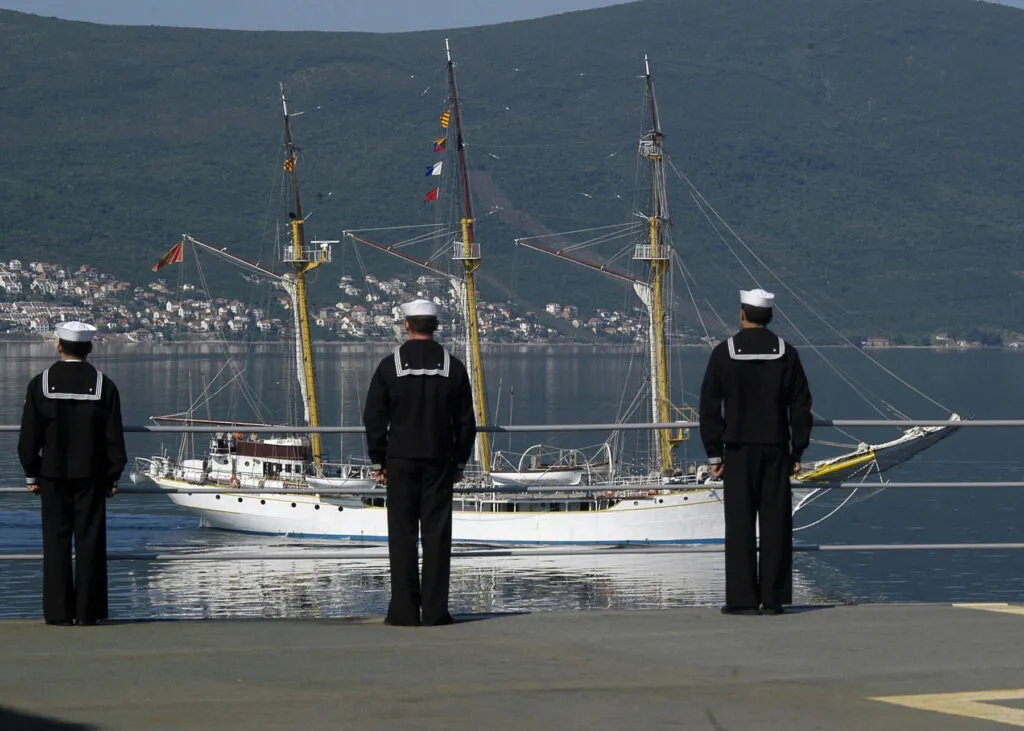
A 1931 sailing ship paid for with German reparations and the king's money is now a tourist attraction in Tivat,...
This site uses cookies - is that okay? Learn more
Be the first to know when Metla launches something new
Leave your email and we'll write to you when there's a new guide or something new on Metla.





