


Two young men say police officers beat them while they were tied up: the investigation is being run by the Interior Ministry itself
10.10.2026


10.10.2026

10.10.2026

10.10.2026

10.10.2026

10.10.2026

10.10.2026

10.10.2026

10.10.2026

09.10.2026

10.10.2026

10.10.2026

09.10.2026

10.10.2026

10.10.2026

10.10.2026

10.10.2026

09.10.2026

08.10.2026

10.10.2026

10.10.2026

10.10.2026

10.10.2026

10.10.2026

09.10.2026

09.10.2026

08.10.2026

07.10.2026
10.10.2026

08.10.2026

06.10.2026

23.04.2026

23.04.2026

12.04.2026


A facial at the beautician leaves skin smoother, cleaner and brighter. But it is not magic for everything. Blackheads, breakouts, tightness and excess sebum depend far more on what you do at home every evening than on a treatment once a year.
"A facial does not make up for an unsuitable or irregular routine," says dermatologist Dr Lidia Maroñas, founder of Oneskinmed. If your routine is fine and you still have stubborn blackheads, clogged pores or uneven texture - that is when a professional facial makes sense. If your skin feels tight, gets irritated, breaks out often or shines with sebum, the problem is the routine, and that should be refreshed roughly twice a year.
Vanessa Villaitodo, marketing director at HydraFacial - in other words, at the company selling one of the treatments - advises watching your skin over a longer period: more oiliness, breakouts, flaking or changes in texture are a sign something is not working. She too admits that more facials are not always the answer: if comedones and acne keep coming back, you need to look for the cause.
Different skin, different facial. Oily and acne-prone skin gains most from a deep cleanse: extracting comedones, salicylic acid, which penetrates the follicle and helps dissolve sebum, and hydrodermabrasion. Combination skin needs treatment by zone - stronger on the T-zone, gentler on the cheeks, which are more sensitive or dehydrated. Dry skin likes a gentle enzyme peel, lots of hydration and care for the skin barrier. With mature skin the focus is on preparation - gentle renewal, then active ingredients such as antioxidants, peptides and exosomes.
Sensitive skin and skin with rosacea need the most care. Here steam, aggressive squeezing and chemical peels are off-limits unless a dermatologist says otherwise - soothing, decongesting treatments are enough. Dermatologist Dr Maribel García Briz agrees: the protocol must not be the same for everyone.
How often? For healthy skin without problems - three to four professional facials a year, one per season, with a cumulative effect. Oily skin with visible pores, blackheads or comedonal acne - every one to two months. Dry or reactive skin can get by with one treatment every three to four months.
Squeezing is not a home job. Manual extraction has its place for oily skin with open or closed comedones and for milia, the tiny keratin cysts - if done gently. It is never done on inflamed spots, active pustules or rosacea, because of the risk of inflammation, marks and scarring. Maroñas is categorical: do not do it yourself in front of the mirror. What makes the difference is technique, and knowing when the skin must not be touched.
The three types of treatment. A classic facial focuses on impurities and comedones, with manual extraction and soothing products at the end. Diamond tip is mechanical microdermabrasion that removes dead cells for smoother, more even skin. HydraFacial combines lymphatic drainage, cleansing, exfoliation, vacuum extraction, serums, LED light and hydration in one protocol. Which is best? The one that matches what your skin actually needs - not the one at the top of the price list.
The latest 10 news from this category

A 6-million-euro necklace, boots worth up to 30,000 euros, a Hermès bag that fetched 349,000 euros at auction. Stars wear...

Before it became a fashion statement, the bridal bouquet was an amulet of garlic and herbs against evil spirits. Trends...

The coat fashion editors have declared this winter's trend, a brooch from her mother-in-law's jewellery and a 107-euro bag: a...

"At that age you cut your hair short" - a line hairdressers retired long ago. Four cuts that stay above...

Grandma's silk pillow ended up as sleeves, her old bedspread in the dress, and a bracelet on the bride's head....

In the courtyard of the Louvre, Nicolas Ghesquière dressed women for cities that keep heating up: sheer layers, gauze and...

Mouth breathing, a head bent over the phone, and make-up left on overnight. Three of the four fixes cost nothing...

A republic for more than a century, yet in Mafra - a tiara from 1887, a gown just like her...

At the Grand Palais, with Gabrielle Chanel's own 2.55 bag on the runway, Blazy talked about freedom. Sequins you wear...
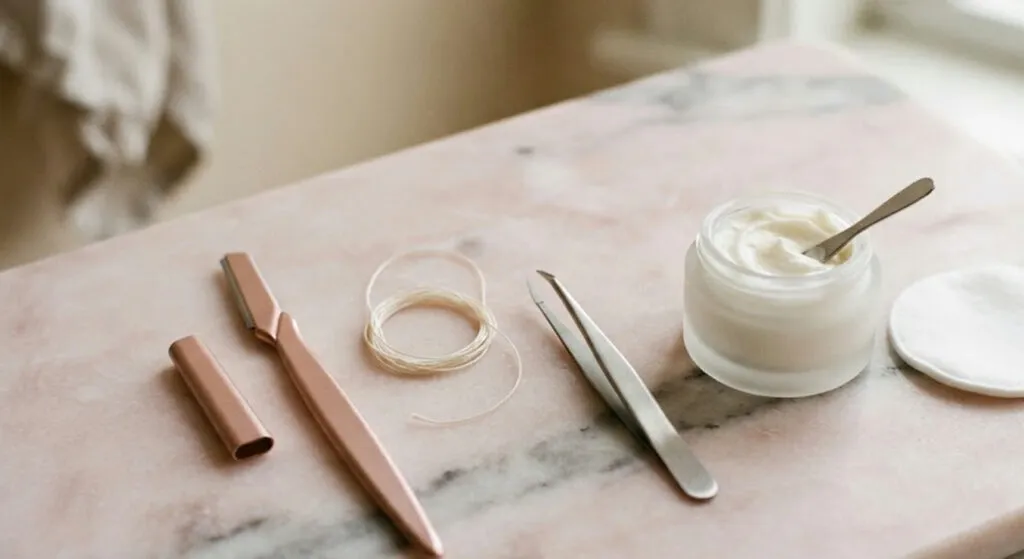
What works on your legs can become a risk on your face. Threading, razor, electrolysis or laser - the choice...
This site uses cookies - is that okay? Learn more
Be the first to know when Metla launches something new
Leave your email and we will write when there is a new guide or something new on Metla.

