


State Lottery: Two Arrests Over an 80-Million-Denar Embezzlement, While the Star Witness in Court Changed His Story
06.10.2026


06.10.2026

06.10.2026

06.10.2026
06.10.2026

06.10.2026

06.10.2026

06.10.2026

06.10.2026

05.10.2026

06.10.2026

06.10.2026

05.10.2026

06.10.2026

06.10.2026

06.10.2026

06.10.2026

05.10.2026

04.10.2026

06.10.2026

06.10.2026

06.10.2026

06.10.2026

06.10.2026

05.10.2026

09.03.2026

27.02.2026

19.02.2026

06.10.2026

05.10.2026

04.10.2026
06.10.2026
05.10.2026

04.10.2026

23.04.2026

23.04.2026

12.04.2026


A new job, a first speech in front of an audience, a first trip alone, a first class in the sport you've put off your whole life. You know you can do it. And that's exactly when something in your chest says: turn back. That voice isn't proof you're not ready. It's proof your brain is doing its job - sometimes a little too keenly.
Francisco Díaz García, a specialist in clinical neurophysiology and sleep disorders, explains the mechanism simply: "Our brain works by constantly predicting what might happen." When we face something new, uncertain, or something we read as a potential threat, the brain "can trigger a defensive response even before it knows whether the danger really exists".
From an evolutionary point of view, that makes sense. "For survival, it was more useful to have a brain that anticipates a possible threat than to wait and check whether the danger was real," the doctor says. That's why, he adds, "we can be perfectly capable of something and still feel fear before doing it".
There is no single fear centre
The popular image of a "fear centre" in the brain is too simple. According to Díaz García, it's several regions working together. One is the amygdala - "part of the brain's alarm system" - which recognises what might be a threat and fires up defensive reactions. When the alarm goes off, the body gets ready: alertness rises, heart rate and breathing speed up, muscles tense, and attention locks onto whatever looks dangerous. Unpleasant, but protective.
The neurophysiologist suggests picturing three structures as a team in constant conversation. The amygdala sounds the alarm. The hippocampus brings memory and context - what happened before and in what circumstances. The prefrontal cortex gathers all the information and asks: "I feel afraid, but am I really in danger, and how should I respond?" He himself warns this is a simplification, because "the brain is far more complex and these regions have many other functions". But the point stands: we can feel fear and decide to keep going at the same time.
Why running away works so well - in the short term
"Avoidance works extremely well in the short term: if something scares me and I decide not to do it, the anxiety usually drops almost immediately," says Díaz García. That relief comes so fast that the brain learns it as a strategy. The problem starts when escape becomes the only answer. "If we always avoid, the brain never gets the chance to check what would really happen," and so we keep the prediction of danger alive, because we never create a new experience that could correct it. How many decisions have been on hold for years because "it's not the right moment"?
An alarm that goes off at every piece of toast
Before acting, the brain makes a forecast: I won't manage, something bad will happen. If we do the thing that scared us anyway and the forecast doesn't come true, a gap opens up between what we expected and what actually happened. That gap, according to the expert, "gives the brain new information and allows what it has learned to change gradually".
His example is surfing. Someone who has never stood on a board walks into the water and is most likely still scared - the alarm is working. But they stay, and discover they're handling it much better than expected. That's information they didn't have before going in. Díaz García compares it to an oversensitive smoke alarm: "The alarm isn't broken, it's doing what it was designed to do - warning us about a possible threat." But, he adds, "an alarm that goes off every time we make toast has to learn to tell better when there really is a fire".
The goal isn't zero fear
This may be the most important part. "The goal doesn't have to be feeling zero fear." The brain doesn't erase old learning; instead it "can create new safety learning that competes with the previous expectation of threat". That's why fear that comes back now and then doesn't mean you're back at square one. "We don't always stop being afraid and then act. Very often we act despite the fear, and that very experience tells the brain the thing was safer or easier than it predicted."
With one important caveat: not every fear should be overcome. "It's an adaptive response, and there are situations in which it warns us of real danger. There's no point teaching someone to ignore it," the doctor says. The difference lies in situations that are reasonably safe, where the expected threat is far bigger than the real risk. There, constant escape only feeds the alarm. The skill isn't switching it off - it's learning when it's shouting for a reason.
The latest 10 news from this category

The markets are filling up with quinces and pumpkins, hunting season is opening, and after the first rains the mushrooms...

A mother and daughter on a rugby team, friends who met playing padel. When we can message anyone at any...
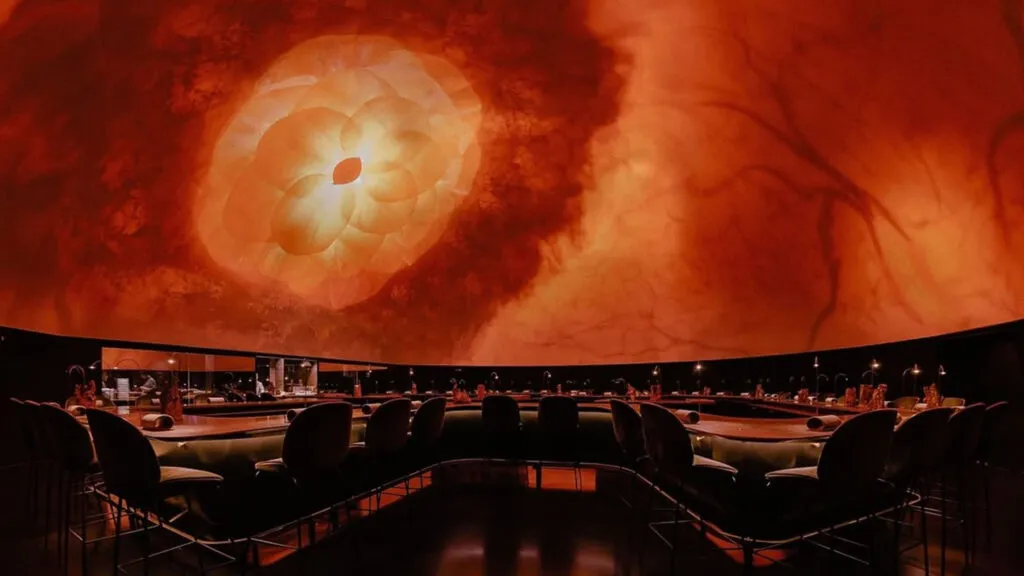
The world's fifth-best restaurant isn't closing because of empty tables, but to have time to think. The team's wages keep...

Your ID card says 80, but your body may be a completely different age. Longevity experts say the key isn't...

The potato isn't fried brown, it is slowly poached in oil - that is the base. Then comes the "hat":...

You've cut out gluten, sugar and dairy, and the fatigue and bloating still won't go away? Maybe the problem isn't...

We reduced cauliflower to boiled greens with béchamel. But it can be a crispy pizza base and a "steak" you...

Shame makes people with obesity put off check-ups, and "if you really wanted to, you could" only makes it worse....

The right potato, half an hour in cold water, and salt the moment they come out of the oil. Five...

Every automatic "yes" to other people is often a "no" to yourself. A therapist explains the signs that you are...
This site uses cookies - is that okay? Learn more
Be the first to know when Metla launches something new
Leave your email and we will write when there is a new guide or something new on Metla.