


Kriva Palanka: 104 Police Reports Against the Family with the Cows - and Now a Woman with a Broken Leg
24.11.2026


24.11.2026

24.11.2026
24.11.2026
24.11.2026

24.11.2026
24.11.2026

24.11.2026

23.11.2026

22.11.2026

24.11.2026

24.11.2026

23.11.2026
24.11.2026

24.11.2026

24.11.2026

24.11.2026

23.11.2026

22.11.2026

24.11.2026

23.11.2026
22.11.2026

24.11.2026

23.11.2026

23.11.2026

24.11.2026

23.11.2026

23.11.2026

23.04.2026

23.04.2026

12.04.2026

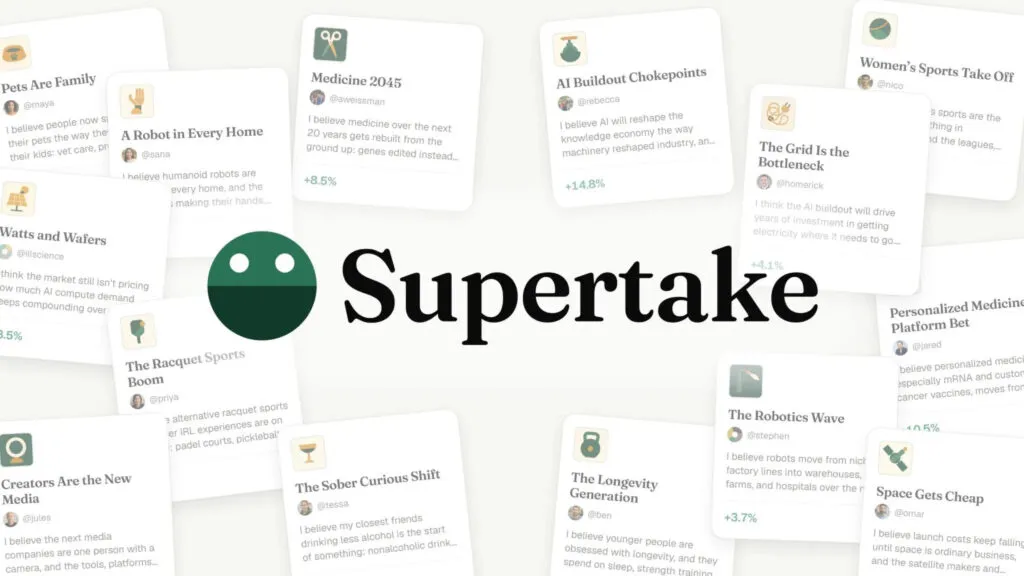
Have an opinion on where the world is heading? The American startup Supertake wants to turn it into a stock portfolio. You describe your belief in plain words - for example, that people will spend more and more on longevity - and the company's agents, built on the latest artificial intelligence (AI) models, turn it into specific stocks and trade on your behalf.
Investors put 20 million dollars into that idea in a seed funding round. The round was led by Nico Wittenborn's fund Adjacent, with participation from Coinbase Ventures and Union Square Ventures. Individual backers include Nat Friedman, who heads products at Meta Superintelligence Labs, Vercel chief Guillermo Rauch and investor Scott Belsky. Before that, the company had raised 2 million dollars.
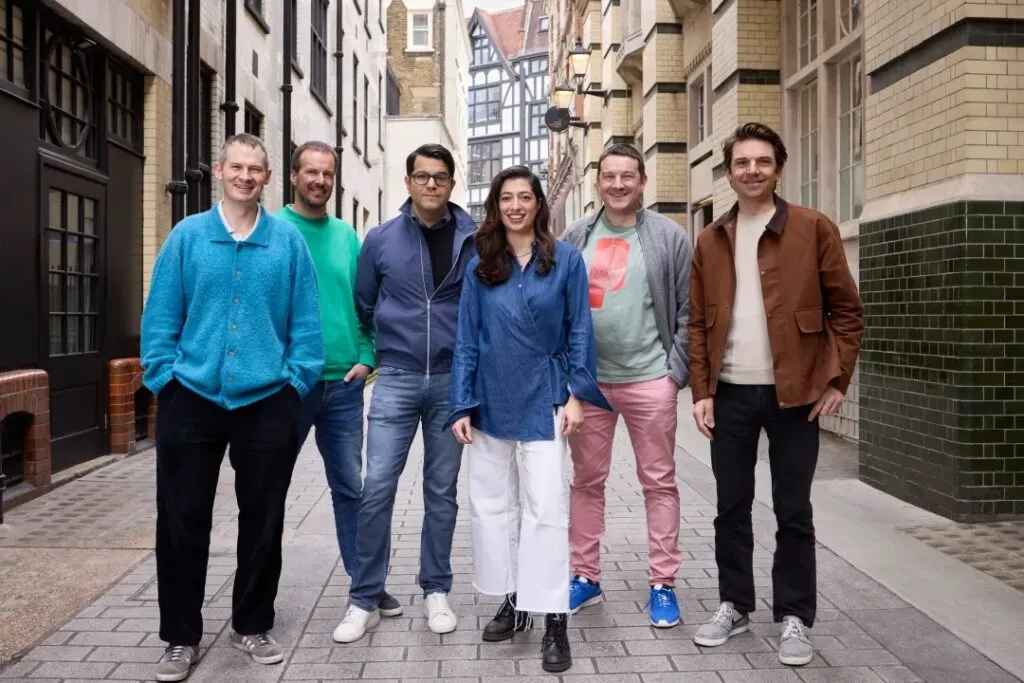
The idea comes from Michael Mignano, one of the founders of the podcast platform Anchor, which Spotify bought in 2019 for more than 150 million dollars. Day to day, the company is run by Lincoln Moore as CEO and John Peterson as CTO, both from Coinbase, where they led AI products and engineering. "We believe there is an opportunity for investing to become more democratic, so that anyone can invest in their own views, beliefs and ideas," says Mignano.
For now, Supertake works with the brokers Coinbase and Robinhood and only invests in stocks. Users' theses are ranked on a public leaderboard, so others can invest alongside the author. One of them, for example, bets on the "looksmaxxing" and longevity craze, through pharmaceutical and cosmetics companies. The plans go further: short selling, derivatives and prediction markets through partners.
Moore keeps insisting that Supertake is not a betting market, but a new version of the robo-adviser. At the same time, he says they don't want to block short-term strategies either - and a thesis about who will win an election could be one of those.
To calm fears, the company lists safeguards: the AI cannot deposit or withdraw money without the user's explicit consent, there are limits on the size of each transaction, lists of allowed and banned securities, and live monitoring for unusual activity. The agents can't even see the login details for the brokerage account. "A few years ago you might not have felt comfortable in a car with lane assist, and today you get into a Waymo like it's nothing," says Moore.
The product is still only available through a waiting list, but the founders say they are already investing their own money: Moore "tens of thousands", Peterson "thousands" and Mignano "hundreds of thousands" of dollars. Handing your savings to a bot because it nicely turned your idea into numbers - that is Silicon Valley's new offer. When the thesis turns out wrong, who answers for it: the user, the agent or the model underneath?
The latest 10 news from this category
The fund with an office in Tallinn invests in fusion, space and rockets, and openly measures urgency by distance from...

In 2024 the shareholders rejected its offer of 3,200 denars per share. Now the bank is being sold out of...

A start-up founded in February by a researcher who left artificial intelligence because of climate change. No fusion plant has...

From Milan, they're collecting American internet brands like furniture at a clearance sale: AOL, Vimeo, Evernote, and now Mailchimp. The...

The package starts at around 1.4 billion denars, and by the sixth auction the starting price per share can fall...

In two and a half years, from wholesale jewellery to a target of 100 million dollars in annual revenue. A...

The company had orders, yet the workers haven't been paid since January. While the court kept postponing hearings, the union...

Founded in Sofia eight years ago, it's now worth 2 billion dollars, and there's still money in the till from...

The company the world got to know for flying blood around Rwanda is now flying sandwiches into a Houston suburb....

The man who served 22 months in prison for fraud is now teaching machines when to whisper to close a...
This site uses cookies - is that okay? Learn more
Be the first to know when Metla launches something new
Leave your email and we'll write to you when there's a new guide or something new on Metla.





