
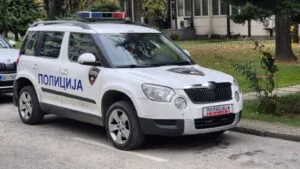
Smugglers Dragged a Police Officer With Their Vehicle at Blace: the Second Car Is What Tells You This Wasn't an Accident
14.09.2026


14.09.2026

14.09.2026
14.09.2026

14.09.2026
13.09.2026

12.09.2026

14.09.2026

14.09.2026

13.09.2026

14.09.2026

14.09.2026

14.09.2026

14.09.2026
13.09.2026

12.09.2026
14.09.2026

14.09.2026
14.09.2026

14.09.2026

14.09.2026

13.09.2026

09.03.2026

27.02.2026

19.02.2026

14.09.2026

14.09.2026

13.09.2026

23.04.2026

23.04.2026

12.04.2026

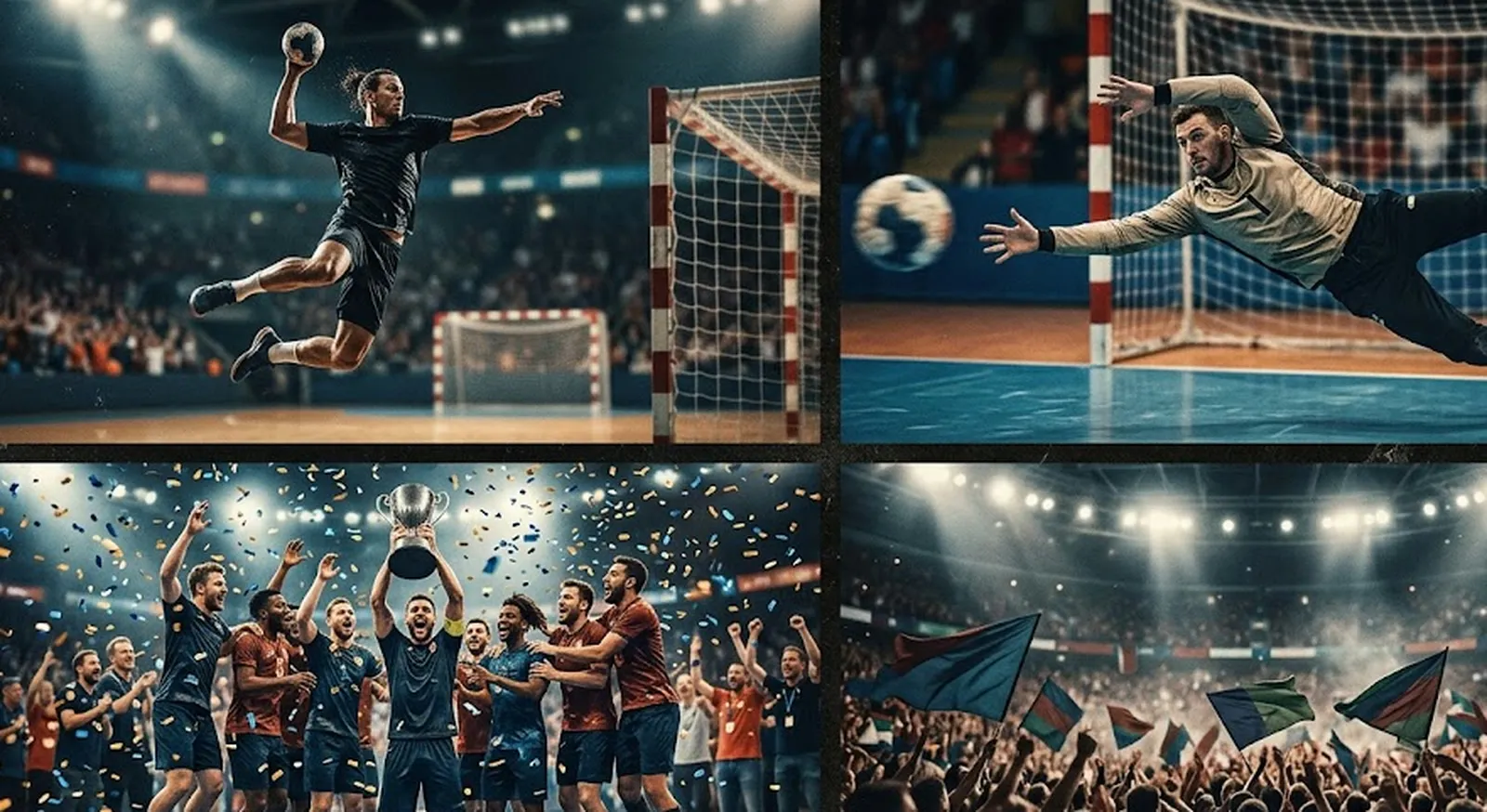
Less than two weeks after the end of the season, the draw for the group stage of the men's EHF Champions League 2026/27 was held in Vienna, and it comes with a new format. The number of teams jumped from 16 to 24, split into six groups of four. The top two from each group go to the main round, the third and fourth continue in the European League. Title holders Barcelona are in group E with Montpellier, Dinamo București and Aarhus, while finalists Füchse Berlin drew Veszprém, Porto and Partizan. The start is on 9 and 10 September. A bigger league means more matches and more money for the EHF - but also thinner quality in the opening rounds, where there is now room for teams that previously had no business being here.
The EHF announced the team of the 2025/26 season, and the dominance of two clubs is obvious. Barcelona supply four players, Füchse Berlin three, and Denmark - the new European champion - is represented by four of its internationals. In goal is Emil Nielsen (Barcelona), the centre back is the Slovenian Domen Makuc, and at right back again Mathias Gidsel, the player who in recent years has swept up every individual award. The vote is split into four groups - fans, players, coaches and media, each with 25 percent. It sounds democratic, but when the two richest clubs fill almost the entire team, the question is whether this is the best squad of the season or just the most watched.
While the big powers carve things up among themselves, a new player is rising in the Balkans. Greece has for the first time in history secured qualification for its women's national team to the EHF EURO, which for a country with no handball tradition is a big leap. Behind it stands a generation of players who grew up together for a long time, like Eleni-Ioanna Kerlidi, who plays beach handball in parallel and won the domestic double with PAOK. „We did not believe we had made it - only when those on the bench began to celebrate did we realise," she says of the decisive match against Spain. The Balkans rarely produce handball stories from scratch - but when they do, they are worth noting, because they show that even without tradition it can be done with hard work.
Macedonian handball gets what it wanted: Vardar 1961 returns to the Champions League. On a special invitation from the EHF, the Skopje club is placed in group B alongside French side Nantes, German Melsungen and Polish Wisła Płock. The schedule is tough - starting away at Melsungen on 9/10 September, then Nantes come to Skopje. It is not an easy group, but for a club that fought for years with financial troubles and a fall from the top, simply returning among the best is a victory in itself. Now comes the harder part - to prove the place is earned, not just gifted with an invitation.
Macedonian handball shone individually too. The goalkeeper of Eurofarm Pelister, Nikola Mitrevski, forced the EHF to honour his spectacular assist to Dejan Manaskov in the match against Barcelona - a goalkeeper who, instead of merely defending, creates a goal against the strongest club in Europe. Meanwhile, Vardar's Slovenian back, Jaka Maluš, was named the best centre back in the team of the EHF European League. Two names, two clubs, one reminder - Macedonian handball can still produce moments that Europe takes note of. The question is whether the clubs around these players will be able to hold on to that class for longer than a single season.
The latest 10 news from this category
Vukasin Vorkapic scored nine goals, Gogov shut the goal down and the deficit melted to one. Nantes come to Skopje...
Vardar returned to the elite after five years and lost by just two goals at the winner of a European...
Fuchse Berlin put 44 goals past Partizan for the biggest win in their Champions League history, Ivanoski is MVP in...

The two-time European champion is back in the elite and closed to within a single goal late on. Ivanoski is...
The red-and-blacks play in Kassel tonight, their first time in the elite since 2021, carrying a suspension over from last...
On the Melsungen bench in Kassel sits Roberto García Parrondo, the man who led Vardar to the European throne in...
The EHF is pulling archive footage from 2017 and 2019, and Vardar enter a group with Nantes, Melsungen and Wisła...
500 denars for a ticket and four years of waiting. Vardar are back in Europe, while the domestic Super League...
Tickets for the Nantes match are already on sale, and the man who brought the first European trophy has signed...
The champion started the way it had to, and one Macedonian in the Bundesliga outplayed two goalkeepers with European titles...
This site uses cookies - is that okay? Learn more
Be the first to know when Metla launches something new
Leave your email and we will write when there is a new guide or something new on Metla.