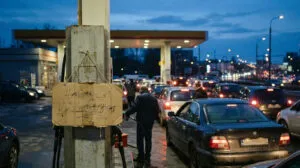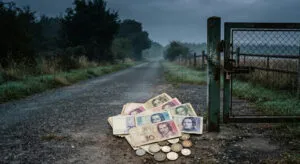
Вајдел го кажа планот гласно: излез од еврото и крај на Шенген, а АфД веќе е пред ЦДУ
24.08.2026



24.08.2026

24.08.2026

24.08.2026

23.08.2026
22.08.2026

22.08.2026

23.08.2026

23.08.2026

22.08.2026

23.08.2026

23.08.2026

23.08.2026

23.08.2026

22.08.2026

21.08.2026

23.08.2026

23.08.2026

23.08.2026

24.08.2026

23.08.2026
23.08.2026

09.03.2026

27.02.2026

19.02.2026
23.08.2026
23.08.2026
22.08.2026

23.04.2026

23.04.2026

12.04.2026
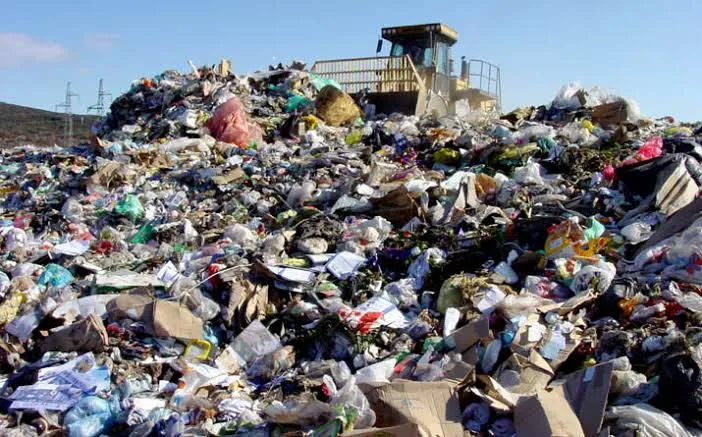
History shows that the greatest environmental tragedies did not begin with sirens, explosions or warnings. They began quietly.
In Japan, the residents of Minamata for years had no idea they were taking mercury into their bodies through fish. In the US, thousands of families lived on top of toxic waste without being aware of the risk. In other cases, people drank polluted water for years, while the official assurances were that everything was fine.
What these examples have in common is one thing: the truth became obvious only once the consequences could no longer be hidden.
That is exactly why, when it comes to industrial facilities that can affect the environment, the public has the right to ask questions. An integrated environmental permit should not be the end of the debate, but the start of transparency. It should not replace trust, but back it up with facts.
When waste is used as fuel, and there is no full insight into its composition, origin, the controls and the results of emissions measurements, it is entirely justified to raise serious questions.
Waste is not ordinary fuel. Its composition can vary significantly, and the emissions produced by combustion depend on that.Citizens have the right to know what is released into the air, how emissions are monitored, who takes the measurements, how often they are checked, and whether the results are publicly available. Only full transparency and independent monitoring can create trust.
History doesn't teach us that every factory pollutes. It teaches us that silence, a lack of information and the dismissal of suspicions can carry a high price.
This is not only about ecology. It is about the health of present and future generations. And health must never be built on assumptions, but on verifiable evidence and public accountability.The latest 10 news from this category
Hectares flown over but no word on what was sprayed, routes announced but no passenger numbers, a demonstration drill but...
Thirteen sprayings and four dead, technical solutions drawn up but never built, and five years of investigation without a single...
Today the difference was made by presence. Where someone was in the field or where the camera worked, there is...
A ban issued six months ago, technical solutions sitting drawn up, eight thousand cubic metres of soil on a landfill...
Institutions spent today chasing things that were already burning. The planes landed, the crews stayed, and the hardest part is...
The measured weight, the marked pothole and the order with the sums all existed before the damage did. This was...
Fifty-two fires in one day stopped by villagers, a crisis closed with a glass of water in front of the...

The finding exists, the report exists, the expert analysis exists. What is missing is someone on the other side to...
Almost every domestic story today has an institution that has the plan, the number or the press release - and...
The day produced paperwork at every step: a referral, a statement that the fires were deliberately set, two contradictory lab...
This site uses cookies - is that okay? Learn more
Be the first to know when Metla launches something new
Leave your email and we will write when there is a new guide or something new on Metla.