
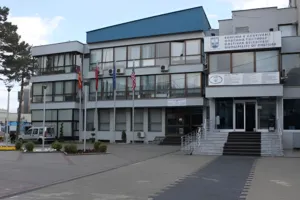
The Macedonian Flag in Gostivar Taken Down and Thrown on the Ground, While the Municipality Claims Nothing Was Removed
29.11.2026


29.11.2026

29.11.2026

29.11.2026

29.11.2026

29.11.2026

29.11.2026

29.11.2026

29.11.2026
29.11.2026

29.11.2026

29.11.2026

28.11.2026

29.11.2026

29.11.2026

29.11.2026

29.11.2026
28.11.2026

27.11.2026
29.11.2026
28.11.2026
27.11.2026

29.11.2026

28.11.2026
28.11.2026
29.11.2026
29.11.2026

28.11.2026

23.04.2026

23.04.2026

12.04.2026

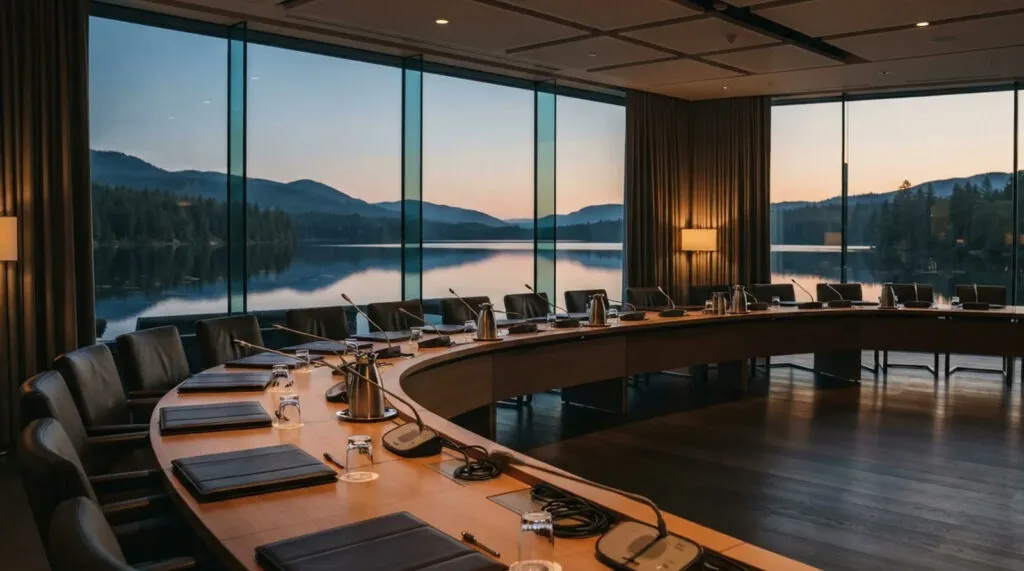
Aleksandar Čupić, the newly elected speaker of the National Assembly of Serbia, came to Ohrid for the meeting of the Brdo-Brijuni Process. There he sat down with the president of Montenegro, Jakov Milatović, and after the meeting told a TV station that Montenegro's progress on the road to the European Union is inspiring for Serbia. He added that it had been interesting to hear about Milatović's ups and downs and that he expects the European path to be felt by the citizens of both countries.
Textbook praise. Except that in the Balkans, every compliment has a flip side.
The reply came from Montenegro. Milan Knežević, leader of the Democratic People's Party in Montenegro, shared the video of the statement and listed three decisions by official Podgorica beneath it: "Montenegro recognised Kosovo, joined NATO and introduced sanctions against Russia. Very inspiring!"
Knežević's irony isn't a made-up list. These are the real steps by which Montenegro got to the place Čupić is now praising. Both men are describing Podgorica's European path, just from opposite ends: Čupić talks about the result, Knežević about the price Podgorica paid for it. Serbia doesn't recognise Kosovo's independence, so praise from Belgrade for the neighbour that did recognise it sounds like a sentence spoken without reading it to the end. Is the new government in Belgrade ready for the whole list, or just for the compliments?
The biggest irony is that all of this was said in Ohrid. Macedonia recognised Kosovo back in 2008, joined NATO in 2020, and changed its very name for the European door - and is still waiting in front of it. If anyone in the region can explain to the neighbours what the "inspiring" path costs, it's the hosts of the meeting.
The Brdo-Brijuni Process is meant to be a table where the region's leaders talk about Europe. What came out of Ohrid was more honest than any joint declaration: in the Balkans, even simple praise for a neighbour quickly turns into a political row. Who will lead Serbia towards the Union, if every word about someone else's success is read as betrayal?
The latest 10 news from this category
Over 800 euros for every day in the camp - and that is just one of the eight conditions Zagreb...

The region's presidents gathered in Ohrid to talk about joining the EU faster. The loudest message came from the president...
Belgrade's new government is holding in custody the editor who for years was the loudest defender of the old one,...

Podgorica brought back visas for Turks to please Brussels, and Ankara answered with Erdoğan's signature. European integration in the Balkans...

The students beat Vučić, but the academician they're fielding for president calls the border with Bosnia "fictitious" and claims Moscow...

Belgrade has detained the editor of the tabloid that ran "Ukraine Attacked Russia" before the invasion. Now he cries persecution...

A bank that lost money for years, then started making millions after the war in Ukraine began. A firm with...
A Bosniak wartime commander and a former Republika Srpska MP were guests at the wedding of a man police have...

Belgrade recognises Kosovo, and he'll push for the euro in 2027 - plus Čupić's face on a two-euro coin. After...
Čupić announced elections on 27 December, fewer ministries and a parliament that will hold the government to account. How many...
If we need anything more, we'll write to the email you left.
Close the form?
What you've entered will be lost.
This site uses cookies - is that okay? Learn more
Be the first to know when Metla launches something new
Leave your email and we'll write to you when there's a new guide or something new on Metla.





