
A sniper rifle, automatic weapons and an ISIS flag from 12 locations in Skopje: intelligence agency talks of radical imams and recruiting young people
30.09.2026


30.09.2026

30.09.2026
30.09.2026
30.09.2026

30.09.2026

30.09.2026

30.09.2026
29.09.2026
28.09.2026
30.09.2026
30.09.2026

29.09.2026

30.09.2026

30.09.2026

30.09.2026

30.09.2026

29.09.2026
28.09.2026

30.09.2026

30.09.2026

30.09.2026

09.03.2026

27.02.2026

19.02.2026

30.09.2026
29.09.2026

28.09.2026

23.04.2026

23.04.2026

12.04.2026


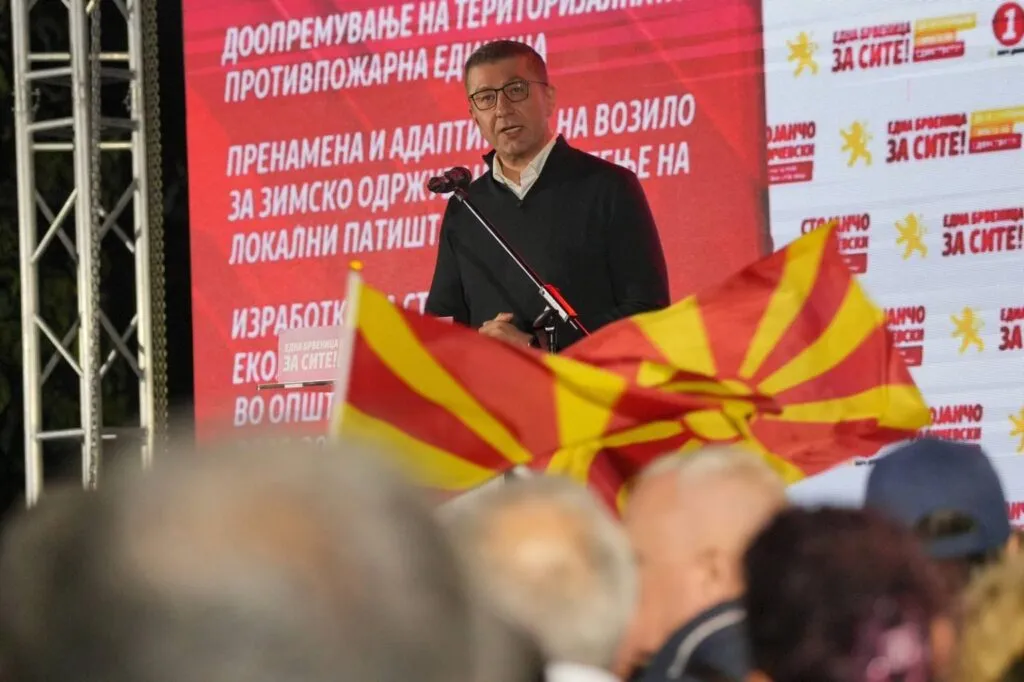
Inflation "50 percent lower" than in Europe. That is how Prime Minister Hristijan Mickoski presented the state of the economy from a party podium at a rally in Brvenica on September 28. The figures he cited: 2.3 percent in July and 2.6 percent in August, against 2.9 and 3.2 percent in Europe.
The figures themselves are correct. The maths - not so much. Inflation of 2.6 versus 3.2 percent is lower by about a fifth, not by half. For it to really be "50 percent lower," August inflation here would have had to be 1.6 percent.
But the bigger problem isn't the percentage. Inflation measures how fast prices are rising, not how high they are. A product that went from 100 to 140 denars doesn't get cheaper when inflation falls - it just keeps rising, only more slowly. The earlier price hikes stay baked into every bill.
The basket doesn't listen to speeches
According to the Federation of Trade Unions of Macedonia, the union's minimum consumer basket reached 69,432 denars in September - 757 denars more than in August, 4,355 more than last September and 8,126 more than in 2024. The average net salary in July, according to the State Statistical Office, was 48,499 denars, 4.7 percent higher in real terms than a year earlier. The gap between the basket and a single average salary is over 20,000 denars - and the average says nothing about the people who earn below it.
In 2025, food and non-alcoholic drinks stood at around 74 percent of the average EU price level. Sounds cheap, until you set it against wages. In August alone, food and non-alcoholic drinks rose another 0.5 percent in a single month. Citing preliminary estimates from the State Market Inspectorate, the prime minister is forecasting annual food inflation of between 1.5 and 2 percent. The final data will come from the State Statistical Office.
Real GDP growth of 4.3 percent is an official and positive figure. But the biggest jump is in construction, a full 21.9 percent, while seasonally adjusted growth for the economy as a whole is 4 percent. At the rally, Mickoski himself said growth must continue and "the results must be felt more - in higher wages." Even his loudest critics would agree with that. The only question is when.
The latest 10 news from this category
Mickoski name-drops the American DFC and a double-digit rate of return. The financing still isn't in place - and the...
Industrial water from underground sources, closed cooling loops, citizens first - the promises are all there. How many litres and...

It all started when Microsoft cut off the International Criminal Court prosecutor's email. Now France is switching state computers to...
AI agent safety is being offered as open source, but full protection only works on Nvidia chips. And the company...
Expected revenue growth of 90 percent, 5.7 million paying members, 372 million dollars in the bank - and yet the...

Remote start, unlocking from your phone, navigation - convenience has a price that isn't in the owner's manual. Only one...
In seven days, diesel jumped by 5.50 denars and then dropped by 4.50. Part of the new "hundred" is borrowed...
The average across 55 global markets is 1.4 percent. In Macedonia, flat prices are rising by around 13 percent even...
The growth figures came from a campaign rally, along with the message that wages still have to catch up. And...
It was supposed to arrive in ChatGPT in October and work with no human looking over its shoulder. In testing,...
This site uses cookies - is that okay? Learn more
Be the first to know when Metla launches something new
Leave your email and we will write when there is a new guide or something new on Metla.