Three of Four Sensors Were Dead: Skopje's Vodno Cable Car Ran Fifteen Years Without a Real Service
17.09.2026


17.09.2026
17.09.2026
17.09.2026
17.09.2026
17.09.2026
17.09.2026

17.09.2026

16.09.2026

15.09.2026

17.09.2026

17.09.2026
16.09.2026
17.09.2026

17.09.2026

17.09.2026

17.09.2026

16.09.2026

15.09.2026

17.09.2026

17.09.2026

17.09.2026

17.09.2026

17.09.2026

17.09.2026

09.03.2026

27.02.2026

19.02.2026

23.04.2026

23.04.2026

12.04.2026

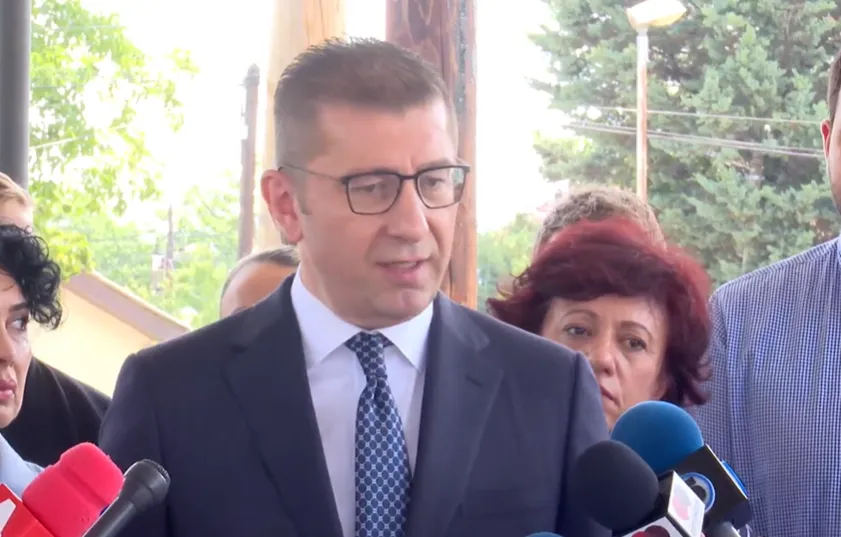
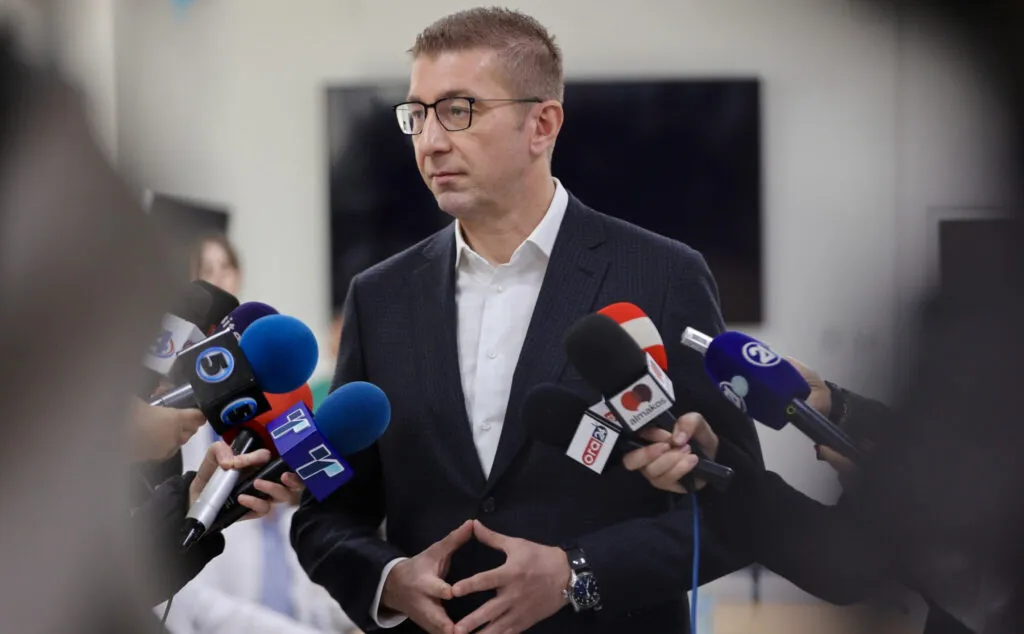
Prime Minister Hristijan Mickoski said today he will not run for president of the state at the next elections, planning instead to return to the university as a professor once his term ends. A statement that sounds like a personal decision at first glance - but one thrown right into the middle of the Election Code negotiations, and that's no accident.
The context is everything. Mickoski put his political future on the table as a guarantee, to win the opposition over to supporting the Election Code amendments. The sticking point is VMRO-DPMNE's proposal for electronic voting by Macedonian citizens living abroad - the issue on which the talks stalled.
The message to the opposition is almost open: look, I won't run for head of state, so ease your resistance to our voting solution. A political promise used as currency to strike a deal. Does a gesture like that really change the arguments for and against the voting method, or does it just shift the topic from the substance to the personalities?
The question of how citizens abroad will vote is no technical trifle - it directly affects the outcome of future elections. And that's exactly why any promise attached to it should be read carefully. Mickoski promised what he won't do for four years; what matters more to citizens is what gets decided about the voting method now, while the talks are on.
It remains to be seen whether the statement will soften the opposition or just bring another round of tug-of-war. One thing is certain - when a prime minister offers his own future as an argument in negotiations over election rules, it shows how high the stakes are. And the stakes, as always, are who gets to write the rules everyone will play by at the next elections.
The latest 10 news from this category
Of 340 million denars, only 40 million came from private money - the rest came from the State Lottery. Prosecutors...
The State Audit Office already warned that withholding the points makes favouritism possible. The rulebook requiring them to be published...
Two senior officials announced progress, the two largest parties denied it the same day. The amendments sit blocked behind 13,500...
The police acted on their own knowledge, without the PM filing anything at all. The same mechanism exists for every...
The Electoral Code is the one unfulfilled reform obligation, and the working group does not even know when it will...
It was supposed to cost "zero denars". Now the opposition wants an investigation, and the timeline - David Guetta announced...
Five negations in one sentence, pension growth "16 times higher" with not a single figure beside it, and a third...
One side waits for a letter, another waits for a different commission, a third waits for consent. In those same...
The commission's chairman says it only checked whether the documents were complete. The public call says something else entirely -...
Three candidates, two of them lawyers, one of them employed by the very municipality he is running for. The line...
This site uses cookies - is that okay? Learn more
Be the first to know when Metla launches something new
Leave your email and we will write when there is a new guide or something new on Metla.