

Koraboski's Trial Begins: Custody Came Only After the Public Revolted
27.11.2026


27.11.2026

27.11.2026

27.11.2026

27.11.2026

27.11.2026

27.11.2026

27.11.2026

26.11.2026

25.11.2026

27.11.2026

27.11.2026
26.11.2026

27.11.2026

27.11.2026

27.11.2026

27.11.2026

26.11.2026

25.11.2026

27.11.2026

26.11.2026

25.11.2026

27.11.2026

27.11.2026

24.11.2026

23.04.2026

23.04.2026

12.04.2026

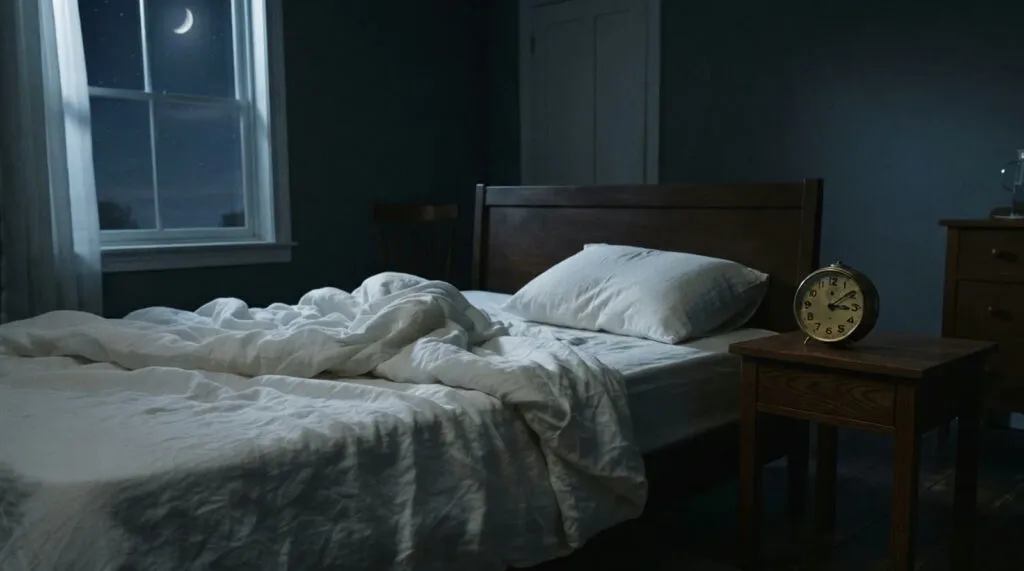
For two years, Spanish model Mar Flores slept between three and four hours a night. She got up without trouble, worked, stayed active and thought everything was fine. Until one day she sat down to work something out. "I needed a calculator to add 10 and 10," she said on a Spanish TV show.
The signs had come before that. "I started having a kind of fog in my head, I wasn't really responding to my kids' questions. And where did I leave this?" she describes. This isn't just a story about one celebrity, but about something many people put up with night after night, because they seem to be functioning.
Neurologist Francisco Mira, head of the brain health unit at a preventive medicine clinic in Altea, is clear: "Sleeping three or four hours, when it goes on for a long time, is far below what most adults need, and we shouldn't normalise it." Sleep, he says, is an active process during which key functions take place for metabolism, the heart and blood vessels, memory, immunity and physical and mental recovery.
Mira isn't only talking about how long we'll live, but how many of those years we'll be healthy. "We're not just looking to live longer, but to keep our physical and cognitive abilities for longer," he explains. Chronic sleep deprivation, he warns, is a factor that steals exactly those years.
Paz Torralba, who runs a beauty and aesthetic medicine centre in Madrid, goes further. Night is when the body repairs tissue and balances hormones, and the brain does its own cleaning, and on three or four hours "that work is left half done". If it goes on, cortisol, the stress hormone, stops falling: immunity weakens, hunger and sugar cravings grow, and in the long run so does the risk to the heart. "The most deceptive part is that people usually believe they're fine, because the body gets used to running on reserve."
The cost is emotional too. Without sleep, the part of the brain that manages emotions becomes more reactive, and the part that calms us down weakens. Irritability, anxiety and exactly the fog Flores described set in. And the circle closes: the worse we sleep, the more anxious we get, and the more anxious we get, the worse we sleep. The neurologist adds one more loop: one bad night breeds fear of the next one, and that fear wakes a person up exactly when they need to fall asleep.
What to do? When the problem lasts a long time, Mira warns, the answer isn't just going to bed earlier or trying harder to fall asleep. First the cause has to be found: stress, an irregular schedule, a disrupted body clock, hormonal changes, medication or another sleep disorder. His advice is simple: a regular schedule, bed only when you're actually sleepy, daylight during the day, movement and no caffeine late in the day, in a dark, quiet and cool room.
All of this sounds obvious. But how many times have we heard someone boast that they "function" on four hours of sleep, as if it were a medal and not a warning?
The latest 10 news from this category

Nobel laureate Hesse boiled happiness down to one sentence. Psychologist Ana Morato explains why "love yourself first" sometimes just adds...

Naples invented pizza, but on the "50 Top Pizza" list for 2026 first place went to a Spanish chain. The...

She has made them all her life and measures nothing. Worked out in grams, 125 grams of flour is enough...

Caffeine and L-theanine in the morning, unsweetened cocoa at noon, turmeric at night. But the most important ingredient, says the...

Thanksgiving is tomorrow, and social media is full of pumpkin cake in the shape of a wreath. Grandma's pumpkin pie...

The course you dropped and the half-knitted scarf don't mean you're lazy. According to a psychologist, more often they mean...

Five days before the election in which she heads a list in Madrid, Miriam González Durántez has a recipe older...

One texts all day, the other just shows up when it counts. Psychologists say that's fine, as long as nobody...

The fridge looks like a smart solution, but it's actually the fastest route to hard bread. What to do instead,...

"What will people say?" The Balkans know that sentence by heart. Coach Sara Manzaneque offers two tools so that other...
This site uses cookies - is that okay? Learn more
Be the first to know when Metla launches something new
Leave your email and we'll write to you when there's a new guide or something new on Metla.