
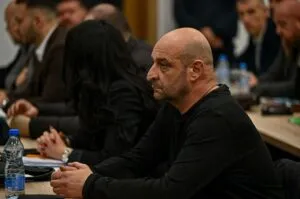
New Investigation Into the Owner of "Pulse": Prosecutors Say He Bought the Licence With a Bribe
02.10.2026


02.10.2026
02.10.2026
02.10.2026
02.10.2026
02.10.2026
02.10.2026
02.10.2026
01.10.2026

30.09.2026

02.10.2026

02.10.2026

01.10.2026

02.10.2026

02.10.2026
02.10.2026

02.10.2026
01.10.2026
30.09.2026

02.10.2026

02.10.2026

02.10.2026

02.10.2026
01.10.2026
01.10.2026

09.03.2026

27.02.2026

19.02.2026
02.10.2026

01.10.2026

01.10.2026

23.04.2026

23.04.2026

12.04.2026

Biljana Plavšić, former president of Republika Srpska, died this morning in Belgrade, aged 96. Sources close to the family confirmed the news, and according to current information the funeral will be held in Banja Luka. With her goes one of the key figures of the Bosnian Serb leadership of the nineties - and the only woman ever convicted by the Hague tribunal.
Her biography reads as if it were written for two different people. Born in Tuzla in 1930, she grew up in Sarajevo. She graduated in biology in Zagreb and earned her doctorate in botany there, specialised in the US as a Fulbright scholar and did research in laboratories from Prague and London to New Delhi. She was a professor and dean of the Faculty of Natural Sciences and Mathematics in Sarajevo. And then, before Yugoslavia broke up, she left science for politics - at exactly the moment when politics in the Balkans was becoming a matter of life and death.
In 1990 she was elected to the collective Presidency of Bosnia and Herzegovina. In April 1992, on the threshold of war, she resigned and moved into the leadership of Republika Srpska. She left Sarajevo, where the war had already begun, on 20 May 1992, the last of the inner Serb leadership to do so. In September 1996, under pressure from the international community, Radovan Karadžić handed her his presidential powers, and the same year she was elected president of Republika Srpska. Two years later she lost to the Radicals' candidate, Nikola Poplašen.
The Hague, a confession and a return home
The Hague tribunal's indictment dates from April 2000. In January 2001 she surrendered voluntarily. On 27 February 2003 she was sentenced to 11 years in prison - after pleading guilty to persecution, a crime against humanity, following which the prosecution dropped the remaining counts, including genocide. She served her sentence in Sweden's Hinseberg prison and was released at the end of October 2009, after serving two thirds of the sentence, returning to Belgrade.
Later, in an interview with a Swedish outlet, she claimed she had done nothing wrong and that her guilty plea had been a sacrifice, not remorse. That's the moment the story takes on a Balkan tone we know all too well: a confession before the international court, and at home the explanation that the confession meant nothing.
That's why what happens at the funeral will matter more than the obituary. Will Banja Luka give state honours to a woman convicted of a crime against humanity? Will anyone from the current leadership of Republika Srpska stand beside the coffin, and what will they say? It wouldn't be the first time the Balkans sent off a convict with flowers and speeches, while the names of the persecuted remain only in court records.
Plavšić lived to 96, the last seventeen of those years in freedom. That's far more than the war left many of those whose persecution she herself admitted before the court.
The latest 10 news from this category
Barrier-free trade and access to research programmes - if you align with Brussels's foreign policy and don't share technology with...
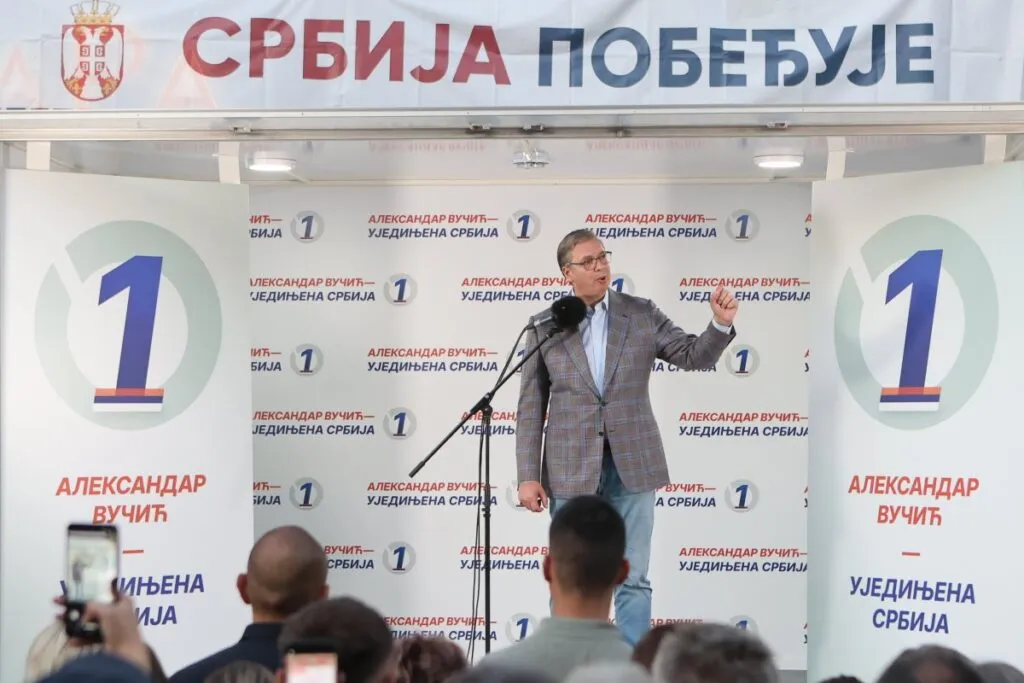
In front of more than 10,000 people in Jagodina, Vučić talked about six or seven billion euros "from outside" and...
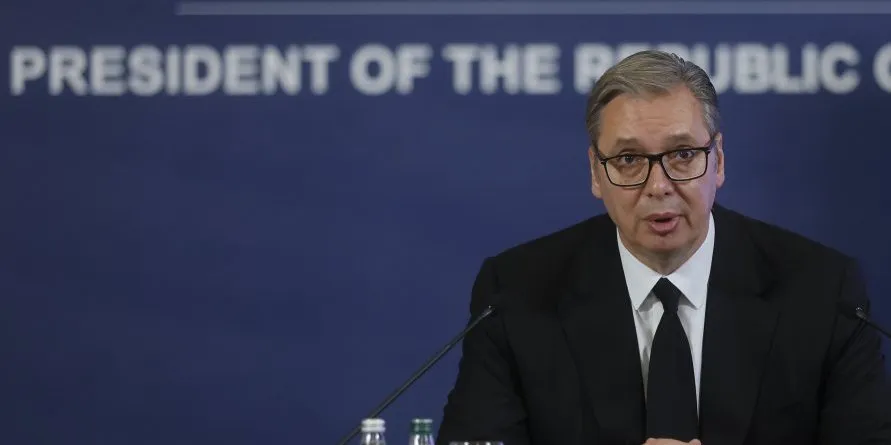
Russian news agency RIA Novosti celebrates him as a master at sitting on two chairs, while describing Serbia as an...

A Greek firm's lobbyist sat beside the US ambassador, the firm won a six-billion-dollar deal in Albania, and the Romanian...
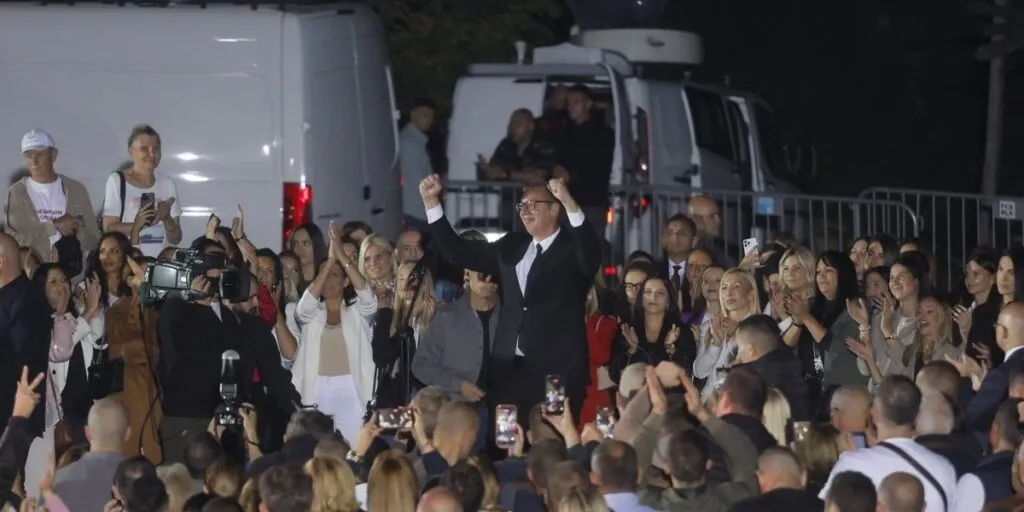
After two terms, Vučić signed his resignation outside the Presidency, in front of a crowd with flares - and that...
On Sunday evening Vučić steps down as president, but first he personally informed Putin. The legacy he leaves: Russian gas...
A billionaire with a Kyiv arrest warrant first bought a 10-million-euro property in Croatia, then got a Serbian passport. Belgrade...
Zelensky in Ukraine, Lavrov in New York, Putin on the phone - all within a few days. Belgrade plays at...
Dozens of delegations walked out of Netanyahu's UN speech; Serbia's stayed in their seats. Belgrade and Israel are now also...

Before the General Assembly, Vučić complained of double standards over Kosovo, attacked Croatia and looked to Trump to save the...
This site uses cookies - is that okay? Learn more
Be the first to know when Metla launches something new
Leave your email and we will write when there is a new guide or something new on Metla.