Six Years of Fake Licence Categories Issued From an Interior Ministry Desk: Six Charged, 21 More Under Investigation
21.09.2026


21.09.2026
21.09.2026

21.09.2026

21.09.2026

21.09.2026
21.09.2026

21.09.2026

20.09.2026

20.09.2026

21.09.2026

21.09.2026

20.09.2026

21.09.2026

21.09.2026

21.09.2026

21.09.2026

20.09.2026

19.09.2026

21.09.2026

21.09.2026

21.09.2026
21.09.2026
21.09.2026

21.09.2026

09.03.2026

27.02.2026

19.02.2026

21.09.2026

21.09.2026

20.09.2026

23.04.2026

23.04.2026

12.04.2026

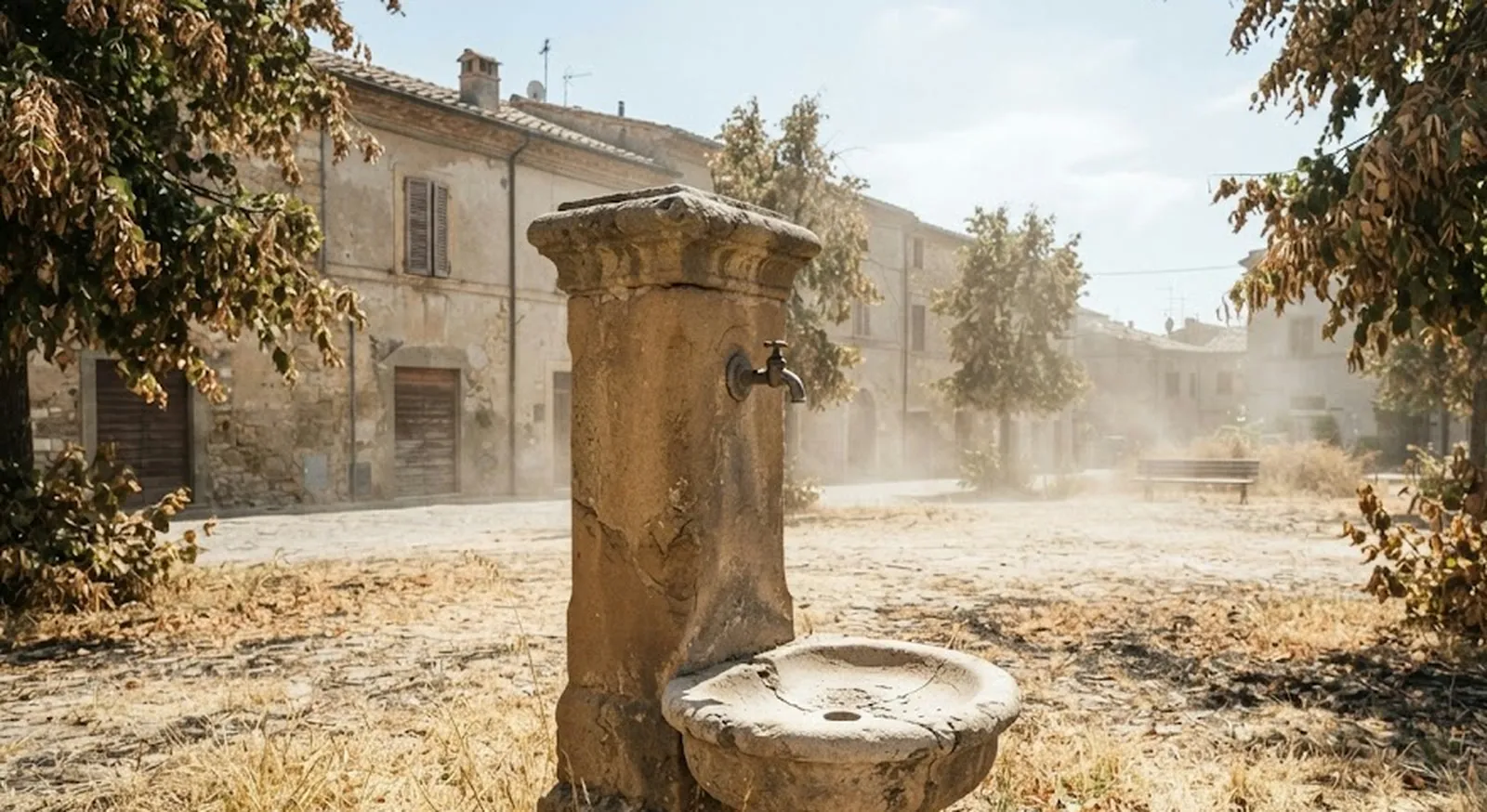
Hungary has introduced drinking water restrictions in hundreds of settlements. According to data published on the government website, first-degree restrictions apply in 465 settlements, second-degree in 151, and the strictest, third degree - the one where water is distributed rather than consumed - is in force in 13.
The cause is twofold and banal: a prolonged heatwave and increased consumption. Which is to say, heat plus people trying to endure the heat. Forecasts say that from 6 to 11 August an even stronger heatwave will settle over the country, with barely noticeable overnight drops in temperature.
From the tap to the reactor
But the tap is only one end of the story. The other is the Danube. The General Directorate of Water Management warned that the water level at Paks has fallen to 135 centimetres - and Paks is not just any point on the river. That is where Hungary's nuclear power plant sits, and that plant is cooled with Danube water.
The response was mechanical and urgent: additional floating pumps were installed at the pumping stations, with reserve units deployed at the port and on land. The defence working group sat down to review the energy supply situation and the consequences of the water shortage. When a state convenes its defence working group over a river level, that is no longer a weather forecast.
A river that is no longer guaranteed
For centuries the Danube counted as the most reliable infrastructure in this part of Europe. It required no maintenance, no budget, no political will. It simply flowed. Nuclear plants, irrigation systems, shipping corridors and entire economies were built on that assumption.
The assumption is falling apart. And not gradually over a decade, but within a single summer, in centimetres measured daily. If the Paks plant depends on floating pumps to get enough cooling water, then the question is no longer whether the plan was a good one - it is who else in the same river basin still thinks their plan is fine.
The same basin, the same summer
Macedonia is not on the Danube, but it is in the same climate zone and running on the same logic. Here too summer water consumption climbs, here too hydropower depends on water levels, and here too the response to drought usually arrives after the problem is already on the front page.
Is anyone here counting centimetres before they start counting damages? Hungary only started counting once it had to invent floating pumps to keep a nuclear plant running. Thirteen settlements are already at the third degree. The heat is still coming.
The latest 10 news from this category

Three options on the table in Washington - military pressure, economic strangulation or a deal - and the president frames...
The party of Adenauer and Kohl slid to the electoral threshold in Mecklenburg, the AfD is already demanding the chancellor's...
Two prime ministers in the same Union, the same month, completely opposite diagnoses of who is provoking whom. There is...
A broken aircraft in a field usually ends up in a police note. This one ended up with federal investigators,...
Beijing will easily find another supplier. The harder question is what Washington is actually testing: whether private Chinese companies will...
The law lets Washington hit the five biggest buyers of Russian oil with tariffs of up to 100 per cent....

Measures imposed over the war in Ukraine are now being offered as currency in an entirely different dispute. If the...

A smaller dose and more needles does not mean a safer vaccine, it means an ineffective one. Science has had...
Harald designed the sarcophagus himself, and it is shaped like a ship. The stone is 400 million years old and...

Von der Leyen proposed a status that does not exist in European law, the Canadians distanced themselves, and Washington announced...
This site uses cookies - is that okay? Learn more
Be the first to know when Metla launches something new
Leave your email and we will write when there is a new guide or something new on Metla.