


Studeničani: 35-year-old dies after being electrocuted while washing his car with a pressure washer
18.09.2026


18.09.2026
18.09.2026

18.09.2026
18.09.2026

18.09.2026
18.09.2026
18.09.2026

17.09.2026
16.09.2026
18.09.2026
18.09.2026

17.09.2026

18.09.2026
18.09.2026

18.09.2026
18.09.2026
17.09.2026

16.09.2026
18.09.2026

18.09.2026
18.09.2026

18.09.2026
17.09.2026

17.09.2026

09.03.2026

27.02.2026

19.02.2026

18.09.2026
17.09.2026
16.09.2026

23.04.2026

23.04.2026

12.04.2026

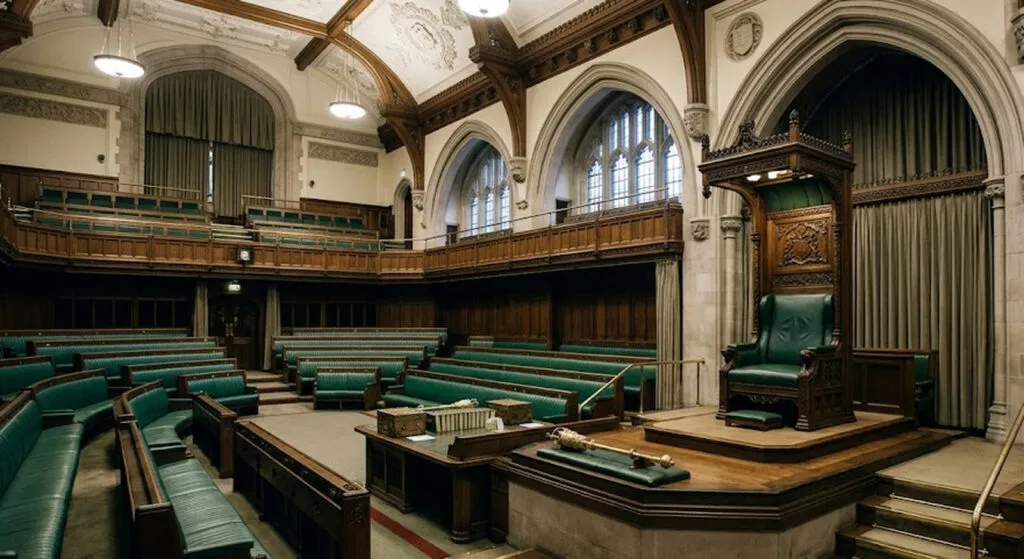
Three weeks after elections, Slovenia got the answer to the question all of Europe was waiting for: Janez Jansa is returning to power - for the fourth time. The SDS leader, whom many consider the Balkans' Orban, is one step from forming a government with a coalition that includes a parliament speaker planning a NATO exit referendum and a visit to Moscow.
How did it come to this? Democratic Party leader Anzhe Logar - former foreign minister under Jansa and a longtime SDS member who left the party two years ago - broke off negotiations with PM Robert Golob's Freedom Movement. The reason? Golob allegedly tried to "impose a coalition agreement." Freedom Movement responded that negotiations never actually took place.
"We sent Logar invitations and proposals but received no response. Despite this, they created a public impression that talks were ongoing. That simply isn't true," Golob's party stated.
Jansa's coalition: from the right to NATO-skeptics
With NSi's support (8 seats), the Democrats (6 seats), and Resnica (5 seats), Jansa commands over 46 parliamentary seats needed for a majority. And Resnica is the party whose leader Zoran Stevanovic - a former police officer known for anti-vaccine activism and climate change denial - was elected parliament speaker with this very coalition's votes.
The same Stevanovic who declared before a notary that his party would never cooperate with SDS or Jansa. The same one who, immediately after being elected, gave an exclusive Sputnik interview and confirmed plans for a NATO exit referendum and a Moscow visit to "build bridges between East and West." He would be the first EU member state parliament speaker to visit Moscow since Russia's invasion of Ukraine.
The president: "46 votes - and the mandate is yours"
Everything depends on President Natasha Pirc Musar, who begins consultations from April 20. Her condition is clear: "Whoever brings me 46 votes gets the mandate." But she added another caveat - she won't grant a mandate to anyone who attempted to influence Slovenian elections through foreign actors, a direct reference to the Black Cube Israeli private intelligence firm affair.
According to Delo journalist Uros Esih, Jansa has already distributed ministerial positions: 8 for SDS, 5 for NSi, 3 for Democrats, while Resnica stays outside government with external support.
Election results were nearly identical: Freedom Movement got 28.62%, SDS 27.95% - a one-seat difference. But that minimal gap is turning into a maximum course change. Europe gets another government where a coalition partner talks about a NATO referendum and visiting Putin. Will Brussels react, or once again wait until it's too late?
The latest 10 news from this category
The call was about damaged furniture on a terrace. Armin Dzutovic died three days later. The internal investigation found first...
Four KLA leaders received 81 years in prison, and Albania's parliament immediately adopted a declaration calling the verdict unjust. The...
The court established responsibility for 96 killed, 303 tortured and 385 unlawfully detained. The prosecution asked for 45 years. Serbia...
Thaci and Krasniqi got 25 years each, Veseli 18, Selimi 13. The court established 385 unlawfully detained, 303 tortured and...
"If it is acceptable to the participants" - that is the entire offer. What gets negotiated is the format, not...
Thousands walked from the Rectorate to the electoral commission, and the signatures had to be queued for all weekend because...
Thousands of people under a digital clock and a banner asking for them to be found innocent. On Wednesday The...
The ruling list sailed through without a single problem, the student list was left waiting in line. Nobody banned anything...
The same firm that supplied ammunition to Ukraine for years is burning for the second time in a month. Seven...
A third attempt in three years, but this time the signatures came from the government benches too. Six MPs from...
This site uses cookies - is that okay? Learn more
Be the first to know when Metla launches something new
Leave your email and we will write when there is a new guide or something new on Metla.
