

A Grave of Soil Outside the Interior Ministry for 59 Murdered Women: "Not One More" Gives MPs Until 10 December
26.11.2026


26.11.2026

26.11.2026

26.11.2026

26.11.2026

26.11.2026

26.11.2026

26.11.2026

25.11.2026

24.11.2026

26.11.2026

26.11.2026

25.11.2026

26.11.2026

26.11.2026

26.11.2026

26.11.2026

25.11.2026

24.11.2026

26.11.2026

25.11.2026

24.11.2026

24.11.2026

23.11.2026

23.11.2026

23.04.2026

23.04.2026

12.04.2026


In Copenhagen, scientists have managed to get a plant from the tobacco genus to produce paclitaxel. In Skopje, patients at the University Clinic for Radiotherapy and Oncology are going home without it. According to the opposition party Levica, chemotherapy patients have been told: "Don't expect the drug before New Year."
Paclitaxel, also known as Taxol, is one of the most commonly prescribed drugs in chemotherapy. It's used against breast, ovarian, cervical and lung cancer. It occurs naturally in the bark of the yew tree, but in very small amounts, so today it's produced semi-synthetically from a substance found in the needles of the European yew. That's why it's an expensive and hard-to-get drug.
The minister, the director and the wholesalers
On 23 November, Levica announced that patients had been left without key cytostatic drugs, including paclitaxel. The next day, according to the party, patients were again being sent away from the clinic. And Health Minister Sasho Klekovski, Levica claims, shifted the responsibility onto the clinic's director, who in turn shifted it onto the pharmaceutical wholesalers and called the problem "logistical obstacles".
Chemotherapy is not an appointment you can move around like a check-up with your GP. Cycles are given on an exact day, weekly or every 21 days. Levica warns that a delay of more than two to four weeks lowers the rate of complete remission and that the tumour can develop resistance to the drug. When there are patients already in the middle of treatment, "logistical obstacle" is far too small a phrase.
Who owes whom, and how much
Levica claims the root of the problem lies in the unpaid debts of the Ministry of Health and the Health Insurance Fund to the wholesalers, and that the state is the biggest debtor, breaking the legal payment deadlines for years. It wants both institutions to publish exactly how much they owe the wholesalers. That's a figure every patient has the right to know.
Party press releases are not a diagnosis, and Levica is openly taking aim at the minister. But the question it raises is legitimate even without a party label: when was the drug ordered, when was it supposed to arrive, and who is responsible for it not arriving? While a plant in a Danish lab is producing a cancer drug, Skopje is still looking for who dropped the ball.
The latest 10 news from this category

As protesters poured soil outside the ministry, Minister Toshkovski pointed out that there were seven femicides under his predecessors too....
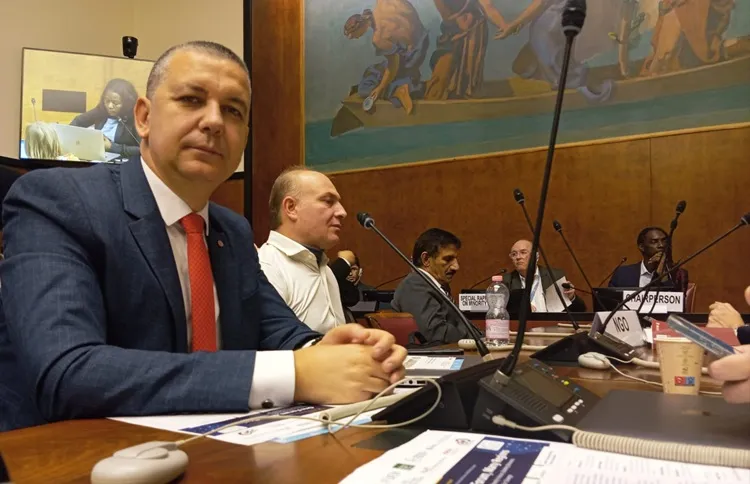
Before the UN Special Rapporteur in Geneva, Sterjovski warned that Bulgaria is using its EU position to impose an identity...
The City of Skopje promises new hidden apartments for victims, the minister promises body cameras for every uniformed officer. All...

Bitola municipality wants artists for its New Year programme but won't say how much money there is. The mayor's committee,...

37 million denars, 400 square metres and room for about a hundred more pupils. The opening drew a prime minister,...

The message claims some payment account features are unavailable and asks you to "update" via a link. The bank's logo...
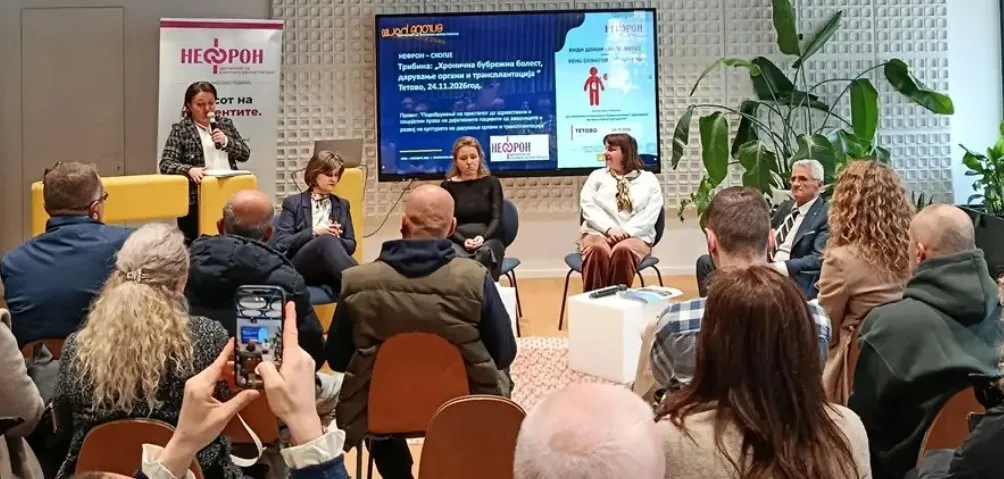
The circle of living donors now reaches fourth-degree relatives. The rest of the new law, for now, is waiting on...

На надзорната расправа за Алта банка во македонското Собрание, како сведок беше повикан Трифун Костовски, поранешниот главен акционер на пропаднатата...

Students get 140 denars, the minister offers a new calculation and a survey, and the new model only from October...

The Interior Ministry admits the system has to tell a parked car from a car stuck in traffic. When it...
This site uses cookies - is that okay? Learn more
Be the first to know when Metla launches something new
Leave your email and we'll write to you when there's a new guide or something new on Metla.