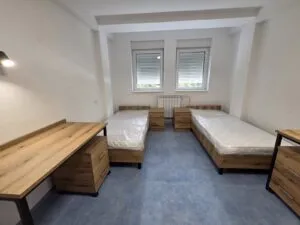
Stiv Naumov dorm renovated for around 10 million euros: a month later water runs through the walls and the ministry counts wet wipes
24.10.2026


24.10.2026
24.10.2026

24.10.2026

24.10.2026
24.10.2026

24.10.2026

24.10.2026

23.10.2026
22.10.2026

24.10.2026

24.10.2026

23.10.2026

24.10.2026

24.10.2026

24.10.2026

24.10.2026

23.10.2026

22.10.2026

24.10.2026

24.10.2026

24.10.2026

24.10.2026

23.10.2026
23.10.2026
24.10.2026

23.10.2026

23.10.2026
24.10.2026
22.10.2026

20.10.2026

23.04.2026

23.04.2026

12.04.2026

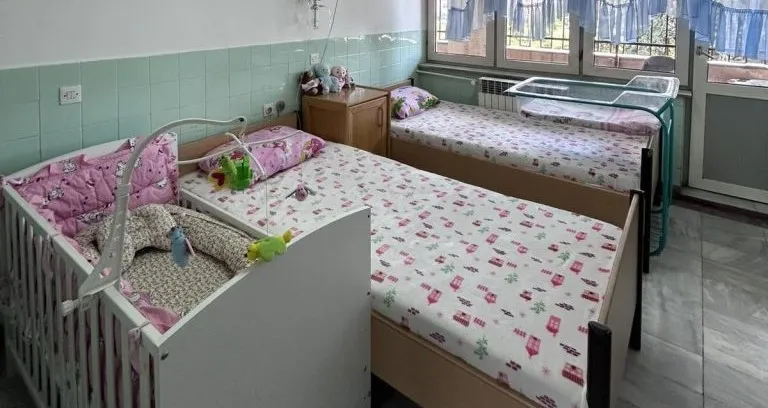
For five years, children from Ohrid who needed hospital treatment were driven to Struga. Not because there was no ward - the ward existed - but because there were not enough pediatric specialists, so it ran as a clinic with limited hours.
Now it is open 24 hours again. And that is news worth saying out loud, in a country where health stories usually go the other way.
The children's ward at Ohrid General Hospital cares for children from the earliest, neonatal age up to 14 - through outpatient services, on-call shifts, inpatient treatment, diagnostics, and follow-up until recovery. That is a description of a normal pediatric department. For five years it was not normal.
What one year of full hours did
Since round-the-clock hours were introduced, the ward has carried out around 10,000 check-ups and admitted around 120 children. Ten thousand check-ups in a single year - that is the number that shows how big the hole was while the service was missing.
Hospital director Dr Goran Markoski points out that the ward has a future because five doctors are in specialist training, and their return will strengthen capacity further.
Five trainees. That is the answer to the problem that closed the pediatric ward - and an answer that should have started five years ago, not one.
The equipment arrived, but not from where it should have
Over the past period the ward was equipped with inhalers, a pediatric ECG, a pulse oximeter with a neonatal sensor, a gas analyser, a suction unit, hospital cots, air conditioners, heaters, children's bed sheets and blankets, new staff uniforms and a small children's library, and the toilets were renovated.
A list that sounds good until you look at where it came from: with support from charitable citizens and organisations, through donations, and with funds secured by the hospital management.
So the sheets and blankets for a children's ward in a state hospital were provided by citizens. That is not a story about generosity - it is a story about a budget. When donations cover the basic equipment, the question is not why people give, but why they have to.
And one more pressure nobody plans for
Ohrid is a tourist town. During the season the number of patients rises by 30 to 40 percent, putting extra strain on both the system and the staff. It is predictable, it repeats, it is the same pressure every summer - yet capacity is cut to the number of residents, not the number of people actually in town in August.
The ward is working again. That is good news and deserves to be read as such. The second half of the news is that it took five years and other people's donations to get back to where it should have been all along.
The latest 10 news from this category
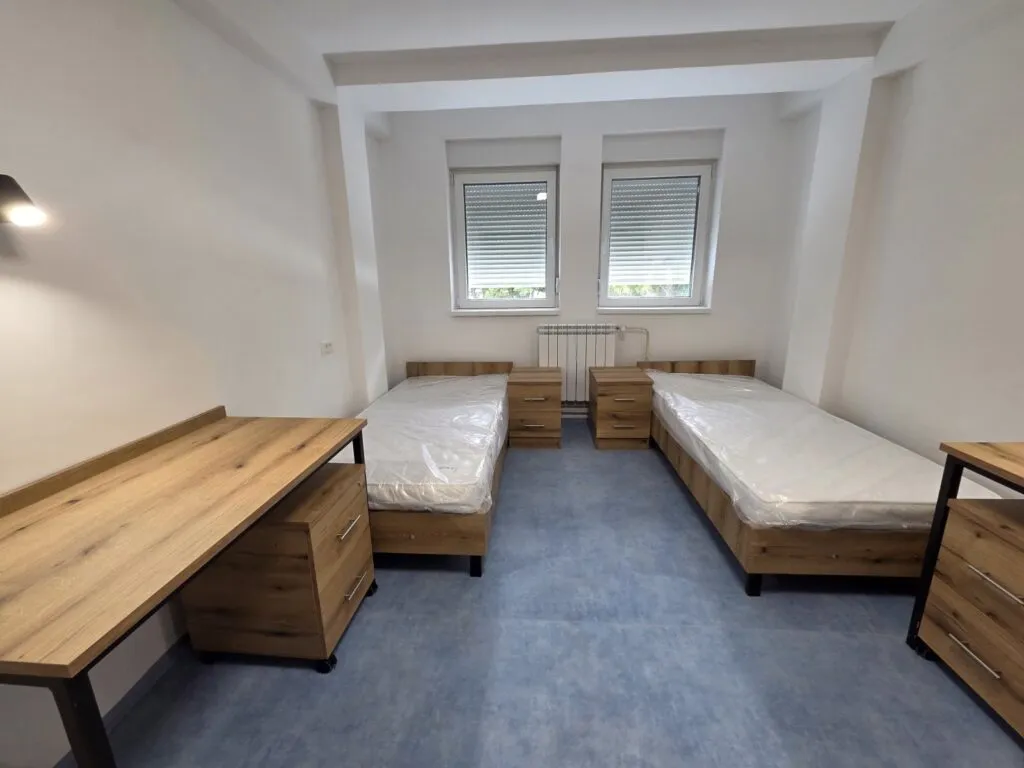
Students pay almost twice as much for "European standards" and got damp and cold radiators. The ministry responds with a...
Of 341 buses, 185 are roadworthy, and the city is once again debating BRT, light metro and a city train....

One day off was enough for queues towards Serbia, Kosovo, Bulgaria and Greece. And on the motorway to Bogorodica, one...

Older people come every year; the high-risk groups doctors worry about most rarely do. The first 30,000 doses are here,...

From 700 entrants in 2007 to 15,040 runners from 63 countries. In the region, only Ljubljana ran bigger.

Metropolitan Georgij in Rome: at the altar of the Ohrid saint, then face to face with the patriarch who holds...

The mayors called the revolutionaries an example and an obligation. A nice line - but obligations are measured after the...

The Finance Ministry said no three times, and 18 of 34 courts can't keep up with their cases. Citizens feel...
The institution meant to protect us from the state is waiting for a budget revision to pay for its premises....
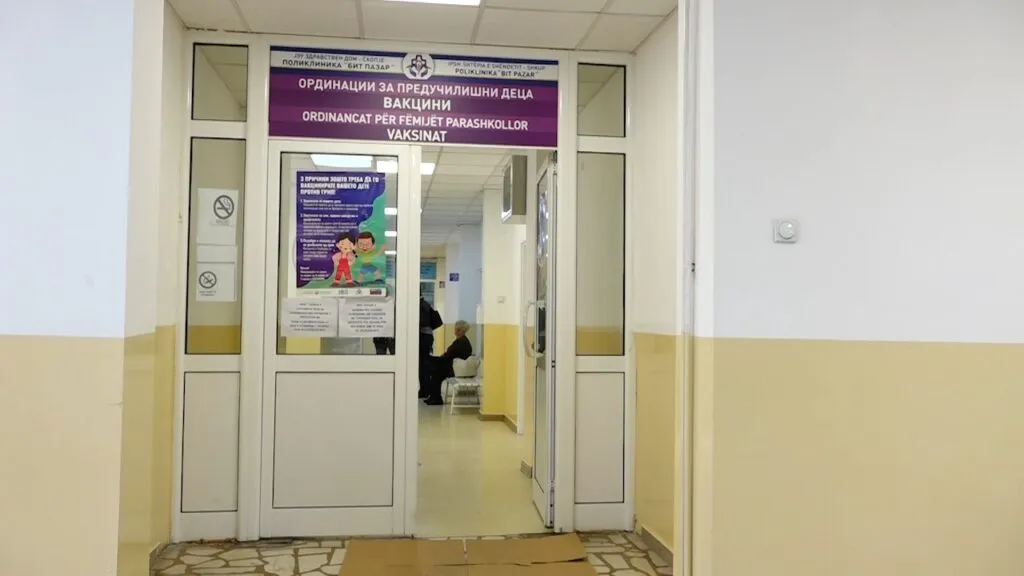
The campaign started with vaccines obtained through a loan, the second shipment arrives by 15 November. The most vulnerable are...
This site uses cookies - is that okay? Learn more
Be the first to know when Metla launches something new
Leave your email and we will write when there is a new guide or something new on Metla.