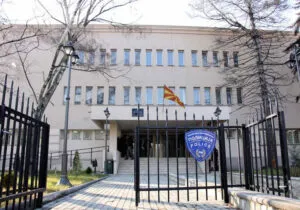
Counter-terror raid in Skopje: an ISIS flag and weapons, while official details come "once it's over"
29.09.2026


29.09.2026
29.09.2026
29.09.2026
29.09.2026

29.09.2026
29.09.2026
29.09.2026

28.09.2026

27.09.2026

29.09.2026

29.09.2026

28.09.2026
29.09.2026

29.09.2026

29.09.2026

29.09.2026

28.09.2026

27.09.2026

29.09.2026

29.09.2026

29.09.2026

29.09.2026

29.09.2026
28.09.2026

09.03.2026

27.02.2026

19.02.2026
29.09.2026

28.09.2026

27.09.2026

23.04.2026

23.04.2026

12.04.2026

At an extraordinary session, and at the prosecutors' request, Hungary's parliament has lifted the immunity of Prime Minister Péter Magyar. Two former ministers lost their protection in the same package - Balázs Hankó, a one-time Fidesz minister for culture and innovation, and Miklós Szeszták, a former development minister. All three are MPs in the current parliament.
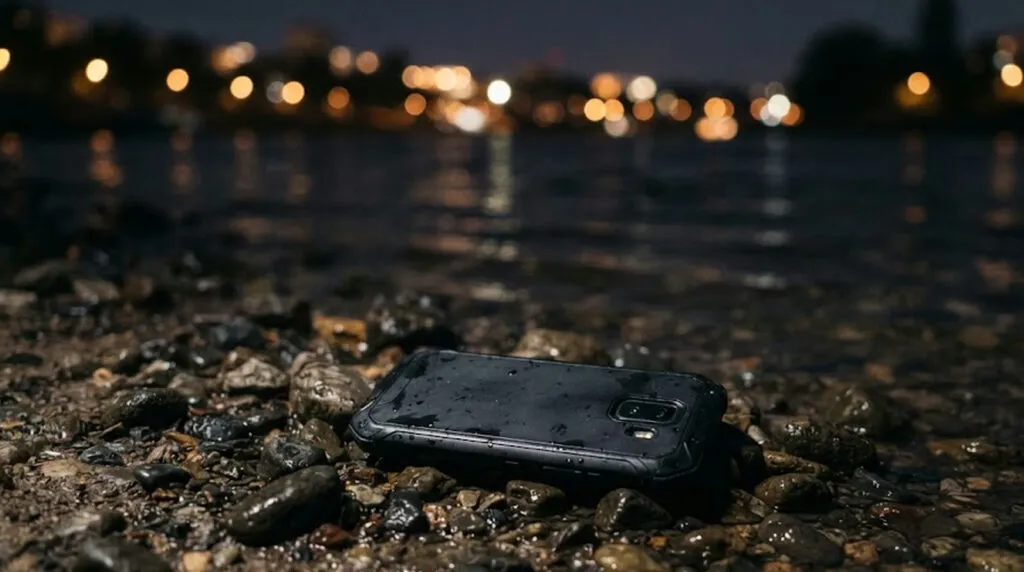
The phone that ended up in the Danube
The case against Magyar is almost cinematic. In June 2024, in a Budapest nightclub, he got into an argument with a man who was filming him on his phone. According to prosecutors, Magyar took the phone and threw it into the Danube. Divers later recovered the device. At the time Magyar was a member of the European Parliament, which did not approve lifting his immunity, so the proceedings stalled. His European Parliament mandate expired on May 8, 2026 - and his protection with it. Prosecutors are now treating the case as suspected theft.
The most interesting detail is that Magyar himself publicly asked parliament to lift his immunity. At the same time, he criticised prosecutors for handling his case together with those of Hankó and Szeszták, arguing they are completely different matters. He also announced an initiative to abolish parliamentary immunity for crimes that are prosecuted ex officio.
A phone versus billions
The difference between the three cases is glaring. Hankó is under investigation over the National Cultural Fund (NKA), whose money, according to prosecutors, was used in a way that could have caused significant damage to the state budget - around 17.3 billion forints in potential losses. He rejects the allegations and says he will contest them in detail. Szeszták faces a separate investigation into procurement by the bus operator Volánbusz between 2015 and 2018, where prosecutors suspect bribe-taking, and Hungarian media are writing about sums running into the millions.
With one decision, then, parliament has opened the way to investigating a prime minister suspected over a thrown phone and two former ministers suspected of billions in damage and bribery. Lifting immunity doesn't mean any of them is guilty. It simply removes the legal obstacle to prosecutors questioning them directly as suspects, if the legal conditions and sufficient evidence exist.
Magyar took over the government five months ago, after the Viktor Orbán era, promising to clean up the state. Now the first serious test of that promise is himself - and so far he is choosing not to hide behind his office. How many Balkan prime ministers would ask for the same for themselves?
The latest 10 news from this category
The world's youngest king died at 34 and left an heir on paper. The clan decided otherwise, so a kingdom...

Seoul says there was an agreement to stay quiet; Kyiv says there wasn't. Caught between them are two captured soldiers...
The Nobel laureate can't get home, and her supporters are driving in convoys demanding an election date. Maduro is gone...
Two of the three incendiary devices ignited, and German services investigating sabotage across Europe are also checking leads to Poland...
One sentence from the White House was enough for the EU energy commissioner to warn of a "very, very bad"...
Girls of around ten stole on the metro and at Disneyland, and if they brought back too little, they were...
The American host claims Ukrainians are "hostages" of their president and that the war only goes on thanks to US...
From the UN podium, Zelensky announced that two North Korean prisoners had been transferred to South Korea - and South...
Beijing wants Washington not just to not support Taiwan's independence, but to openly oppose it, while a 14-billion-dollar arms package...

Northern lights and snowy forests for the cameras; an air wing, a brigade and conscripts on the schedule. Felipe and...
This site uses cookies - is that okay? Learn more
Be the first to know when Metla launches something new
Leave your email and we will write when there is a new guide or something new on Metla.