
Koraboski's Trial Begins: Custody Came Only After the Public Revolted
27.11.2026


27.11.2026
27.11.2026

27.11.2026
27.11.2026

27.11.2026

27.11.2026

27.11.2026

26.11.2026

25.11.2026

27.11.2026

27.11.2026

26.11.2026

27.11.2026

27.11.2026

27.11.2026

27.11.2026

26.11.2026

25.11.2026

27.11.2026

26.11.2026

25.11.2026

27.11.2026

27.11.2026

24.11.2026

23.04.2026

23.04.2026

12.04.2026

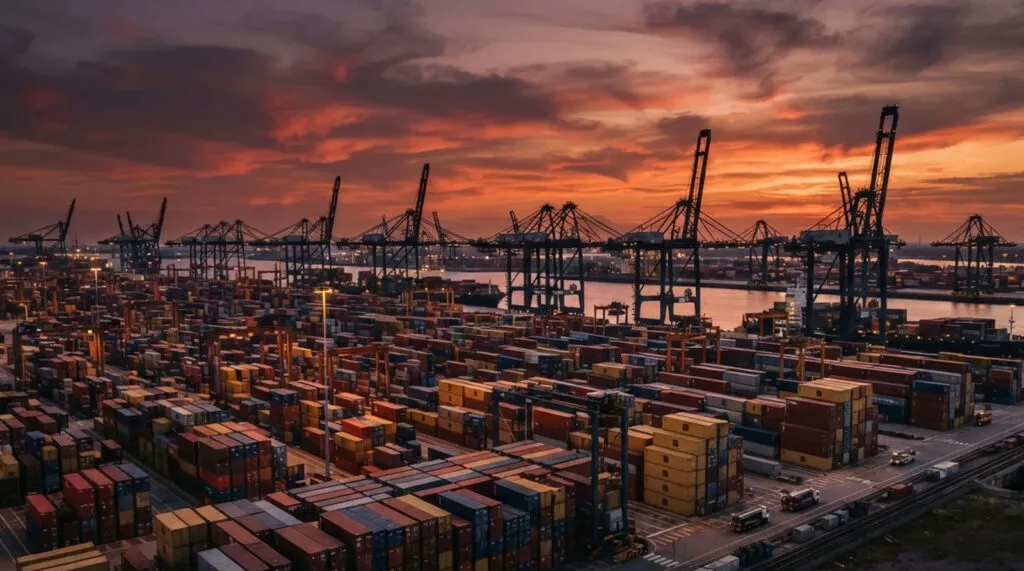
In February, the US Supreme Court annulled the so-called "Liberation Day" tariffs. Nine months later, Donald Trump is bringing them back through the side door. His administration has proposed new tariffs on 14 major trading partners, including China, the European Union, Japan and South Korea. Markets didn't wait to see whether they would even take effect - the Nasdaq fell more than 4 percent.
An old law, a new price list
After the court struck down the original tariffs, the White House looked for another legal route. It found one in Section 301 of the Trade Act of 1974: an eight-month investigation into "structural overcapacity" in other countries - goods whose overproduction, according to Washington, threatens American industry. The results have now been published, and with them the new price list.
For China the proposed rate is the highest - 20 percent, with the possibility of rising to 40. For the EU, 15 percent, the same as agreed with the Trump administration in July last year. India gets 17 percent if it strikes a deal with Washington, and 25 if it doesn't. Switzerland, 15. For Mexico and Norway there is no decision yet. Brazil additionally gets a special tariff on sugar and 10 percent on finished aircraft, openly as leverage to get it to the negotiating table. The new tariffs won't take effect before January.
A friendship with a one-week shelf life
The most cynical part is the timeline with China. Just a week ago, Trump was boasting about his visit to Shenzhen, where he spoke with Xi Jinping at the APEC summit. He called it "one of the most successful presidential visits to Asia in American history", said he gets along great with both Xi and Putin, and called his critics "stupid". Xi, for his part, broke diplomatic practice and personally greeted him at the foot of the plane. One week later, the highest rate in the package goes to Beijing.
Beijing, for its part, just a day before the American announcement, extended the suspension of its export restrictions to the US on key minerals - antimony, gallium and germanium, used in ammunition, batteries, telecommunications and chips - until 27 January. China controls around 70 percent of global processing of key minerals. It will almost certainly bring that advantage to the negotiating table.
Brussels defends itself, Washington explains
The EU responded sharply: "We strongly reject the claim that Europe is a source of structural overcapacity. On the contrary, Europe is among the most exposed to this problem." A message that could refer to the huge influx of goods from China. US Trade Representative Jamieson Greer, meanwhile, argues that statements from the G7, the G20 and the World Trade Organization changed nothing, so Trump is now offering "concrete measures" for "a level playing field for American workers".
The markets reacted differently. Tech stocks led the fall on Wall Street, the Nasdaq briefly entered a so-called bear market - a drop of at least 20 percent from its last record - and Nvidia lost almost 9 percent. Trump blamed the Democrats for the fall.
And at home? A poll carried out after the Republicans' defeat in the congressional elections found that 62 percent of respondents support efforts to scrap the tariffs. An Indian seafood exporter described the situation best: "It started at 25 percent, then the rate dropped to 10, then rose to 25 and 50, and then it changed many more times. Uncertainty is not good news for importers or exporters."
If Europe, with all its negotiating weight, feels "most exposed", what's left for the small economies hooked onto the European market? Rules that change overnight are something we know well. This time they're being changed by the world's largest economy, with a deadline in January.
The latest 10 news from this category

The government boasts of rising wages. But last December seven in ten wage earners were at or below the average,...

The market inspectorate has sent 40 teams into the field, but the consumers' organisation says the fine is often smaller...

For the first time the ministry has shown how its basket is built. The unions' basket is "aspirational", says Durmishi,...

One shared meter for chatting and working, the same subscription - and an admission that the most active users will...

Instead of selling shares, the maker of trucks for FedEx is borrowing. When the customer is also an investor and...

Daily limits, follower approval, a view of who the child is messaging - but the messages stay closed. And this...

No building permit unless at least 10% of the residential space goes to young couples. The measure doesn't cost the...

Since July 2024: 18 companies fined, 49,400 euros in penalties in total. One of the two firms now blocked made...

Over 200 guests, ministers, ambassadors and the World Bank in one room. The most concrete number at the forum came...

The US regulator has given Musk the green light for satellites that will crunch numbers for artificial intelligence. Who will...
This site uses cookies - is that okay? Learn more
Be the first to know when Metla launches something new
Leave your email and we'll write to you when there's a new guide or something new on Metla.