

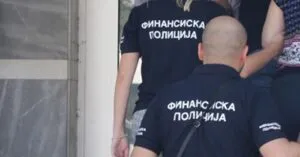
State Lottery: Two Arrests Over an 80-Million-Denar Embezzlement, While the Star Witness in Court Changed His Story
06.10.2026


06.10.2026
06.10.2026

06.10.2026
06.10.2026
06.10.2026
06.10.2026
06.10.2026

06.10.2026

05.10.2026

06.10.2026

06.10.2026

05.10.2026
06.10.2026

06.10.2026
06.10.2026
06.10.2026
05.10.2026
04.10.2026

06.10.2026

06.10.2026
06.10.2026

06.10.2026

06.10.2026
05.10.2026

09.03.2026

27.02.2026

19.02.2026

06.10.2026

05.10.2026
04.10.2026
06.10.2026
05.10.2026
04.10.2026

23.04.2026

23.04.2026

12.04.2026

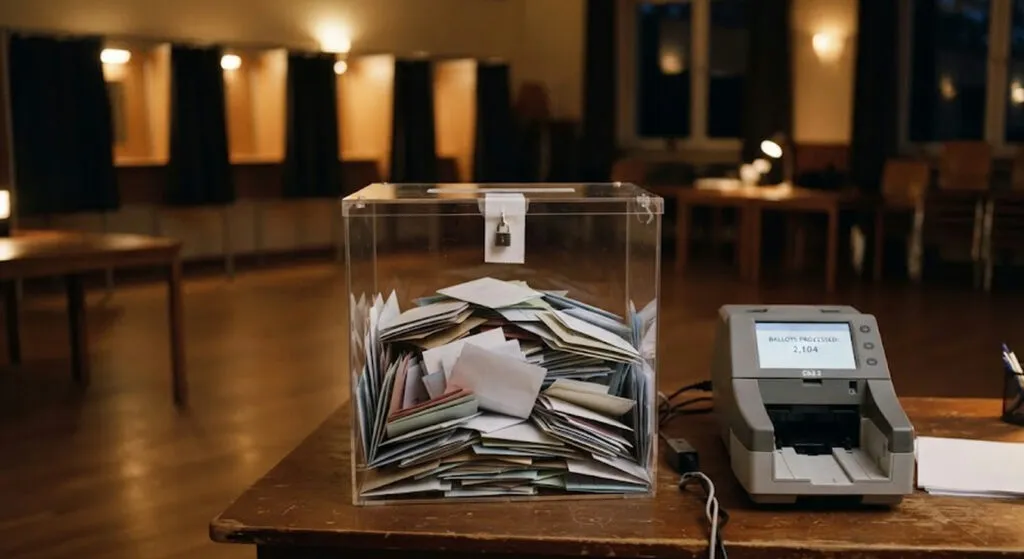
Bosnia and Herzegovina has voted, and anyone hoping for a surprise will have to wait another four years. The preliminary results show what the Balkans know by heart: every people voted for "their own", and Komšić, who for years offered the civic idea, ran out of air.
The end of the Komšić era
The biggest news comes from the Croat bloc. Darijana Filipović of HDZ BiH won the Croat seat in the Presidency convincingly, ahead of Slaven Kovačević of Željko Komšić's Democratic Front. With more than 91 per cent of polling stations in the Federation counted, Filipović had 104,293 votes, Kovačević 68,041, and Zdenko Lučić, the joint candidate of five Croat opposition parties, 51,284. According to reports, Filipović will be the first woman elected to this post.
For HDZ this is not just a win, but vindication of a campaign it has been waging for years. Komšić used to take the Croat seat with a significant share of votes from Bosniak voters, so HDZ argued that Croats couldn't choose their own representative. This time they chose her themselves. HDZ BiH is the leading party in all four cantons with a Croat majority, and in West Herzegovina Canton it takes around 72 per cent.
Komšić conceded, and he didn't even win a parliamentary seat himself. "Clearly there has been ethnic homogenisation of the electorate on all sides," he said. His party fell from 11 to around 6 per cent in the Federation. It sounds like the defeat of one party, but it's really a verdict on an idea - a civic state in a country tailored to Dayton's measurements. Is there any room at all in Bosnia for politics that doesn't start with the question "who are you"?
Dodik: "Without Trump we would have been political corpses"
There's no surprise in Republika Srpska. Milorad Dodik's SNSD kept its dominance: Željka Cvijanović won the Serb seat in the Presidency with 55.6 per cent, according to preliminary data. Savo Minić leads the race for president of RS with around 202,000 votes, ahead of Branko Blanuša of the SDS with 160,000, and SNSD is also the leading party in the parliamentary vote.
Dodik celebrated the win with a song and then delivered a sentence worth reading twice: "Had it not been for Trump's magnificent victory, we would probably be political corpses today, but thanks to the new environment we are now political winners." He also thanked Putin. So, according to Dodik himself, the result in Banja Luka is written in Washington and in Moscow. Do the voters in RS know their vote was only the second factor?
Bećirović and the "Balkan Switzerland"
In the Bosniak bloc, Denis Bećirović of the SDP won a new term, again ahead of Bakir Izetbegović. Izetbegović conceded, but his SDA is the strongest party in the Federation - it rose from around 24 to over 30 per cent, and he says it will be hard to form a government without the SDA. The Party for BiH jumped from under 4 to around 9 per cent.
After his win Bećirović invited Zagreb and Belgrade to cooperate: "BiH can be a Balkan Switzerland, and I call on Belgrade and Zagreb to treat the state of BiH with respect, at least the way Berlin, Paris and Rome treat Switzerland." A nice picture. Except Switzerland doesn't have to wonder after every election whether it will have a functioning government at all.
Zagreb celebrates, voters stay home
Croatian Prime Minister Andrej Plenković immediately congratulated Filipović and said that the Croat people in BiH "from tonight have a legitimate representative". Croatia's top diplomat Gordan Grlić Radman spoke of "yet another attempt at electoral engineering" that had been overcome. Filipović, for her part, thanked Plenković in her first statement. When a neighbouring government celebrates an election win in another country as its own, that says enough about how much Bosnia really decides for itself.
These were also the first nationwide elections with biometric voter identification and optical ballot scanners, and the electoral authorities and observers rated them the most transparent since Dayton. But transparency didn't get people out of their homes: by 6 p.m. only around 36 per cent of the 3.4 million registered voters had cast their ballots, and around 30 per cent in the Federation. The vast majority of the country evidently decided it knew the result in advance.
Now comes the harder part - forming governments at state, entity and cantonal level. In Bosnia, elections are just the warm-up. The real contest is who sits down at the table with whom, and how many months it takes.
The latest 10 news from this category
The video has over half a million views, and Serbia's Defence Ministry is silent. If two lads with a camera...
Hungary has a new prime minister, but Dodik is still getting congratulations from Orbán. What is support worth from a...

Croatian services recorded 38 state-sponsored cyber attacks last year, and Moscow responds with phrases like "suicidal course". The Balkans know...
The recent president promises ministers who will be out in the field every day and a hand extended to the...
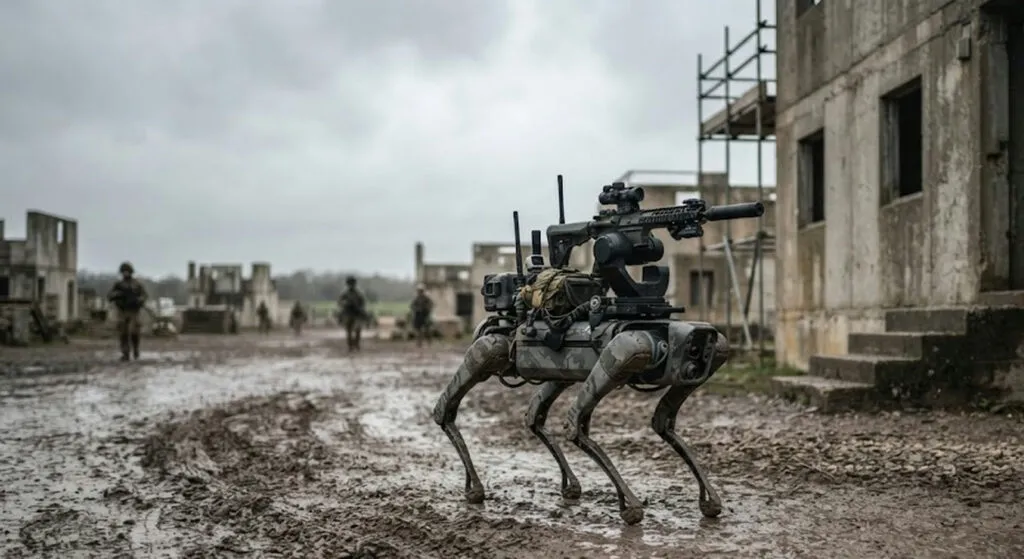
Two weeks after the factory in Šabac opened, four-legged robots with "Osa" rockets are already firing in an exercise. Experts...
The Albanian prime minister wants the veto abolished and says Ukraine has no chance under the current rules. Macedonia, which...
"Rest in peace, general, and thank you" cost her her job in Tomislavgrad. In Banja Luka the same post was...
The only woman convicted by the Hague tribunal has died in Belgrade aged 96. Scientist, president, convicted of persecution -...
Barrier-free trade and access to research programmes - if you align with Brussels's foreign policy and don't share technology with...
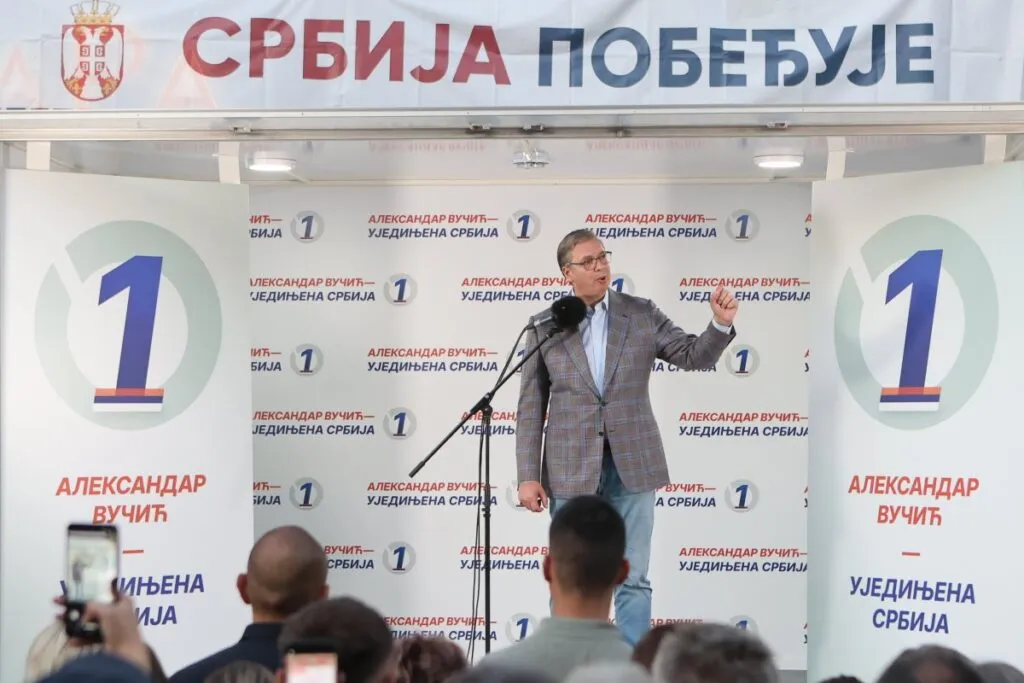
In front of more than 10,000 people in Jagodina, Vučić talked about six or seven billion euros "from outside" and...
This site uses cookies - is that okay? Learn more
Be the first to know when Metla launches something new
Leave your email and we will write when there is a new guide or something new on Metla.