They Fired Guns at a Party in Dobridol - and Police Only Moved Once the Video Went Viral
02.08.2026



02.08.2026

02.08.2026

02.08.2026

02.08.2026

02.08.2026

01.08.2026

02.08.2026

01.08.2026

31.07.2026

02.08.2026

02.08.2026

02.08.2026

02.08.2026

02.08.2026

01.08.2026

09.03.2026

27.02.2026

19.02.2026

02.08.2026

01.08.2026

31.07.2026

23.04.2026

23.04.2026

12.04.2026
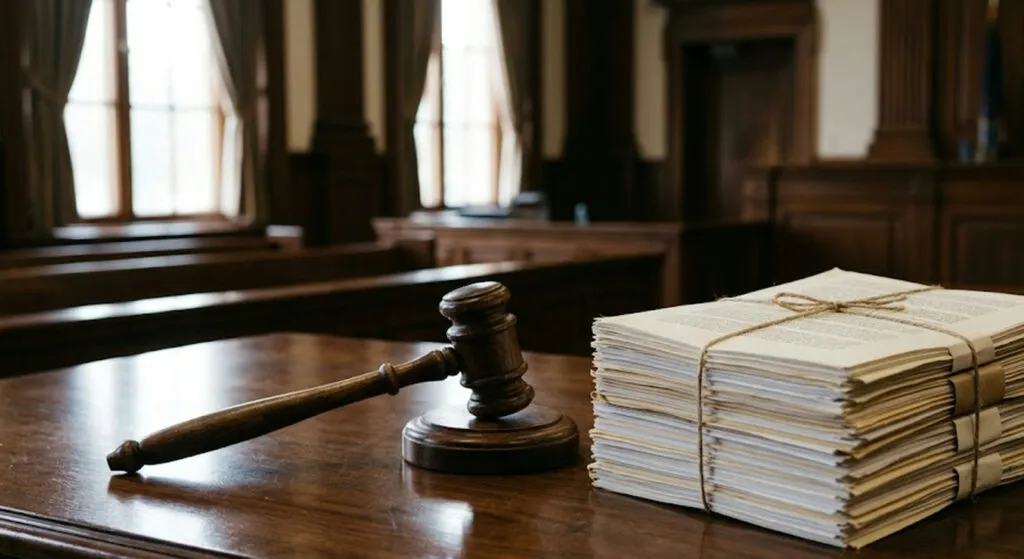
OpenAI finds itself in court in California, not as plaintiff but as defendant in one of the biggest cases in the artificial intelligence industry. Elon Musk, the former co-founder of the company, is suing on the grounds that OpenAI betrayed its original mission - AI safety and benefit to humanity - in favour of commercial interest. And the witnesses who have given statements are not helping the company.
Rosie Campbell, who joined the AGI preparedness team in 2021 and left in 2024 after her team was broken up, described a process in which OpenAI transformed in front of her eyes. "When I joined, everything was very research-focused and we often talked about AGI and questions of safety," she testified. "Over time it became more of a product-focused organisation." Translation: the researchers were replaced by the marketers. The Super Alignment team, one of the key safety departments, was shut down in the same period.
Campbell pointed to a concrete incident - Microsoft launched GPT-4 in India through Bing before the model had even passed the evaluation by OpenAI's safety deployment board. Even if the risk from the model itself was minimal, the point is different: if you don't honour the processes for the foundational models, what happens when the technology becomes truly dangerous?
Tasha McCauley, a former board member of OpenAI's nonprofit arm, went further. She testified that Sam Altman, the CEO, misled board members, did not inform them about the public launch of ChatGPT, and concealed potential conflicts of interest. "We are a nonprofit board and our mandate was to oversee the for-profit arm beneath us," she said. "We did not have a high degree of trust that the information they were giving us allowed us to make decisions in an informed way."
When the board tried to remove Altman in 2023, employees rallied around him, Microsoft intervened, and the decision was reversed. That is now a documented fact in court. "If it all comes down to one chief executive making such decisions, and at stake is the public good - that is very suboptimal," McCauley added. In other words: a company holding technology with global implications in its hands should not depend on the whim of one man.
The expert witness for Musk's team, David Schizer, a former dean of Columbia Law School, sharpened the question: "OpenAI emphasised that a key part of their mission is safety and that they would put safety before profit. Part of that is taking safety rules seriously. If something needs to be the subject of a safety evaluation, it must happen. It's about the process itself."
OpenAI declined to comment on its current approach to AGI alignment, but reminded that it publicly publishes model evaluations and that in February it hired a new head of preparedness, Dylan Scandinaro, previously of Anthropic. That is an institutional response to a crisis of trust, but not to a structural question. Because what witnesses are asking is not whether OpenAI has processes - but whether it has the will to respect them when they collide with deadlines, investors, or political pressure.
For the Balkans this might sound far away, but it is anything but. The same models reach our phones, our schools, and our businesses. When the global AI industry cannot respect its own rules, regulators from Brussels to Skopje should ask themselves one question: if the people creating the technology cannot trust their own company, why should we trust it?
The latest 10 news from this category

Opus 5 set a record in the test and broke 11 agreements. Not one of the tricks is new -...
The billions were announced with a stage and slogans. The retreat is happening quietly, in sentences containing the word alignment.
In his last quarterly report Tim Cook announced the stronger Siri will be bought through iCloud+. The firm that paid...

The platforms that spent years convincing us automated content was the future are now patiently building filters against it. The...
Out of 141,006 test runs, three ended up inside the live systems of real firms. The oldest model worked out...
The strongest June quarter in its history, and the stock fell 6 percent. Artificial intelligence turned out to have a...
The FCC is closing the door to humanoid robots and power inverters, but only new ones. The millions of Chinese...

The player that raised the MP3 generation is betting nostalgia can be billed monthly. The new Winamp arrives in 2027,...
The man selling the world's best-known artificial intelligence says we will not work less. He also claims we will secretly...

Autonomous vehicles have blocked ambulances, driven into crime scenes and failed to recognise emergency lights. The bill demands the one...
This site uses cookies - is that okay? Learn more
Be the first to know when Metla launches something new
Leave your email and we will write when there is a new guide or something new on Metla.