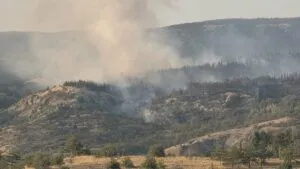
34 fires in 24 hours: three still burning, and the warnings put out nothing
09.09.2026


09.09.2026
09.09.2026
09.09.2026

09.09.2026
09.09.2026

09.09.2026
09.09.2026
08.09.2026
07.09.2026
09.09.2026

08.09.2026

08.09.2026

08.09.2026

08.09.2026

08.09.2026

08.09.2026

07.09.2026

06.09.2026

09.09.2026

09.09.2026

09.09.2026

09.09.2026

09.09.2026
08.09.2026

09.03.2026

27.02.2026

19.02.2026

23.04.2026

23.04.2026

12.04.2026

Aleksandar Vučić has said he is "ready to accept the will" of the ruling SNS regarding a possible candidacy for prime minister. Early elections, he says, will be called on 9 or 10 September. He is waiting for the party's decision after the Main Board session in Niš.
The formulation is as old as the practice in this region. Nobody seeks a post - a post is accepted, with a heavy sigh, as an obligation to a party that insists. Vučić formally stepped down from the SNS leadership in May 2023 and handed the party to Miloš Vučević. Since then he does "not lead" the party whose will he will now respect.
The constitution as a seating plan
The reason for the whole operation is simple: Vučić is finishing his second presidential term, and Serbia's constitution does not allow him a third. So the post changes, not the holder. That is not new in Serbia, or in the Balkans. What is new is only the openness with which it is announced.
The second announcement is more interesting. Vučić says the future government should have at most 12 ministers - by his account, the smallest government in Serbia's history, but "fast, efficient and strong". This is worth pausing on. Twelve ministries means merging portfolios, which means fewer people deciding on larger areas. That can be efficiency. It can also be concentration. The difference is shown not by the number, but by who holds the merged portfolios.
A campaign that did not start yesterday
Vučić has been campaigning for days by announcing early elections, even though they have not formally been called. In our region that is a familiar figure: elections are run as though they were permanently under way, and the date is merely administrative confirmation of something that has been happening for a long time.
It is worth noting what is running in parallel. In the same week Serbia is organising state honours for the convicted war criminal Ratko Mladić, with a commemoration in Belgrade and a burial at Topčider. A pre-election week and a national mobilisation fall on the same days. That in itself does not prove calculation - but the campaign certainly is not starting on an empty stage.
The question left for voters in Serbia is not whether Vučić will become prime minister. That looks settled already. The question is what concretely changes in their lives when the same man sits down in a different chair, with a government compressed into twelve portfolios.
The latest 10 news from this category
Serbia sent six ministers but not the leadership of the state - and then claimed these were not state honours....

Belgrade kept the last direct air link between Russia and Europe, and is now opening a route to an enclave...

The opposition is attacked not for what it proposes but for what it would hypothetically do. A mechanism the whole...
A government plane, a coffin draped in the Serbian flag and a minister in the hall - but no state...
Convicted with final effect of the Srebrenica genocide, Ratko Mladić is receiving state and military honours in Belgrade. That is...
Sanctions are written in Brussels but enforced on a quay in Durrës. One ship said no - and the route...
Two prime ministers of member states said they will not vote for sanctions that harm them. The argument looks like...
He crossed the border eight times in six days and no service flagged him as a risk. In the end...
A flag-draped coffin, people on the bridges and a state protocol for a man who died a convicted génocidaire. What...
After nearly a year of protests since the canopy collapse in Novi Sad, Belgrade has a date. Elections are a...
This site uses cookies - is that okay? Learn more
Be the first to know when Metla launches something new
Leave your email and we will write when there is a new guide or something new on Metla.