

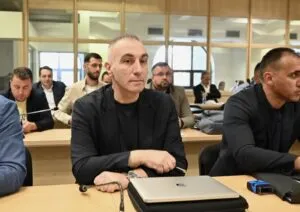
The "Lottery" Trial: 231 Pieces of Evidence, and So Far Not a Single Message Between Grubi and Bajrami
24.09.2026


24.09.2026
24.09.2026
24.09.2026
24.09.2026
24.09.2026
24.09.2026
24.09.2026
23.09.2026
22.09.2026
24.09.2026

24.09.2026
23.09.2026
24.09.2026

24.09.2026

24.09.2026

24.09.2026
23.09.2026
22.09.2026
24.09.2026

24.09.2026
24.09.2026

24.09.2026
23.09.2026
23.09.2026

09.03.2026

27.02.2026

19.02.2026
24.09.2026
23.09.2026
22.09.2026

23.04.2026

23.04.2026

12.04.2026

Serbian President Aleksandar Vučić took the podium at the UN General Assembly and accused the international community of double standards towards Serbia. The main evidence is the one familiar to anyone who has heard Vučić speak even once: Kosovo.
"It will become entirely clear who opened the Pandora's box of disregard for the UN Charter, and when, and when the world set off down an entirely wrong path," he said. His central thesis: by recognising Kosovo's independence and through NATO's 1999 intervention against what was then the Federal Republic of Yugoslavia, the biggest Western powers created a precedent that weakened the international order.
Double standards - but whose?
Vučić repeated that Serbia does not recognise Kosovo's independence and that the international community interprets the principle of territorial integrity differently when it comes to Serbia. Serbia, at the same time, supports Ukraine's territorial integrity - yet Belgrade has not imposed sanctions on Moscow over the invasion of Ukraine and maintains close ties with Russia and China. When Vučić talks about double standards, the mirror is always turned towards others.
He also spoke about the position of Serbs in Kosovo and again insisted on the creation of the Community of Serb Municipalities, provided for in the EU-mediated agreements between Belgrade and Pristina. Serbia, he argued, had signed numerous agreements that the other sides and their international guarantors had not fully implemented.
The Hague, milk and honey
Vučić claimed Belgrade had for decades met the international community's demands, including cooperation with the Hague Tribunal, but got nothing of what was promised in return. "They explained to us that we should hand our people over to the Hague Tribunal, and then milk and honey would flow and flowers would bloom. We handed them over, and we got nothing," he said. The Hague Tribunal, it's worth recalling, tried war crimes.
Then came Trump. Serbia, Vučić said, sees in the American president a chance to establish a "more just world order". Serbia had been "trampled" but not defeated, it "rose from the ashes like a phoenix" and is now "an example of how international order is preserved". The man who, in the same speech, complained about the Western powers that weakened the international order is looking for salvation from the president of the strongest of them.
A swipe at Croatia
The sharpest part was reserved for the neighbours. "What is hardest for us in Serbia is when, in our neighbourhood, we see the legacy of Nazism elevated to the level of social respectability in the Republic of Croatia, which is proud of its Nazi past and of using Nazi slogans and symbols today," Vučić said. According to him, Serbs, who suffered most at the hands of the Nazis, cannot accept the revival of the ghosts of the past responsible for the deaths of hundreds of thousands of Serbs, Jews and Roma in camps such as Jasenovac. That is why, he added, "moral lessons coming from such sources are completely unacceptable".
Rhetoric like this between Belgrade and Zagreb is nothing new. What's new is the stage it was delivered on. Is the UN General Assembly a place for settling regional scores, or just the biggest possible stage for an audience back home?
Between Brussels and the Global South
Vučić described Serbia as a country that remains on the European path but wants to keep close relations with countries in Asia, Africa and the Global South, and to talk to all the great powers. In New York he also met EU High Representative Kaja Kallas, who, after separate meetings with him and Kosovo's Prime Minister Albin Kurti, said normalisation between Belgrade and Pristina must speed up and the agreements already reached must be implemented. Serbia formally remains a candidate for EU membership. How long a "formal" candidacy can last is something Skopje knows better than anyone.
The latest 10 news from this category
In front of the entire General Assembly, the Croatian prime minister called the military honours for the convicted war criminal...
The Serbian president told the great powers they demand respect for rules they trampled themselves, from Kosovo to the 1999...
The question is not emotional but institutional: what does accepting European criteria mean if the verdicts of a court whose...
An economic normalisation signed in 2020 is now filed as a finished war before the General Assembly. A conflict does...
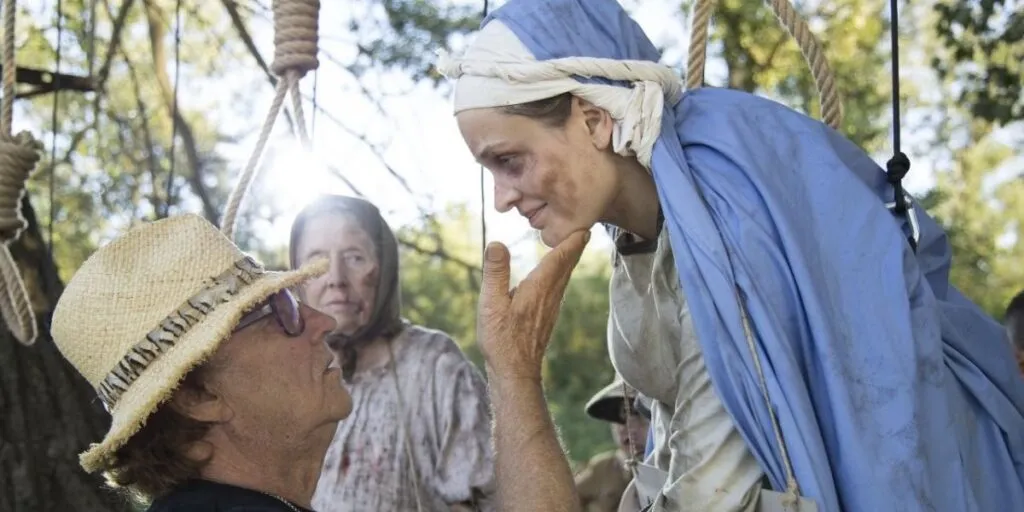
Under the trailer there is not one claim that anything in the film is untrue. There is a ledger: you...
Regimes do not spend tabloid artillery on candidates they are not worried about. Ilija Srdanović got that treatment ahead of...
The president who dissolved parliament himself is now resigning too, promising a cabinet of no more than 12 ministers and...
Eight countries, 120 million people, a motorway to Timisoara and energy connections. And one cancelled visit that says more than...
The call was about damaged furniture on a terrace. Armin Dzutovic died three days later. The internal investigation found first...
Four KLA leaders received 81 years in prison, and Albania's parliament immediately adopted a declaration calling the verdict unjust. The...
This site uses cookies - is that okay? Learn more
Be the first to know when Metla launches something new
Leave your email and we will write when there is a new guide or something new on Metla.
