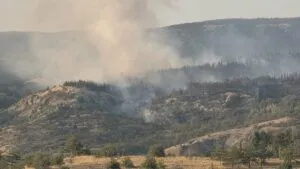
34 fires in 24 hours: three still burning, and the warnings put out nothing
09.09.2026


09.09.2026
09.09.2026
09.09.2026
09.09.2026
09.09.2026
09.09.2026
09.09.2026
08.09.2026
07.09.2026
09.09.2026

08.09.2026
08.09.2026

08.09.2026

08.09.2026

08.09.2026
08.09.2026
07.09.2026
06.09.2026
09.09.2026

09.09.2026

09.09.2026
09.09.2026

09.09.2026
08.09.2026

09.03.2026

27.02.2026

19.02.2026

23.04.2026

23.04.2026

12.04.2026

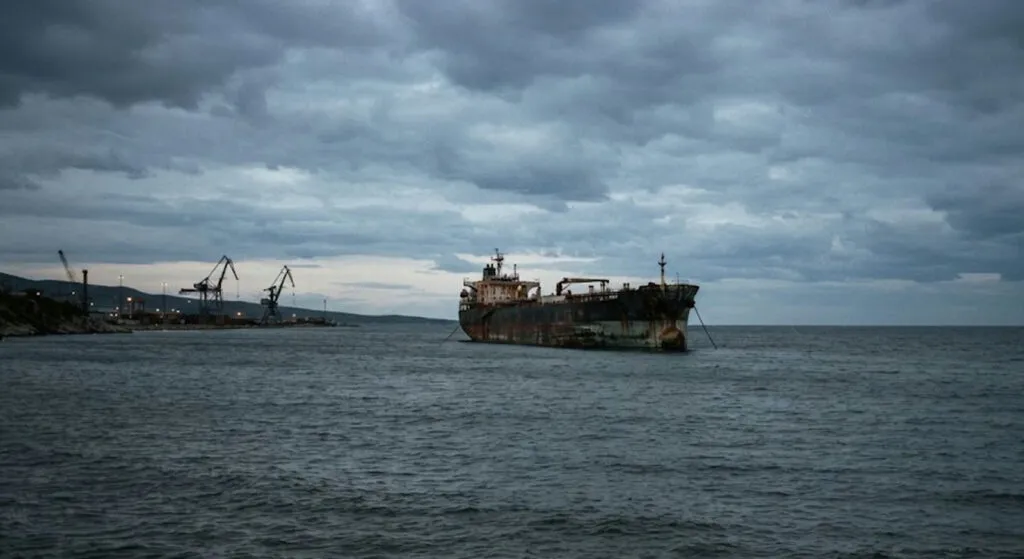
On 29 August Albania barred the tanker Hanuman from entering the port of Durrës, Ukraine's military intelligence service HUR announced. According to them, the ship is an active part of Russia's "shadow fleet" and is linked to Gennady Timchenko, a close associate of Vladimir Putin.
The figure HUR cites is what makes this bigger than one rejected ship. Since the start of 2025, the service claims, the Hanuman has exported at least 452,000 tonnes of Russian fuel. The service says it has been tracking the vessel and identified it as part of the shadow operation on 26 January 2026.
The route runs close to us
The voyages, according to HUR, ran from Russia's Novorossiysk towards Turkey, Senegal, the United Arab Emirates and transshipment zones near Augusta in Italy. Logistics were provided by the Russian company Altoprae Marine, based in Novorossiysk, whose senior director is linked to the sanctioned Timchenko. The same firm, the statement says, regularly services tankers from the shadow fleet, among them the Eventin - a ship under sanctions from the EU, Switzerland, the US, Britain, Canada and Ukraine.
HUR also states that Altoprae Marine takes part in operations of Rosewood Shipping vessels, owned by Oksana Marchenko, wife of Viktor Medvedchuk, who has been charged with treason.
Sanctions end up in a single port
That is the point. Sanctions lists are written in Brussels and Washington, but they are enforced on a quay, by people deciding whether a ship gets to moor or not. Durrës is one such point. Albania said no, and the operation stopped.
The shadow fleet works precisely because those points do not behave the same way. Old tankers, murky ownership, insurance outside the Western system, transponders switched off - the whole construction is built to find a port that will not ask. Every port that does ask raises the cost of the operation.
For a Balkan reader this is a familiar scene in a new form. For decades the region has been a transit zone for things that pass through it rather than end up in it. The difference is that the transit is now logged in a ship's records and has a name, a tonnage and a date.
One question the HUR statement does not answer remains: the Hanuman did not sink and was not seized. It simply sailed on to the next port. Which one?
The latest 10 news from this category
Serbia sent six ministers but not the leadership of the state - and then claimed these were not state honours....
Belgrade kept the last direct air link between Russia and Europe, and is now opening a route to an enclave...
The opposition is attacked not for what it proposes but for what it would hypothetically do. A mechanism the whole...
A government plane, a coffin draped in the Serbian flag and a minister in the hall - but no state...
Convicted with final effect of the Srebrenica genocide, Ratko Mladić is receiving state and military honours in Belgrade. That is...
The constitution does not allow him a third presidential term, so the post changes - not the holder. Elections are...
Two prime ministers of member states said they will not vote for sanctions that harm them. The argument looks like...
He crossed the border eight times in six days and no service flagged him as a risk. In the end...
A flag-draped coffin, people on the bridges and a state protocol for a man who died a convicted génocidaire. What...
After nearly a year of protests since the canopy collapse in Novi Sad, Belgrade has a date. Elections are a...
This site uses cookies - is that okay? Learn more
Be the first to know when Metla launches something new
Leave your email and we will write when there is a new guide or something new on Metla.