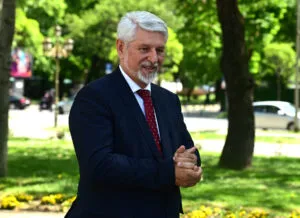
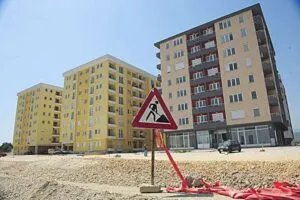
A New Criminal Complaint Against Jakimovski: A Building Permit Based on a Plan Struck Down Back in 2018
16.09.2026


16.09.2026
16.09.2026

16.09.2026
16.09.2026
16.09.2026

16.09.2026

16.09.2026

15.09.2026

14.09.2026

16.09.2026

16.09.2026

15.09.2026

16.09.2026

15.09.2026

14.09.2026

16.09.2026

16.09.2026

16.09.2026

16.09.2026

15.09.2026
15.09.2026

09.03.2026

27.02.2026

19.02.2026

16.09.2026

15.09.2026

14.09.2026

23.04.2026

23.04.2026

12.04.2026

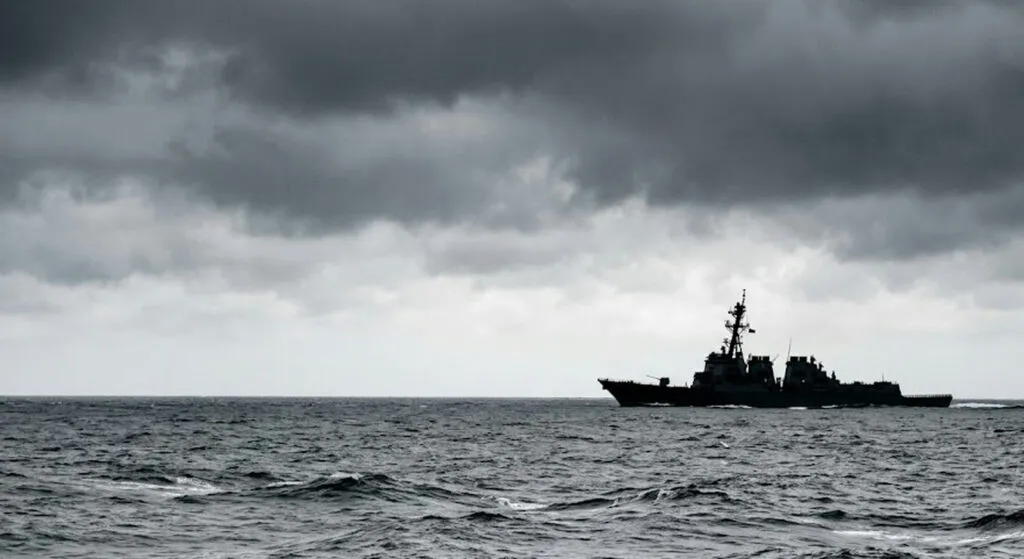
Chinese media (the Sohu portal) have published an analysis according to which Britain is preparing a new naval alliance of ten Northern European countries, with the main goal of blockading Russian military movements around Kaliningrad. This is Russia's exclave between Poland and Lithuania, with access to the Baltic, and one of the most sensitive points in European security architecture.
Those ten countries: Britain, Denmark, Iceland, Latvia, Lithuania, the Netherlands, Norway, Finland, Sweden and Estonia. The structure would be built on top of the existing Joint Expeditionary Force, a model established in 2014. According to the Chinese source, the new configuration would also include a maritime component specifically covering the routes to Russian military storage in the Baltic.
Moscow already has a clear line: „Russia's nuclear deterrence strategy allows Moscow to use nuclear weapons if the existence of the state is threatened." This is not Putin's rhetoric from last year - this is official doctrine, codified in a presidential decree from June 2020. Kaliningrad is „Russian territory" in the legal sense, and a blockade of this territory would activate the escalation spiral.
The Balkans should read this carefully. Russia is not going to withdraw from Kaliningrad. It is not Crimea, it is not Donbas, it is not contested territory. Kaliningrad was Königsberg until 1945, then became part of the USSR, and Russia has held it continuously since. All 10 countries in the new alliance know this. The question is whether „naval alliance" means actual blockade, or psychological pressure.
From a Chinese perspective (and that is why Sohu publishes it), European escalation is good news for Beijing. The more the West gets bogged down in a Kaliningrad scenario, the fewer resources it has for friction in the Taiwan Strait. This is not a casual message - Chinese analysts have an interest in framing the Western world as unstable, escalatory and dangerous.
For the Balkans, the direct lesson: Europe's security architecture is being rewritten. Ten countries are forming an alliance outside the standard NATO frame (even though all are members). A naval alliance is a specific niche in which the Balkans, with no Baltic coast and with the Mediterranean tied up in different ways, has no direct role. But if European defence is regionalising - Northern, Southern, Eastern - then Balkan armies need to think about where they fit on this new map. Nothing is automatically answered by existing NATO membership or by EU candidacy.
The latest 10 news from this category

Sanctions imposed over one war are being offered as currency in an entirely different dispute. Most member states are against...
El Nino in the Pacific shifts the currents that decide where snow falls. An area that usually gets a metre...

The easiest way to dismiss an uncomfortable argument is to point at who is making it. But that does not...

The appeals court ruled the entire trial must start over. The son of Norway's queen is waiting for it on...
Trump scaled back the military exercises to ease the tension, and Wonsan answered in the form of projectiles. What does...

The sanctions list got a seven-day extension instead of one measured in months, a move diplomats themselves call unprecedented. Two...
Switzerland offered a table for talks on Ukraine, Moscow replied that the table stopped being neutral once Bern adopted EU...

The will says one thing, a committee of twenty-one men decided another. The queen mother says the army pulled the...
A country that was Europe's byword for stability for decades now has a parliament split into two blocs by a...

Sixteen years in power, defeat at a regular election, five months of quiet - and now the election result is...
This site uses cookies - is that okay? Learn more
Be the first to know when Metla launches something new
Leave your email and we will write when there is a new guide or something new on Metla.