The "Lottery" Trial: 231 Pieces of Evidence, and So Far Not a Single Message Between Grubi and Bajrami
24.09.2026


24.09.2026

24.09.2026

24.09.2026

24.09.2026

24.09.2026

24.09.2026

24.09.2026
23.09.2026

22.09.2026

24.09.2026

24.09.2026
23.09.2026
24.09.2026

24.09.2026

24.09.2026
24.09.2026
23.09.2026
22.09.2026

24.09.2026

24.09.2026

24.09.2026

24.09.2026
23.09.2026
23.09.2026

09.03.2026

27.02.2026

19.02.2026

24.09.2026
23.09.2026

22.09.2026

23.04.2026

23.04.2026

12.04.2026

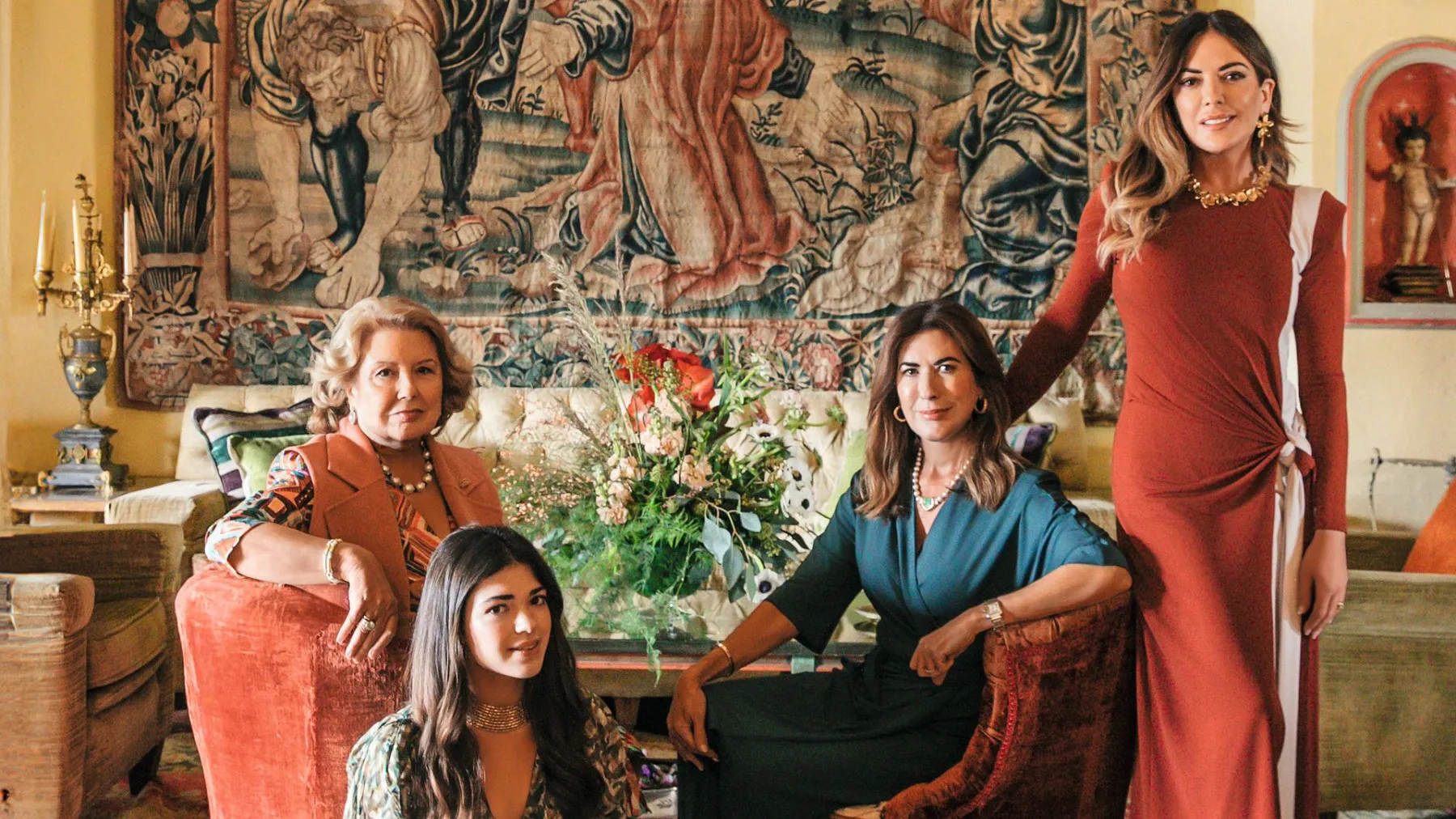
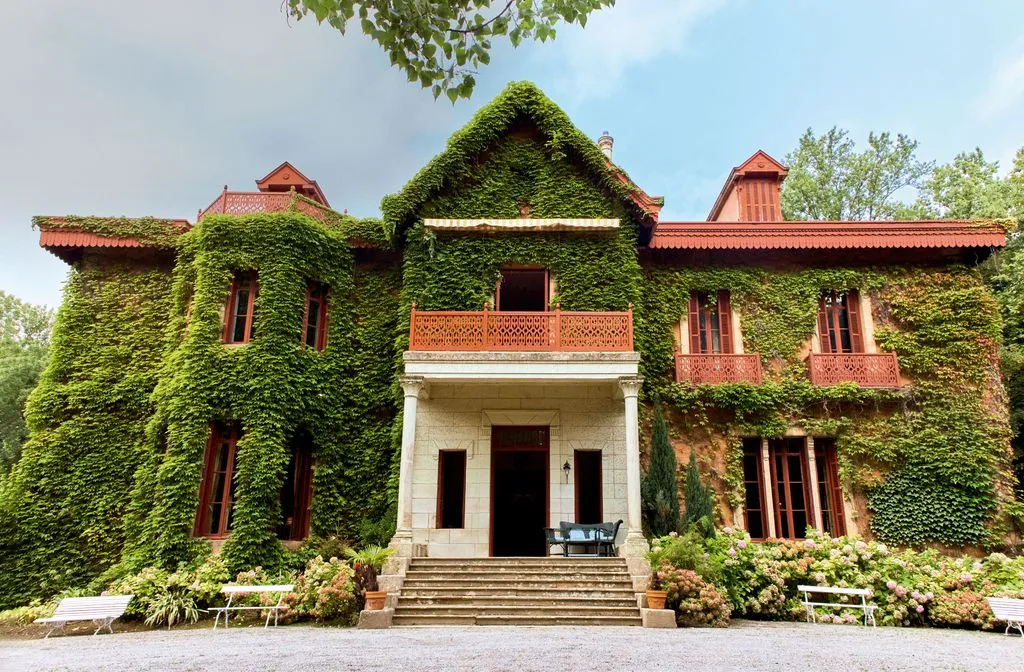
There are houses that get bought, and there are houses that get inherited - with all the burdens, obligations and stories that come with owning something that has no price tag on the market. Federica de Valles y Huesca - Marquesa of San Joaquín and Pastor, Countess of Albalat, and the third generation of unique children in one noble family - is a living illustration of what it means „to keep." At just 16 years old, after her father's death in the final days of the Spanish Civil War, she takes on responsibility for several historical estates of the family. The main one - the hacienda „El pino de San Antonio" in Seville.
For her, this isn't a luxury villa for Instagram. „This is my family home, the place where I lived from childhood to my wedding," she says. The hacienda is a typical Andalusian one - at first it served as an olive grove with its own mill for olive oil. On one of the lanes there was a „galaña" - a space where the workers lived during the working week. Today, the same space gathers her four children, twelve grandchildren and twelve great-grandchildren - a family festival that resembles a film scene.
Architecturally, the house is a textbook for southern Spanish building. The masters' façades are decorated with polychrome tiles of painted ceramic from Triana craftsmen. Centuries-old palms wrap around the inner courtyards. An imposing tower, a whitewashed patio, an Olympic-size pool, and in the courtyard - even a wooden 19th-century carriage, Milord type, with a French chassis and upholstered parts of buffalo and hippopotamus leather. Everything stays authentic - not restored in a tourist way, but kept in a functional way.
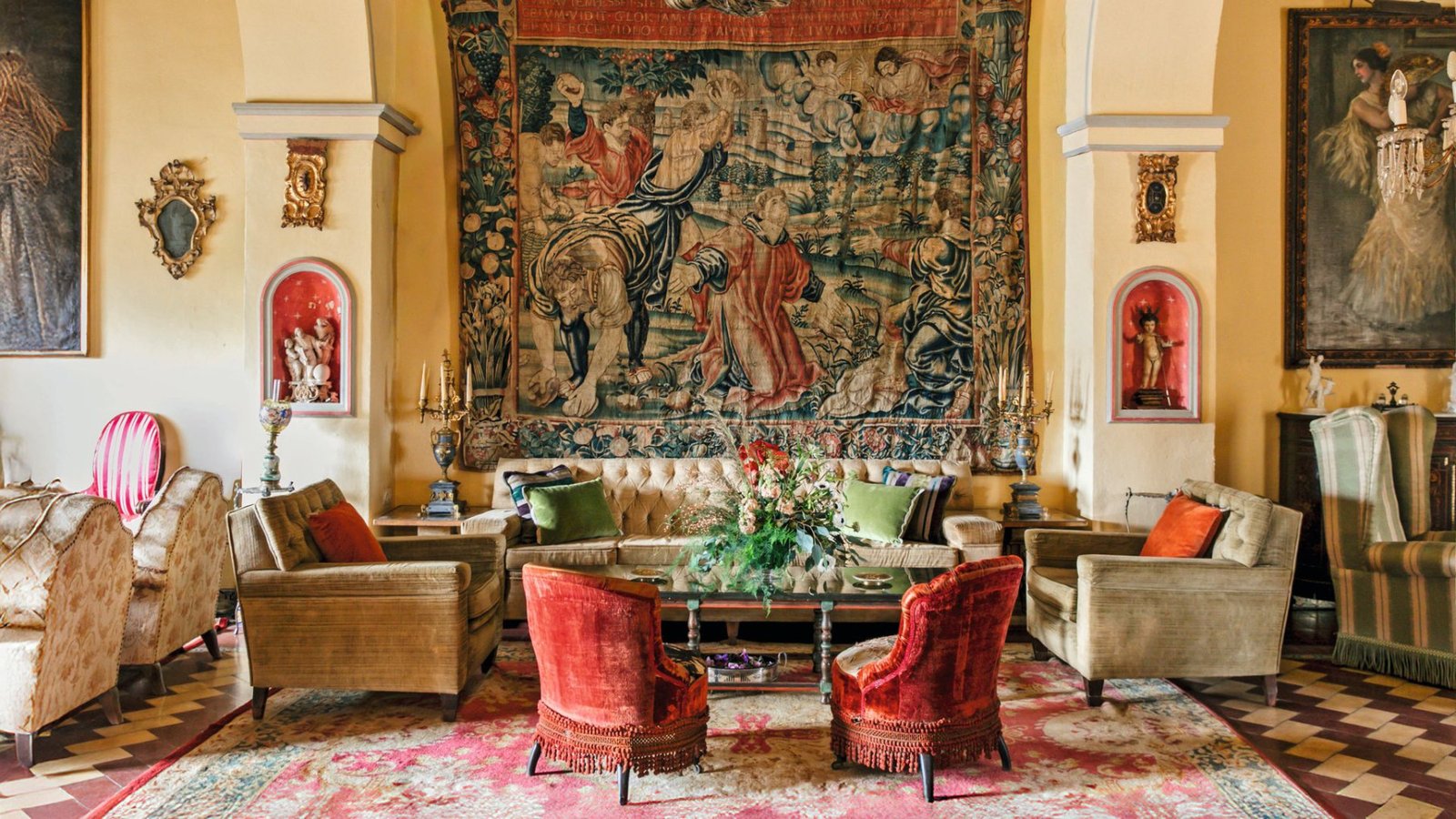
Inside, the main living room is another planet. A 16th-century Brussels tapestry is the central element. Above it - a bronze lamp by Valencian sculptor Sid de Negro. Oil paintings by the artist Groso. A wooden carved figure of Christ Child from the 18th-century Sevillian school. Baroque side tables with flamenco ceramic figurines from the Granada school. This isn't decoration - this is history laid out across the room.
The dining room carries its own rhythm. Limoges porcelain on the table. Above the hearth, a high relief by sculptor J. Lemus. The bedrooms - a Mallorcan-style bed, made of mahogany with floral marquetry and lemonwood inlays. For guests - bedposts inlaid with mother-of-pearl, depicting scenes from Seville. And a rare detail rarely mentioned in the catalogues - figurines of the Immaculate Mary, woven bedspreads and cushions from Alcoutim. Every piece has provenance. Every piece has a date.
The standout object - a triptych on the campaigns of King Jaime I „the Conqueror", with 300 ivory figurines and carved coats of arms of the Kingdom of Aragon. During the Civil War, the triptych was kept in the Museum of Valencia. After the war, Federica's mother - Ángela Huesca Sasiain - claimed it back and brought it home. Her father Federico de Valles Gil-Dolz del Castellar, fallen in battle on the Balaguer front in 1939 at just 26 years old, never lived to see it. She inherited it through him.
Funding all this doesn't happen by miracle. „Enormous economic effort and great personal dedication," Federica says honestly. She modernised the citrus crops, adapted the lands to new irrigation systems, electrified the estates, dug new wells. And in 1968, her mother - „a very enterprising and brave woman" - turned another family house into the hotel Doña María, becoming with it the first female hotel entrepreneur in Seville.
What does this mean for the Balkan reader who lives in a two-room flat and inherits nothing of historical importance? Maybe a lot. First - preservation isn't only for those with titles. Every one of us inherits something - an old village house, a grandmother's icon, a grandfather's photographs. And every one of us decides whether to sell, throw away, or keep. Second - that property without work is a burden. Federica doesn't live in the palace - she runs it. If this is a model, then the model is - you inherit only if you put in the work. If not - the inheritance becomes a gallery, not a home.
The latest 10 news from this category
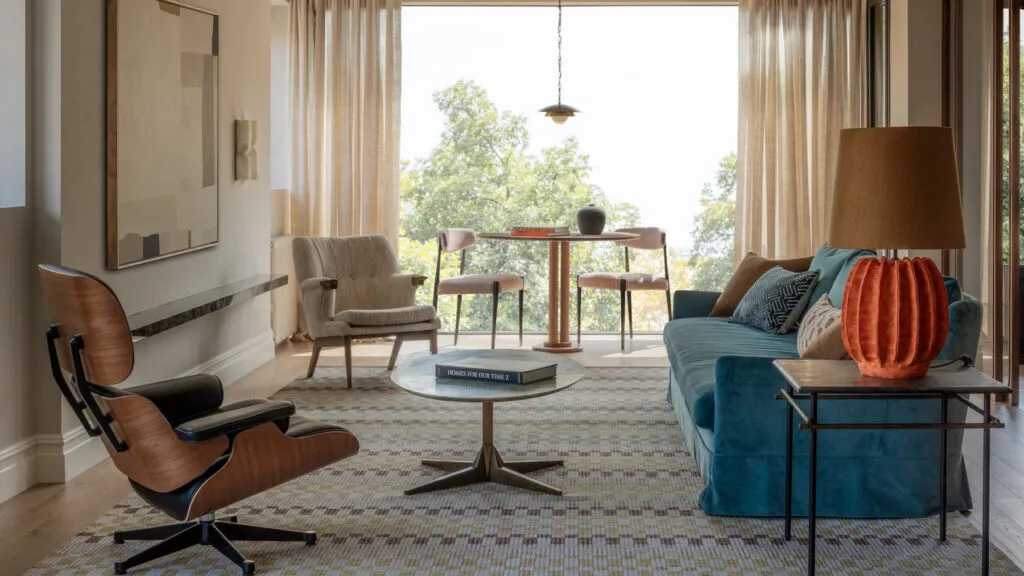
Luxury isn't about showing off, it's about detail, says the architect. That's why the best light in this flat went...
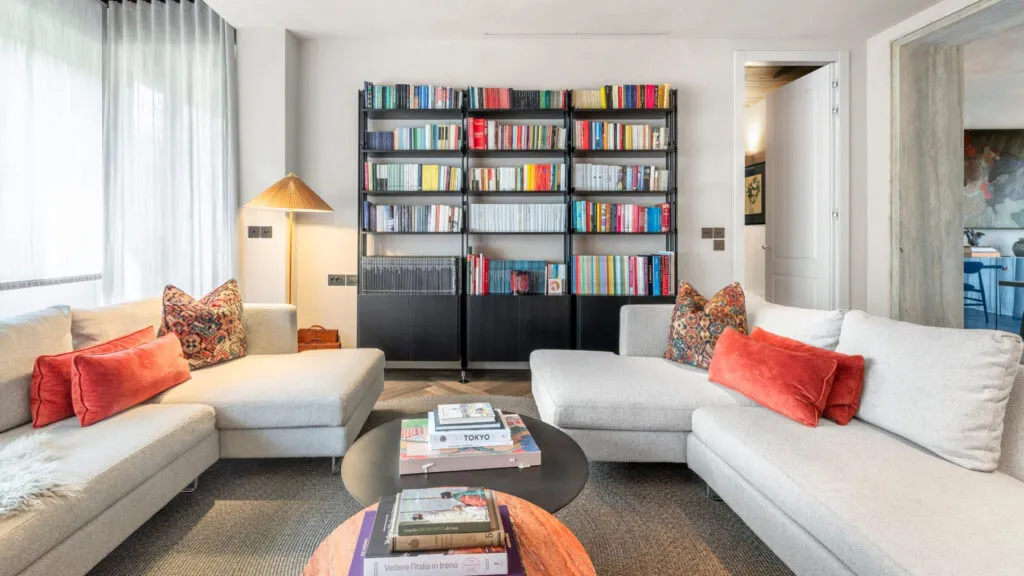
The exposed brick and ribbon windows stayed, and the entire palette came out of a single painting above the sideboard....

An Eames lounge chair from 1956, a Fratini shelving unit and a concave cobalt mirror that reflects the room curved....
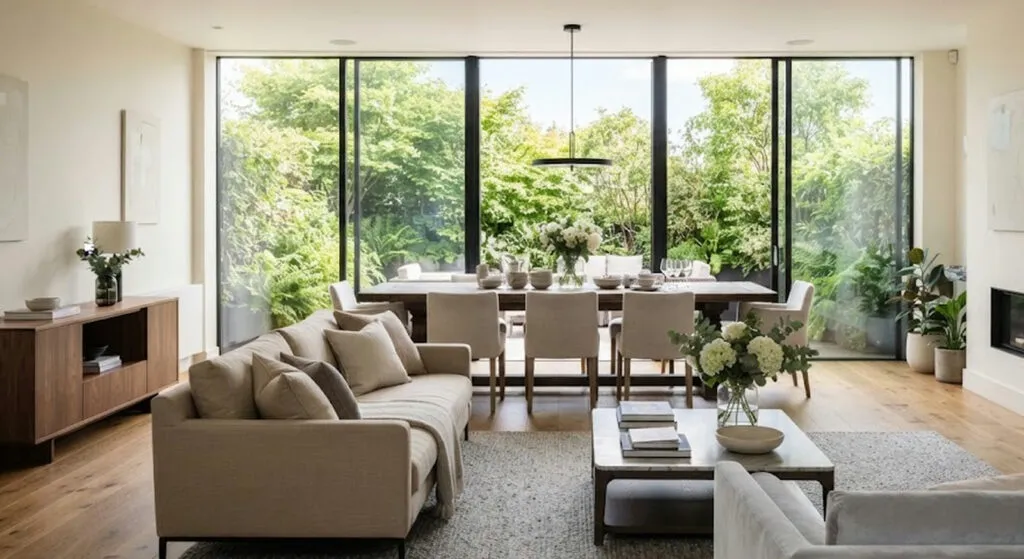
Four bedrooms, four bathrooms and one rug that keeps the dining area separate without a wall. Three things in this...
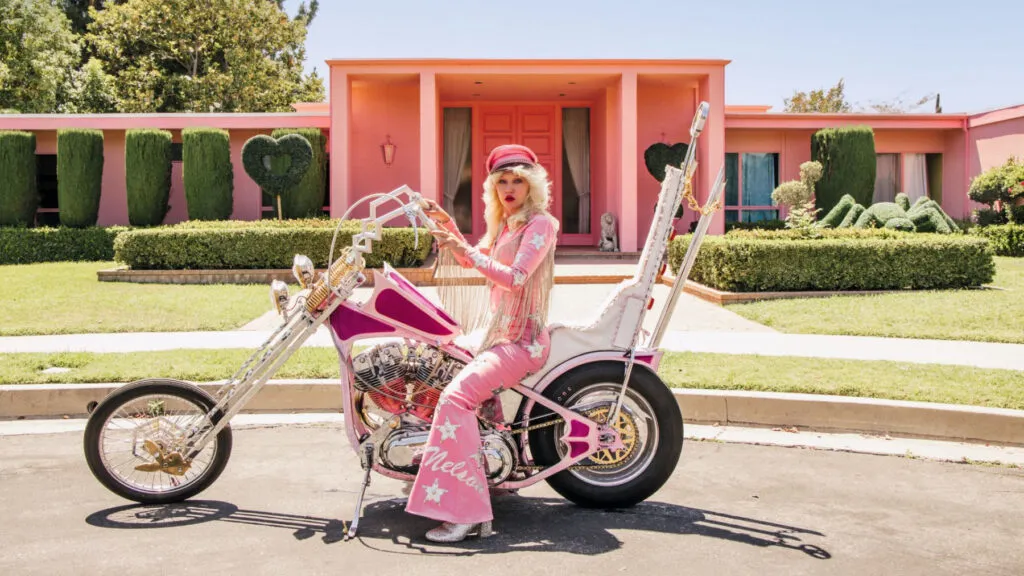
She did not decorate a house - she built a world. And behind all that fantasy there is no inheritance,...
The stairwell has been turned into a gallery, and in the bedroom there is not a single attempt at an...

In the vast majority of flats the ceiling stays white because that is how it was found - not because...
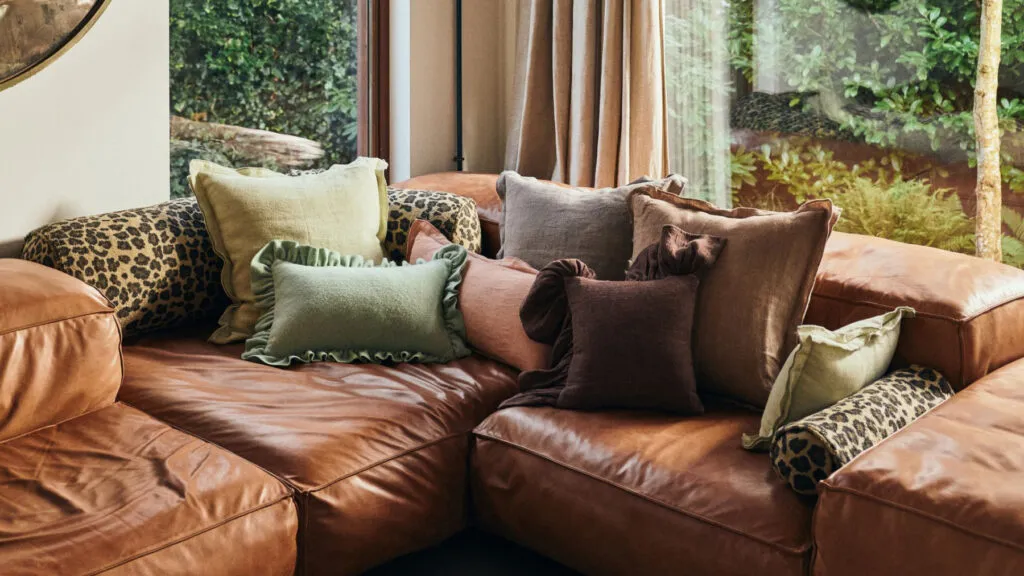
It is not hoarding and it is not maximalism. Ten things that used to be hidden when guests came and...
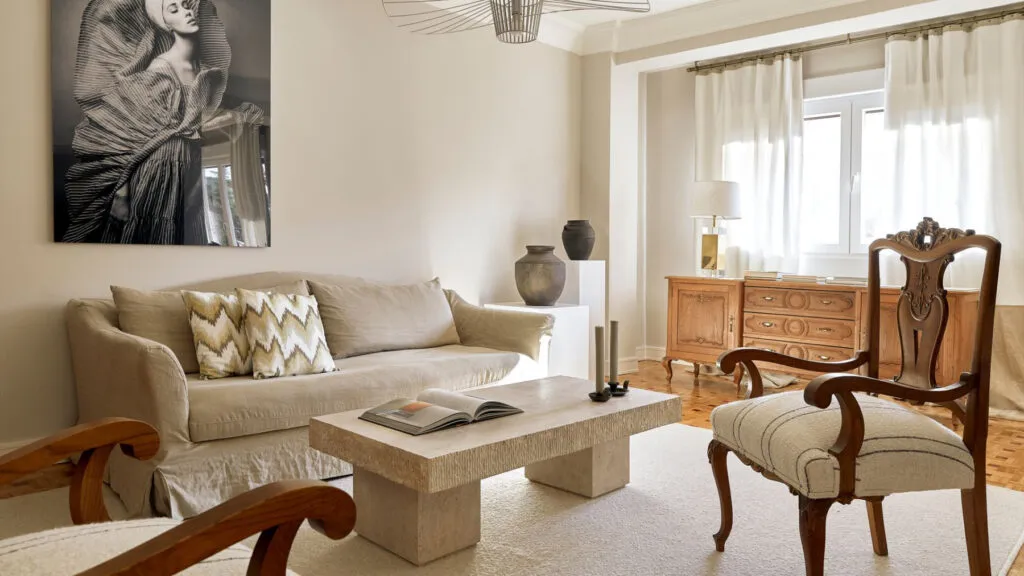
A bespoke console, reupholstered armchairs and wallpaper hung like art. The most expensive thing in the flat is the decision...
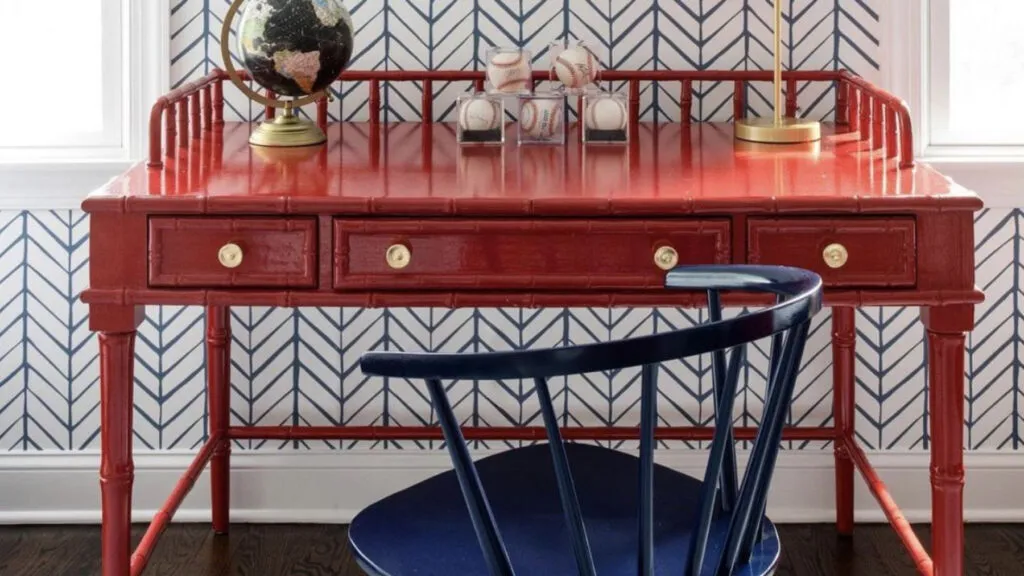
For years the rule was everything neutral and everything from the same collection. The result is a living room that...
This site uses cookies - is that okay? Learn more
Be the first to know when Metla launches something new
Leave your email and we will write when there is a new guide or something new on Metla.