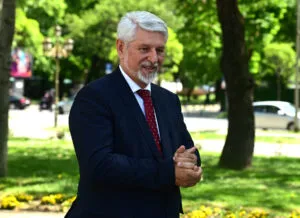
A New Criminal Complaint Against Jakimovski: A Building Permit Based on a Plan Struck Down Back in 2018
16.09.2026


16.09.2026
16.09.2026

16.09.2026
16.09.2026
16.09.2026

16.09.2026

16.09.2026

15.09.2026

14.09.2026
16.09.2026

16.09.2026

15.09.2026

16.09.2026

15.09.2026

14.09.2026

16.09.2026

16.09.2026

16.09.2026

16.09.2026

15.09.2026
15.09.2026

09.03.2026

27.02.2026

19.02.2026
16.09.2026

15.09.2026
14.09.2026

23.04.2026

23.04.2026

12.04.2026

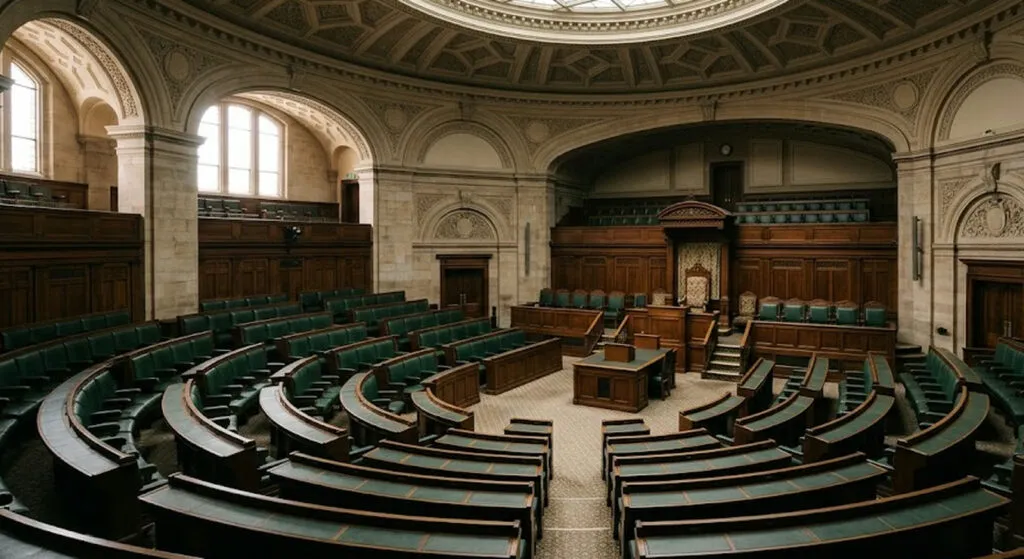
Romania's pro-European government fell yesterday in parliament with 281 votes in favour and only 4 against. Prime Minister Ilie Bolojan, who had led a reform agenda backed by Brussels, walked out of parliament immediately after the vote. The opposition motion, with the provocative name „Stop the Bolojan plan for destroying the economy, impoverishing the population and the illegal sale of state property", was signed by 254 MPs.
Who brought down the government? That is the first question that makes this case interesting for the Balkans. The motion was led by three parties: the Social Democrats (PSD), the Alliance for the Union of Romanians (AUR - a far-right nationalist party), and the Pace-România movement. It is a combination that wouldn't normally happen on the political spectrum - left, far right, and anti-system grouping all together. The common denominator was the economy.
Bolojan was pushing through tough measures to stabilise the budget deficit, with a plan to sell state assets, reform the public sector and cut the budget. The Brussels line was clear - if you want access to European funds, you must clean up the deficit. Romanian public opinion answered that there is no tolerance for an austerity-and-fire-sale economy dictated from Brussels. This is not an isolated phenomenon - we have seen the same cross-section in Hungary, Poland, Slovakia.
For a Balkan reader the question is - what comes next? Romania has been an EU member since 2007 and a NATO member since 2004. It cannot leave. But it can place itself in the „problematic" category - alongside Orbán's Hungary, Fico's Slovakia. That is a new configuration inside the EU - member states that take the funding but not the political agenda. Macedonia, Albania, Serbia and Montenegro, all waiting at the door, get yet another reminder that joining the EU does not bring political stability, only an internal version of the same fight.
What is Bolojan's own fate? According to sources, the government will be kept in a „technical mandate" until a new coalition is formed. Romania's tradition of fallen governments (Cioloș, Ponta, Grindeanu - all collapsed in the last 15 years) suggests the process will be long. Meanwhile the economy continues with the same problems - deficit, inflation, credit-rating risk. The parliament has successfully torn down the government. Has it torn down the problems the government was acknowledging? No. Those remain.
The lesson for the Balkans: pro-European agendas do not win on their own merit. Brussels can send budgets and reforms, but political capital has to be built by the domestic government. Bolojan didn't have it. And in two years he lost it. Balkan presidents and prime ministers who position themselves as „continuers of the EU path" - Shilegov in Skopje, Kurti's posture in Pristina, Vučić in Belgrade (with all his ambiguity) - are all watching this example. The idea of „reforms without voters" simply has no future as durable politics.
The latest 10 news from this category

Sanctions imposed over one war are being offered as currency in an entirely different dispute. Most member states are against...
El Nino in the Pacific shifts the currents that decide where snow falls. An area that usually gets a metre...
The easiest way to dismiss an uncomfortable argument is to point at who is making it. But that does not...
The appeals court ruled the entire trial must start over. The son of Norway's queen is waiting for it on...
Trump scaled back the military exercises to ease the tension, and Wonsan answered in the form of projectiles. What does...

The sanctions list got a seven-day extension instead of one measured in months, a move diplomats themselves call unprecedented. Two...
Switzerland offered a table for talks on Ukraine, Moscow replied that the table stopped being neutral once Bern adopted EU...
The will says one thing, a committee of twenty-one men decided another. The queen mother says the army pulled the...
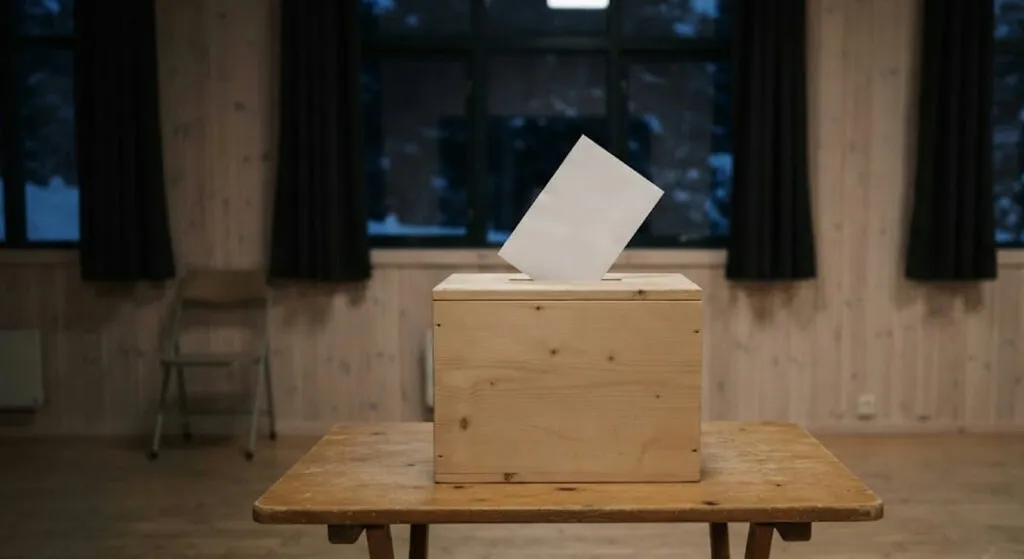
A country that was Europe's byword for stability for decades now has a parliament split into two blocs by a...
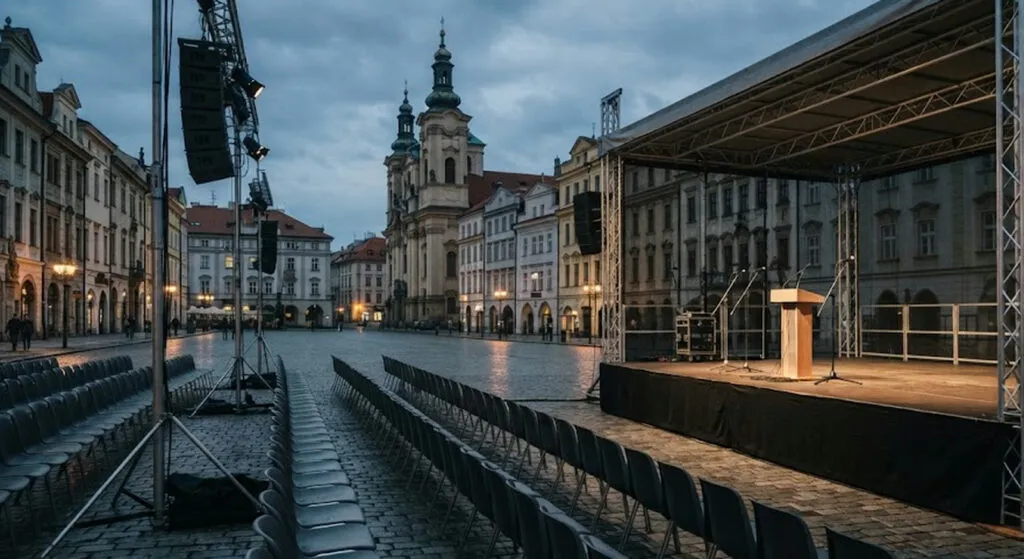
Sixteen years in power, defeat at a regular election, five months of quiet - and now the election result is...
This site uses cookies - is that okay? Learn more
Be the first to know when Metla launches something new
Leave your email and we will write when there is a new guide or something new on Metla.