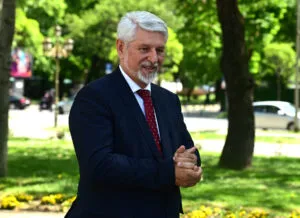
A New Criminal Complaint Against Jakimovski: A Building Permit Based on a Plan Struck Down Back in 2018
16.09.2026


16.09.2026
16.09.2026

16.09.2026
16.09.2026
16.09.2026

16.09.2026

16.09.2026

15.09.2026

14.09.2026

16.09.2026

16.09.2026

15.09.2026

16.09.2026

15.09.2026

14.09.2026

16.09.2026

16.09.2026

16.09.2026

16.09.2026

15.09.2026
15.09.2026

09.03.2026

27.02.2026

19.02.2026
16.09.2026

15.09.2026

14.09.2026

23.04.2026

23.04.2026

12.04.2026

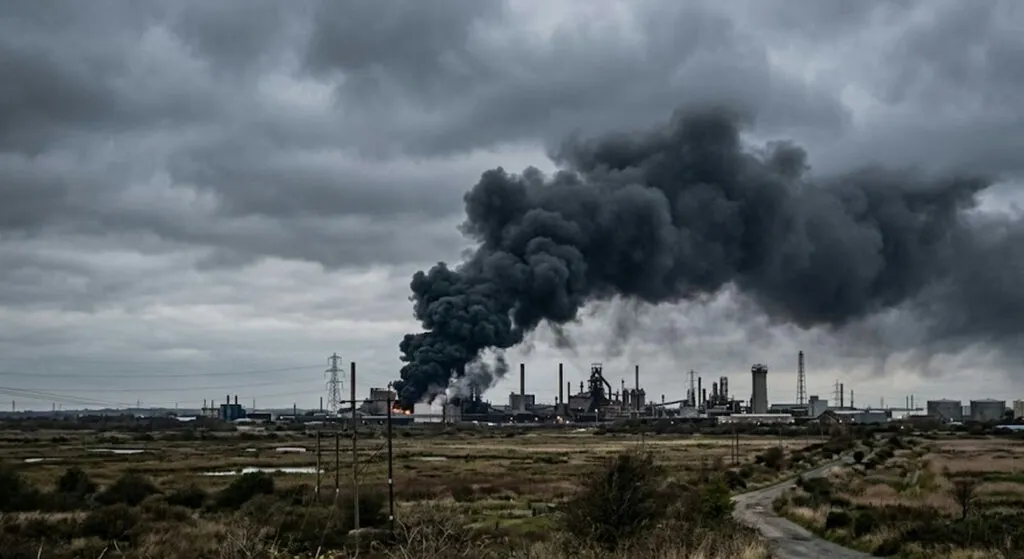
In the city of Liuyang, in Hunan province - known as „the centre of China's pyrotechnic industry" - a fireworks factory exploded on Monday afternoon. The toll - 26 dead, 61 injured. The site - the „Huasheng" plant - is one of hundreds that make up the city's industrial cluster.
The rescue operation mobilised over 1,500 emergency personnel, specialised search robots, and a full string of mass-casualty response services. President Xi Jinping ordered a „thorough investigation", a phrase that in the Chinese official lexicon can mean literally anything - from a real technical review to a political reshuffling of the responsible heads. Authorities claim that environmental monitoring showed „normal conditions" - the kind of statement that rarely arrives at this stage without raising suspicion.
The exact cause of the explosion - has not been specified. China's pyrotechnic industry is the biggest in the world - producing around 90 percent of global supply. But it's also an industry with a steady history of incidents. Similar explosions have happened in Liuyang several times over the past 20 years - 2002, 2008, 2014, 2019 - each time with deaths in the dozens. Clearly, something doesn't change.
Why? Because the structure of the industry is decentralised. Hundreds of small and mid-sized factories, many of them family businesses, with widely varying safety standards. Local authorities protect the industry because it's the economic backbone of an entire region. Central China calls for stricter oversight - but when push comes to shove, there's always an excuse. Those excuses arrive in our own Balkan reality too - „safety standards aren't enforced because that would cost jobs". The lives lost don't enter that calculation until they become news.
For the Balkan pyrotechnic shops - which are always packed in December-January for the holidays - this is a quiet signal. Nearly every fuse, rocket and firecracker sold in our markets comes precisely from this region. We're buying a blood-stained product built on the backs of workers in a distant industrial half-shadow. How often do we think about that when our kids set off firecrackers on 31 December? Almost never. And that's part of the problem.
The latest 10 news from this category

Sanctions imposed over one war are being offered as currency in an entirely different dispute. Most member states are against...
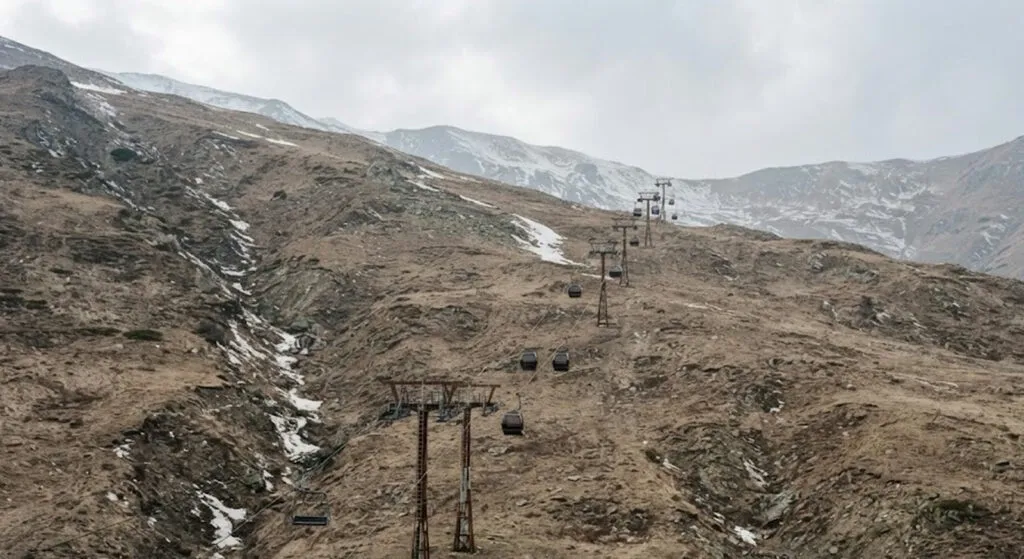
El Nino in the Pacific shifts the currents that decide where snow falls. An area that usually gets a metre...
The easiest way to dismiss an uncomfortable argument is to point at who is making it. But that does not...
The appeals court ruled the entire trial must start over. The son of Norway's queen is waiting for it on...
Trump scaled back the military exercises to ease the tension, and Wonsan answered in the form of projectiles. What does...

The sanctions list got a seven-day extension instead of one measured in months, a move diplomats themselves call unprecedented. Two...
Switzerland offered a table for talks on Ukraine, Moscow replied that the table stopped being neutral once Bern adopted EU...
The will says one thing, a committee of twenty-one men decided another. The queen mother says the army pulled the...
A country that was Europe's byword for stability for decades now has a parliament split into two blocs by a...
Sixteen years in power, defeat at a regular election, five months of quiet - and now the election result is...
This site uses cookies - is that okay? Learn more
Be the first to know when Metla launches something new
Leave your email and we will write when there is a new guide or something new on Metla.