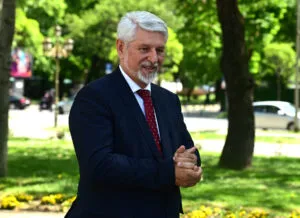
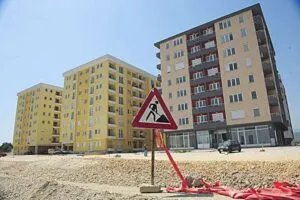
A New Criminal Complaint Against Jakimovski: A Building Permit Based on a Plan Struck Down Back in 2018
16.09.2026


16.09.2026
16.09.2026

16.09.2026
16.09.2026
16.09.2026
16.09.2026

16.09.2026

15.09.2026

14.09.2026

16.09.2026

16.09.2026

15.09.2026

16.09.2026

15.09.2026

14.09.2026

16.09.2026

16.09.2026

16.09.2026

16.09.2026

15.09.2026
15.09.2026

09.03.2026

27.02.2026

19.02.2026

16.09.2026

15.09.2026

14.09.2026

23.04.2026

23.04.2026

12.04.2026

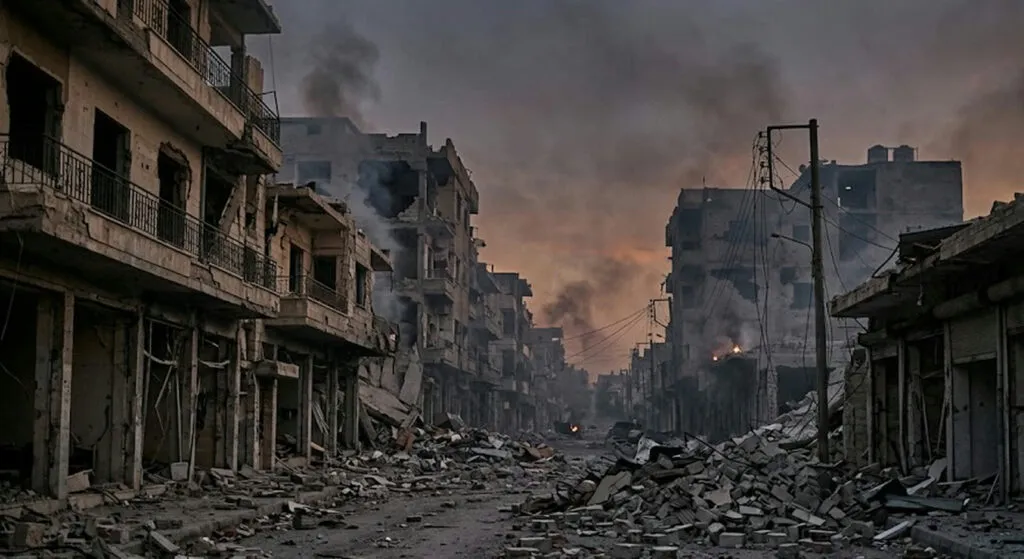
Just a few hours before the announced ceasefire between Russia and Ukraine was supposed to come into force, Russian strikes across eastern Ukraine took at least 27 lives. Zaporizhzhia - 12 dead, around 20 wounded. Kramatorsk - 6 dead, 12 wounded. Dnipro - 4. The Poltava region - 5, including rescue workers who had come to deal with the damage from the first strikes.
Zelensky called the attacks „cynical and senseless". He was right. But cynicism, as the Balkans know well, isn't a mistake in war - it's a strategy.
Ukraine proposed an open ceasefire to start at midnight on May 6, and asked Moscow to stop the strikes. Russia answered with its own „ceasefire" - but only for May 8 and 9, when Victory Day is traditionally celebrated. In other words: we'll pause exactly when it suits us.
This is the „peace" we always see in the Balkans - temporary, symbolic, ceremonial. When Moscow cancelled Vienna in 1989 not because of the war in Croatia but because of the May 9 celebration, that rings familiar to anyone who remembers the breakup of Yugoslavia. The holiday is more important than life.
And why exactly bomb gas facilities in Poltava on the eve of the announced ceasefire? Because you want to blow up the capacity of the energy system right before the cold half of the year. Then you can negotiate from a position of strength: you offer a ceasefire when the opponent can't heat their home.
Zelensky asks for peace on a timeline; Putin replies with a date for a parade. And while the West is busy with Iran, Hormuz and Trump, the same three-year war is grinding on in Ukraine - with one difference. The world is now looking even less often.
Do we, in the Balkans, remember well enough that every „pause" in our neighbours' war in the 1990s was an advertisement for the next escalation? That's the lesson Zaporizhzhia is teaching today - sadly, with another 27 families burying their own.
The latest 10 news from this category

Sanctions imposed over one war are being offered as currency in an entirely different dispute. Most member states are against...
El Nino in the Pacific shifts the currents that decide where snow falls. An area that usually gets a metre...
The easiest way to dismiss an uncomfortable argument is to point at who is making it. But that does not...
The appeals court ruled the entire trial must start over. The son of Norway's queen is waiting for it on...
Trump scaled back the military exercises to ease the tension, and Wonsan answered in the form of projectiles. What does...

The sanctions list got a seven-day extension instead of one measured in months, a move diplomats themselves call unprecedented. Two...
Switzerland offered a table for talks on Ukraine, Moscow replied that the table stopped being neutral once Bern adopted EU...
The will says one thing, a committee of twenty-one men decided another. The queen mother says the army pulled the...
A country that was Europe's byword for stability for decades now has a parliament split into two blocs by a...
Sixteen years in power, defeat at a regular election, five months of quiet - and now the election result is...
This site uses cookies - is that okay? Learn more
Be the first to know when Metla launches something new
Leave your email and we will write when there is a new guide or something new on Metla.