Koraboski's Trial Begins: Custody Came Only After the Public Revolted
27.11.2026


27.11.2026
27.11.2026
27.11.2026
27.11.2026

27.11.2026
27.11.2026

27.11.2026
26.11.2026
25.11.2026

27.11.2026

27.11.2026
26.11.2026

27.11.2026

27.11.2026

27.11.2026

27.11.2026

26.11.2026

25.11.2026
27.11.2026

26.11.2026

25.11.2026

27.11.2026

27.11.2026
24.11.2026

23.04.2026

23.04.2026

12.04.2026

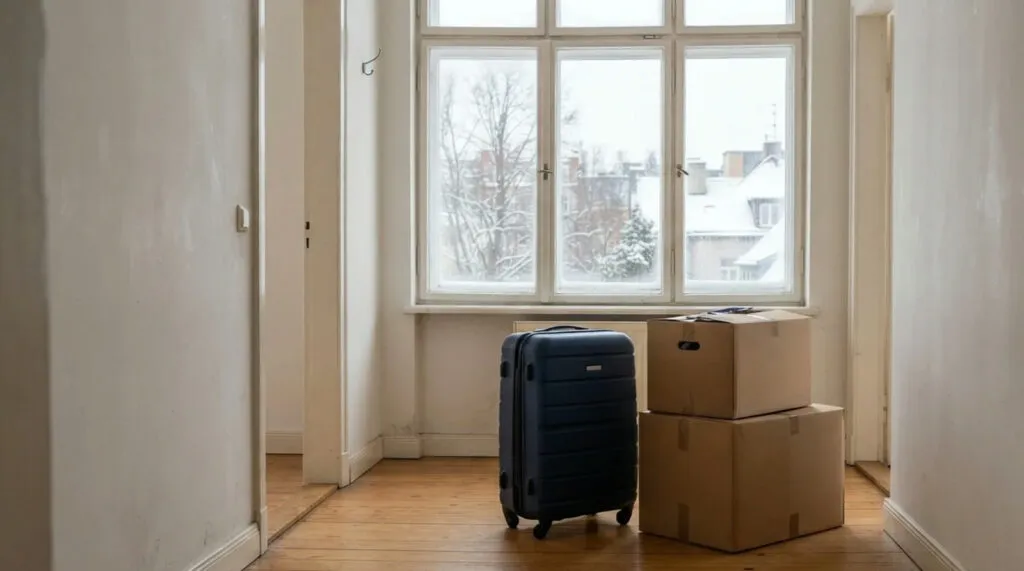
Ten or so years after the great wave of emigration to Germany, the numbers are suddenly pointing the other way. According to the German statistics office Destatis, from the start of January to the end of September this year 7,012 Croatian citizens moved to Germany, while 16,955 left. At first glance, the Croats are coming back. At second glance, not quite.
The key is in the other column of the table. In the pandemic year 2021, 28,457 Croatian citizens came to Germany, and last year only 11,352. The number of those leaving Germany has stayed almost unchanged for years, between 22,000 and 25,000. The negative balance, then, is growing mainly because Germany is attracting fewer and fewer new arrivals from Croatia, not because Croats are packing their suitcases back en masse.
"As soon as an economic crisis and existential uncertainty appear, people who haven't emigrated permanently come back. The European Union no longer needs so much labour, because the European economy isn't particularly prosperous at the moment. These are normal and expected fluctuations. In any case, the great wave of emigration from Croatia has clearly been halted," said demographer and academician Anđelko Akrap.
Who is leaving and where they're going
Those leaving Germany are, for the most part, not the old guest workers heading home to retire. According to Eurostat data for 2024, almost 80 percent of the Croatian citizens who left Germany were aged 15 to 64, around ten percent were 65 or older, and as many again were children under 15, explained Monika Balija Vinček, an assistant professor at the Faculty of Croatian Studies. Her survey of more than 600 Croatian citizens in Bavaria and Baden-Württemberg found that of those already taking steps to return, almost 70 percent had moved to Germany in 2014 or later.
But "left Germany" doesn't mean "returned to Croatia". The two sets of statistics don't agree at all. According to the German figures, last year 20,504 people moved from Germany to Croatia, regardless of citizenship. Croatia recorded only 9,628 arrivals from Germany, of whom 8,334 were Croatian citizens. German statistics log every registration and deregistration of residence, however short, while Croatian statistics, based on Interior Ministry data, count only those who change their country of residence for at least a year. Someone who goes to Germany for a few months' work and comes back exists for Germany, but not for Croatia.
Some of the "returnees" probably aren't going home at all, but moving from Germany to Austria, Switzerland or Bosnia and Herzegovina. A separate category are Croatian citizens with roots in Bosnia and Herzegovina, who went to work in Germany on Croatian papers but never lived in Croatia. Their return to Bosnia is counted statistically as Croats leaving Germany. Demographer Tado Jurić even claims that two thirds of the returnees never end up in Croatia at all, but move on to other European countries. According to him, there are fewer new emigrants mainly because the migration potential has been exhausted. The era of mass one-way emigration is over, and the era of migration in several directions is beginning.
"If it happens again, I'm definitely going"
The most honest sentence in the whole story doesn't come from the tables. Balija Vinček's study published in 2023 covered nine returnees aged 28 to 41 who had spent two to six years in Germany. The sample is small and not representative, but it is very telling. Eight of them planned to return before they even left, and five came back after reaching their goal: they had saved up for a flat, to pay off a loan or to start their own business. Eight of the nine don't rule out leaving again if economic conditions at home squeeze them.
One of them, a 41-year-old who opened his own business after returning, put it most bluntly: "I went to Germany to pay off the loan, so if the same thing happens again, I'm definitely going abroad again." The researchers warn of problems with housing policy, job insecurity and the standard of living in Croatia. So the Croatian "return" is more of a pause than a turnaround. An EU member state, with the euro and open borders, still welcomes its people home with a suitcase that never gets fully unpacked. How much of this sounds familiar to every Balkan family with someone "up there"?
The latest 10 news from this category

For years he called protesters scum and hyenas in prime time. Now a court has found he might do it...

While his loudest editor sits in custody, Aleksandar Vučić promises a stronger SNS and a hunger strike with "no turning...

Two resolutions on Vukovar, Serbian students asking for room for Serb victims too, and a Croatian MEP answering them with...
The editor of the loudest pro-Vučić tabloid ended up at a police station, and the new majority in the Serbian...
The Student List took the Speaker of Parliament, all six deputy speakers and now the chairs of every committee. Vučić...
Cash in a forest, warehouses and a safe, and the investigations are only just starting. The country that gave Gruevski...
Vučić, who set Serbia's agenda for years, is now counting a possible new prime minister's taxes from the opposition bench....

Serbia's new government isn't even formed yet, and the Student List has already asked for files on around fifty people...
A former central bank governor says the panic is baseless, while some exchange offices are charging 120 dinars for a...
Serbia's ninth-largest bank, with 1.84 billion euros in assets, vanished overnight, and until then the National Bank saw no irregularities....
This site uses cookies - is that okay? Learn more
Be the first to know when Metla launches something new
Leave your email and we'll write to you when there's a new guide or something new on Metla.