Koraboski's Trial Begins: Custody Came Only After the Public Revolted
27.11.2026


27.11.2026
27.11.2026
27.11.2026
27.11.2026

27.11.2026
27.11.2026
27.11.2026
26.11.2026
25.11.2026

27.11.2026
27.11.2026
26.11.2026
27.11.2026

27.11.2026
27.11.2026

27.11.2026

26.11.2026

25.11.2026
27.11.2026
26.11.2026
25.11.2026
27.11.2026
27.11.2026
24.11.2026

23.04.2026

23.04.2026

12.04.2026

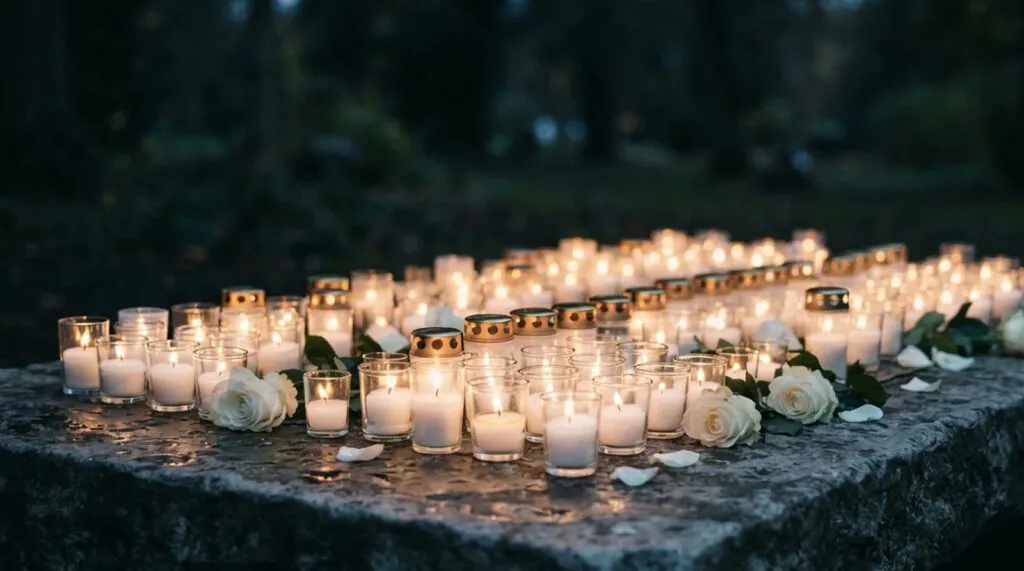
On Thursday, 26 November, the European Parliament votes on a resolution marking 35 years since the fall and destruction of Vukovar. Even before the vote, the document has opened a new round in the oldest Balkan dispute: who writes the history of the nineties, and whose victims get to be in it.
MEPs have two proposals in front of them. The first, initiated by Croatian MEPs, is backed by the European People's Party, the Social Democrats, the Conservatives and the Greens. The second was tabled on behalf of the liberals of Renew Europe by Austrian MEP Helmut Brandstätter. Both were officially submitted on 20 November.
The students: Serb victims too
The student movement in Serbia said it does not agree with the first proposal. In their view, it "almost completely ignores the suffering of the Serb civilian population in Croatia, including killings, persecution, destruction of property and mass flight", and operations "Flash" and "Storm" must not be left out of the picture.
They say it is unacceptable to reduce the complex break-up of Yugoslavia to "a simplified picture of the collective responsibility of the Serbian people". Responsibility for war crimes, they argue, must be individual and established through evidence and final verdicts. Serbia, they acknowledge, has an obligation to cooperate in shedding light on the fate of the missing - but they want that to apply when it comes to Serb victims as well.
The reply came from Croatian MEP Karlo Ressler (HDZ), on X: "On the 35th anniversary of the destruction and the terrible crimes, we in the European Parliament will pay tribute to the victims of Vukovar and Ovčara. The future government will decide for itself - either it will truly reject Milošević's legacy and head towards Europe, or it will once again get lost in the labyrinth, in the tangle of mythomania and toxic propaganda that has kept Serbia in chains for decades."
Put side by side, the two statements say more than either does alone. The students talk about Storm, Ressler answers about Milošević. Two monologues running in parallel - and neither one listening to the other.
The second text: equal demands for everyone
The differences between the two proposals are not a matter of style. The first explicitly asks Serbia to open its military archives, publish all data on the locations of individual and mass graves, fight impunity for war crimes and pass a law on missing persons. It also condemns all forms of denying, minimising or glorifying war crimes, including the public celebration of convicted war criminals in the region.
The liberal proposal directs the demands for opening military and security archives, exchanging data on graves and shedding light on the fate of the missing at all the states in the region. It also asks that the search for the missing and war crimes trials remain a priority in accession negotiations with candidate countries, especially in Chapter 23 on the judiciary and fundamental rights. That chapter awaits every candidate country, Macedonia included.
The alternative text has been backed by seven human rights organisations from the former Yugoslavia, among them the Humanitarian Law Center, the RECOM network and Croatia's "Documenta". They want the resolution to also honour the Serb civilians killed or missing in Vukovar from the start of summer 1991 until the start of the siege - according to several sources, a few dozen people - and they call on the Croatian authorities to investigate those cases without delay. They also want the condemnation of glorifying war criminals to apply to all the states of the former Yugoslavia, including Croatia and Slovenia, which are EU members.
The organisations also recall what happened in 1991: the JNA, the Yugoslav People's Army, and Serb paramilitary forces held Vukovar under siege for almost three months, destroyed it and took it on 18 November. For the crime at Ovčara, the Hague Tribunal sentenced JNA officer Mile Mrkšić to 20 years and Veselin Šljivančanin to ten years in prison. Slobodan Milošević and Goran Hadžić died before their verdicts, and the JNA's top commanders were never indicted in The Hague.
The number that isn't up for debate
Croatia is still searching for 1,725 people missing or killed in the war. For 1,341 of them, their fate is unknown, and in another 384 cases the remains are still being sought. In this year's report on Serbia, the European Commission notes that Serbia's law on missing persons is still not finished, and that the joint Croatian-Serbian working group on the missing has not held an official meeting since January 2023.
And the detail that gets lost in the noise: the resolution is not legally binding. Adopting it will not, by itself, introduce any new conditions for Serbia's EU membership.
In Skopje, this scene is familiar. When history lands in a European document, it stops being a matter for historians and becomes an argument at the negotiating table - Macedonia has learned that from its own experience with Bulgaria. That's why Thursday's question isn't only a Croatian-Serbian one: will the European institutions write rules that apply to everyone, or write history tailored to the states that have MEPs in the chamber - and Serbia has none?
The latest 10 news from this category
From January to September 7,012 Croats moved to Germany and 16,955 left. It looks like a big homecoming, but demographers...
For years he called protesters scum and hyenas in prime time. Now a court has found he might do it...
While his loudest editor sits in custody, Aleksandar Vučić promises a stronger SNS and a hunger strike with "no turning...
The editor of the loudest pro-Vučić tabloid ended up at a police station, and the new majority in the Serbian...
The Student List took the Speaker of Parliament, all six deputy speakers and now the chairs of every committee. Vučić...
Cash in a forest, warehouses and a safe, and the investigations are only just starting. The country that gave Gruevski...
Vučić, who set Serbia's agenda for years, is now counting a possible new prime minister's taxes from the opposition bench....
Serbia's new government isn't even formed yet, and the Student List has already asked for files on around fifty people...
A former central bank governor says the panic is baseless, while some exchange offices are charging 120 dinars for a...
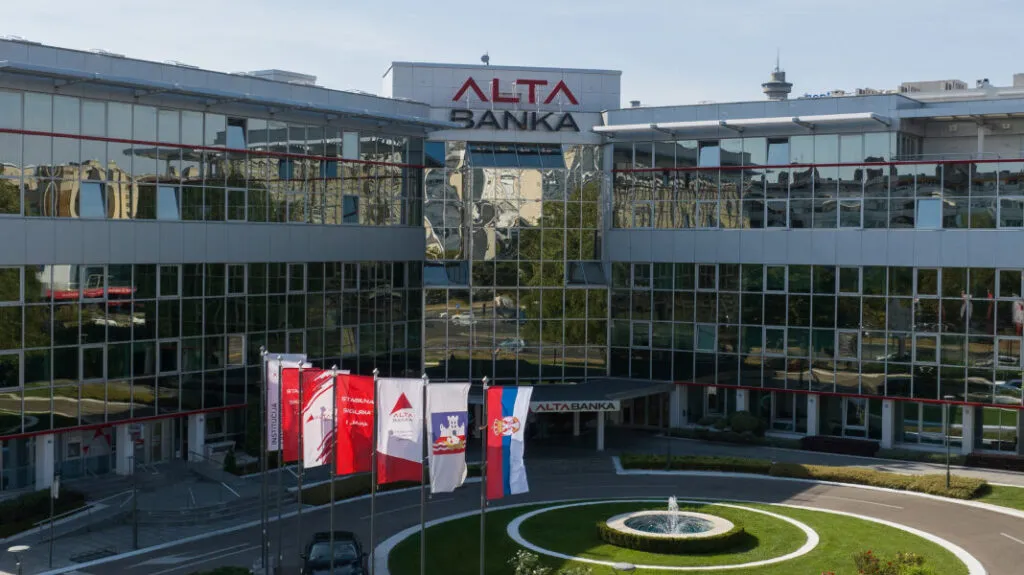
Serbia's ninth-largest bank, with 1.84 billion euros in assets, vanished overnight, and until then the National Bank saw no irregularities....
This site uses cookies - is that okay? Learn more
Be the first to know when Metla launches something new
Leave your email and we'll write to you when there's a new guide or something new on Metla.