Slaveski Tells Filipče to Delete His "Shameful Post": Alta Banka's Customers Got a Duel on X Instead of a Deadline
02.11.2026


02.11.2026

02.11.2026
02.11.2026

02.11.2026
02.11.2026

02.11.2026

02.11.2026

02.11.2026

01.11.2026

02.11.2026

02.11.2026

01.11.2026

02.11.2026

02.11.2026

02.11.2026

02.11.2026

01.11.2026
31.10.2026

02.11.2026

02.11.2026

02.11.2026

02.11.2026

01.11.2026
01.11.2026
02.11.2026
01.11.2026
01.11.2026

23.04.2026

23.04.2026

12.04.2026

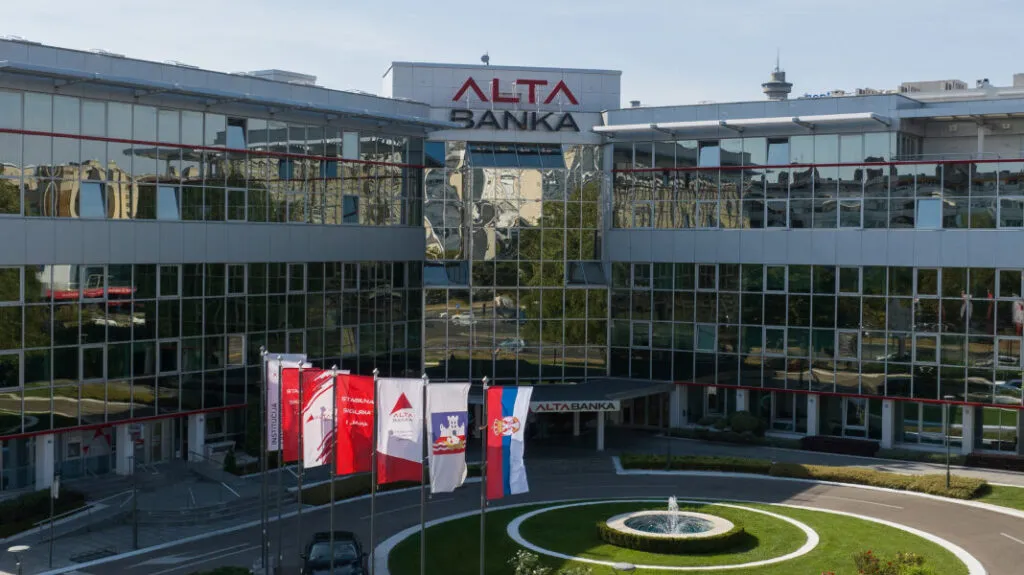
At 02:34 in the night between Friday and Saturday, the National Bank of Serbia announced it was pulling Alta Banka's operating license. The Executive Board had met in an emergency session the previous evening, five days after Aleksandar Vučić's government fell at the October 25 elections. The official explanation: the financial situation had deteriorated significantly and savers' interests were at risk. Just a few days earlier the central bank had been saying it found no irregularities in financial flows in the banking sector. That's how long the calm lasted.
For savers the rule is simple. Deposits up to 50,000 euros are insured and payouts should start within seven working days, with the Deposit Insurance Agency taking over the bank as bankruptcy administrator. Above that limit the waiting begins, and bankruptcies in Serbia aren't known for speed. Loans still have to be repaid. Elektroprivreda Srbije, whose account was at Alta, immediately rushed to tell citizens in Belgrade they wouldn't pay their electricity bills twice.
The numbers flying around
Media close to the defeated government immediately produced two big numbers: that Alta is the first or second largest bank in Serbia, and that over 10,000 people are losing their jobs, the new people's fault, of course. The National Bank of Serbia's data say otherwise. Alta is ninth in size, with 1.84 billion euros in assets and 2.9 percent of the market, and the bank itself had 562 employees in 2025.
The real fear lies elsewhere. The Sloga trade union warns about over 8,000 workers at the retail chains Idea, Roda and Mercator, owned by Davor Macura, and is demanding an urgent answer on what's happening with the money for their wages. The chains aren't formally in bankruptcy. But when the owner's bank falls, nobody can guarantee the shop assistants that their pay will land on time.
From a currency exchange to a regional empire
Macura started out in 2008 with a currency exchange office. In 2019, for about five million euros, he bought the state's 28.51 percent stake in the former JUBMES Bank, from which Alta later sprang. Then came the property of the former IMT tractor factory, for which he paid 70 million euros, the chains from Croatia's Fortenova, plans for a tower in New Belgrade, a bank and insurance in Macedonia and the deal to take over Addiko in Serbia, Montenegro and Bosnia and Herzegovina. That deal is now almost certainly dead.
Elektroprivreda opened its account at Alta without public procurement, and payments for the police also went through the bank. Back in August 2024 the European Central Bank suspended the voting rights of his Alta Pay in Austria's Addiko, over suspicions of opaque capital origins and undisclosed control. Critics say the empire grew on its closeness to power. For now these are claims and suspicions, not verdicts. But who in Belgrade watched a currency exchange turn into one of the fastest-growing banks in seven years and asked nothing?
The vice governors want a prosecutor
The strongest move didn't come from the opposition. The four vice governors, Željko Jović, Ana Ivković, Dragana Stanić and Nikola Dragašević, publicly asked the prosecution to establish all the facts, including possible criminal liability within the National Bank itself. They claim they only learned the real situation at the emergency session and that it "drastically deviated" from the bank's reports. They specifically want it established when and at what level of management knowledge of the risks existed. When vice governors put their signatures to a request for a prosecutor to look at their own institution, who are they pointing at? The governor of that institution since 2012 is Jorgovanka Tabaković, against whom Democratic Party leader Srđan Milivojević has filed a criminal complaint.
The Organized Crime Prosecutor's Office asked as early as October 27 for data on all Alta's foreign transactions since September 27. Unofficially there is talk of attempts after the elections to move out tens of millions of euros. That hasn't been confirmed. But analyst Ivan Radak's question stays open: did large sums leave the bank before the shutters came down?
And what about Bitola
This is where the story stops being Serbian. Last year Alta became the majority owner of Stopanska Banka Bitola, with the consent of our National Bank, and today it operates as Alta Banka AD Bitola. The bank said it is "liquid and continues regular and uninterrupted operations" and that customers "can freely dispose of their deposits." The National Bank confirms that the Belgrade decision "does not in itself mean automatic withdrawal of the license," that the local bank is a separate legal entity and that it is monitoring the risks from the ownership link. Citizens' deposits are insured through the Deposit Insurance Fund. Even so, people have been seen withdrawing money at the branches.
SDSM is demanding proceedings against Prime Minister Hristijan Mickoski and Governor Trajko Slaveski, and Slaveski replies that transfers between countries in themselves don't mean suspicious activity. The claims of money moved into Macedonia remain claims for now. But the National Bank says it gave consent for the takeover on the basis of a comprehensive procedure and officially available data. What did that data show about a group whose firm had its voting rights suspended by the European Central Bank back in 2024? Serbia's central bank saw no problem until a few days ago. That's why savers in Bitola need numbers from Skopje, not just an appeal not to believe speculation.
The latest 10 news from this category

The father says he saw no warrant, Vučić says there was one, and the new government doesn't have a single...

A few days after the election, the man who was until recently the most powerful in Serbia is talking about...
Four people arrested, a dozen more wanted, and media from Israel to Chile reporting "Rise, Adolf." Instead of first looking...

Code 7500, a fighter jet over Korenica and a closed airport in Germany. It all ended with no danger -...

14.02 euros a month for the public broadcaster and a nation split almost exactly in half - and the final...
In Serbia people are asking how to get refunds, while Croatian war veterans attack him for singing in Niš at...
His bandmates spent years trying to convince him to get treatment. At the end of September a concert in Makarska...
More than 50 people at the entrance, children and folk dancers inside, shouts of "Kill the Serb" as they left....
Twelve people from the Novi Sad group and eleven who took part in incidents against protesters - pardoned four weeks...
At a dinner in Athens, while Romania was sinking into political crisis, the US ambassador reportedly said America could do...
This site uses cookies - is that okay? Learn more
Be the first to know when Metla launches something new
Leave your email and we'll write to you when there's a new guide or something new on Metla.